An EOB is not a bill
This is the point that trips people up. A provider's bill asks you for money. An EOB is your insurer's explanation of a claim — it tells you what the plan did, not what to pay. Most EOBs say so directly, somewhere near the top: this is not a bill. Pay the bill, not the EOB — but read the EOB first, because it tells you whether the bill is right.
What the numbers on an EOB mean
An EOB lists each service and walks it through a few figures. The labels vary by insurer, but the shape is the same:
- Amount billed / charged. The provider's list price for the service — usually the highest number, and rarely what anyone actually pays.
- Allowed amount. The discounted rate your plan and the provider agreed on. The difference between billed and allowed is a network discount you don't pay.
- Plan paid. What your insurer paid toward the allowed amount.
- Your responsibility. What the plan says you owe — your deductible, copay, or coinsurance on the allowed amount. This is the number that matters.
The comparison that catches the most errors
Once you can read the EOB, the most valuable habit is simple: line up what a bill charges you against the EOB's patient responsibility for the same care. If the bill asks for more than the EOB says you owe, question it — it may be billing you the full charge instead of the discounted rate, running ahead of insurance, or simply wrong. In the Medical-Bill Review & Appeals Organizer, that comparison is automatic: enter both and it flags any bill charged above the EOB responsibility.
Why the EOB and the bill rarely match
A bill can be sent before the insurer has processed the claim, bill you at the full charge rather than the allowed rate, include a duplicate or a coding error, or come from an out-of-network provider you didn't choose. None of those mean you should pay the higher number — they mean you should wait for the EOB and compare before paying anything you're unsure about.
A note, and a limit
An EOB is background information from your insurer, not a final word — and this page is general explanation, not medical, billing, or insurance advice. If an EOB or a bill doesn't make sense, the people who can actually resolve it are your insurer's member services, the provider's billing office, and, if you're stuck, a patient advocate.
Related tools and concepts
To check any bill for free, the free Itemized-Bill Review Checklist lists what to look for; the full Medical-Bill Review & Appeals Organizer matches every bill to its EOB and tracks appeals. If a claim is denied, see what an insurance appeal is. See the tools for caregivers hub for more.
Templates that implement this
Tools that put your EOBs to work
2 templates
Line up each bill against its EOB, catch where you were charged more than the EOB says you owe, and keep the whole trail in one owned file.
- $21.95 Spreadsheet
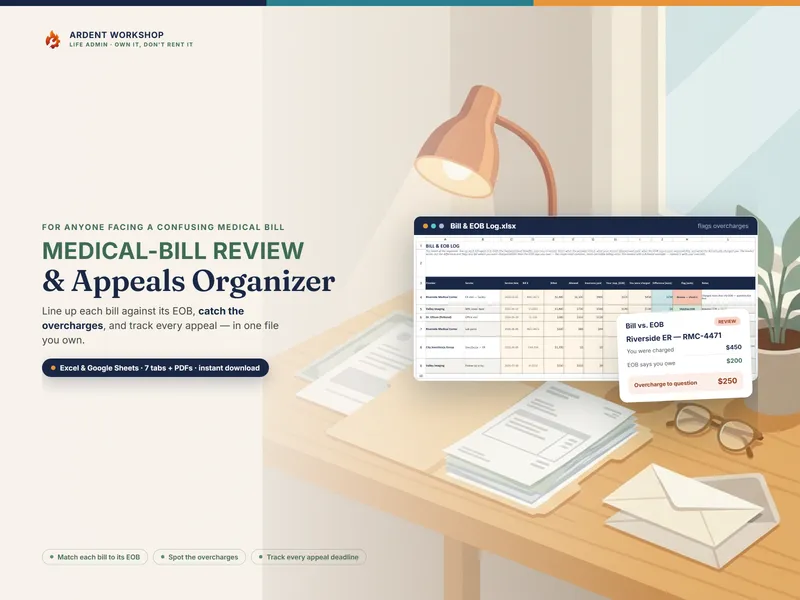
Medical-Bill Review & Appeals Organizer — EOB Matching, Denial & Appeal Tracker for Excel & Google Sheets
A medical-bill review & appeals organizer for Excel & Sheets — match bills to EOBs, catch overcharges, and track every denial and appeal you own.
Life AdminView details - $5.95 Excel
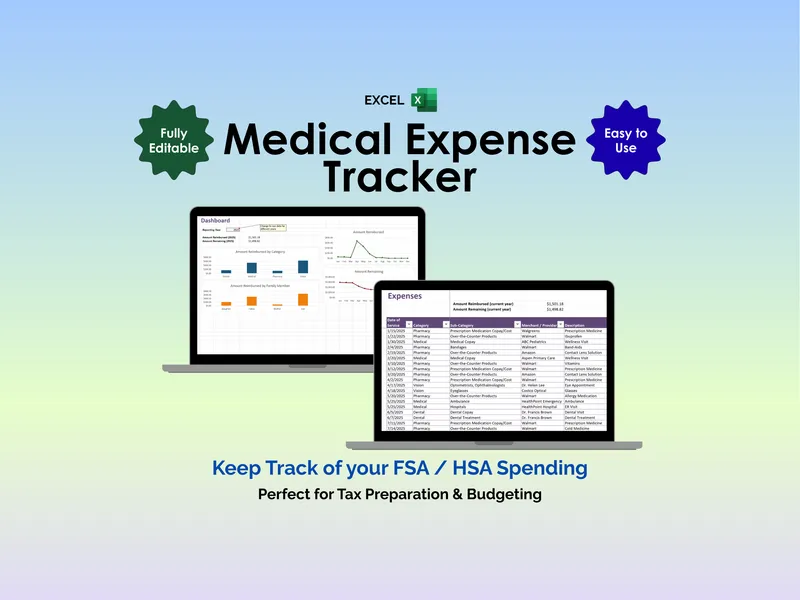
Medical Expense Tracker - Excel
Nobody really teaches you how to keep up with medical bills. This excel medical expense tracker holds the dates, providers, family members, and FSA/HSA reimbursements in one quiet place.
Life AdminView details