What a caregiver authorization covers
- Who the child is — full legal name and date of birth for each child, matching what the doctor's office has on file.
- Who the caregiver is, with an address and a phone number that will actually be answered.
- A start and an end date. An open-ended authorization signed years ago invites the question of whether it is still current, and a stale one is easy for an office to refuse.
- Collection and day-to-day care — that the caregiver may pick the child up from school, daycare, or an activity, and make the ordinary decisions a parent would.
- Medical care — the clause that matters most. That if you cannot be reached, the caregiver may consent to examination, treatment, and where a physician judges it necessary, admission and anesthesia.
- How to reach you, plus a second contact on a different schedule.
- Health details — allergies and what to do about each, current medications, the insurance policy, the pediatrician.
A caregiver authorization is not guardianship
This is the distinction that matters. A caregiver authorization is a temporary permission from a parent who keeps every parental right they had before signing. Guardianship is a court order that moves legal authority over a child from one adult to another, and it cannot be created by a letter. If an arrangement is long-term, contested between parents, or intended to change who decides for a child, that is a lawyer's job, not a template's.
Some states go further than a plain letter: several publish their own statutory caregiver-authorization affidavit that can unlock more — school enrollment, for instance — and a few expect notarization before a provider will rely on it. Check what your state offers before you assume a generic letter is enough.
The mistake that makes one useless
People write the letter for the caregiver and never give a copy to the people who have to act on it. The letter only works where it is on file. Email a scan to the pediatrician's office and the school, hand the caregiver the paper original, and keep a photo of it on your own phone. A document nobody can produce at the counter has not done its job.
The second most common mistake is a single point of contact. Most clinics will try the parent first and treat the authorization as the fallback — so a phone that is switched off abroad, with no second contact, stalls the whole thing.
Caregiver authorization vs travel consent letter
They overlap and answer different questions. A caregiver authorization answers "may this adult look after and consent for this child?" and its audience is a school, a daycare, or a clinic. A minor travel consent letter answers "may this child leave with this adult?" and its audience is an airline check-in desk or a border officer. A child spending two weeks abroad with a grandparent needs both, and they are usually signed at the same table.
Where to start
Both letters are free, fillable, and shown filled in at Minor-Travel & Caregiver Consent Letters — no signup. The full Everyday Household Legal & Authorization Template Pack adds the other eleven household documents, and the family templates hub gathers the rest. General templates and guidance — not legal advice. Anything touching guardianship, custody, or medical decision-making beyond temporary consent needs a qualified professional.
Templates that implement this
Get a caregiver authorization you can fill in
3 templates
A fillable caregiver and childcare authorization with the medical-care clause, a table for each child, and the insurance and pediatrician block — one of thirteen household documents in a pack you own.
- $19.95 Mix

Everyday Household Legal & Authorization Template Pack — 13 Fillable Household Documents: Caregiver & Minor-Travel Consent Letters, Bill of Sale, Personal Loan Agreement & Room Rental
The 13 agreements a household needs across a decade — caregiver and travel consent, bill of sale, personal loan, room rental. Fillable PDF + Word.
Life AdminView details - $19.95 Spreadsheet
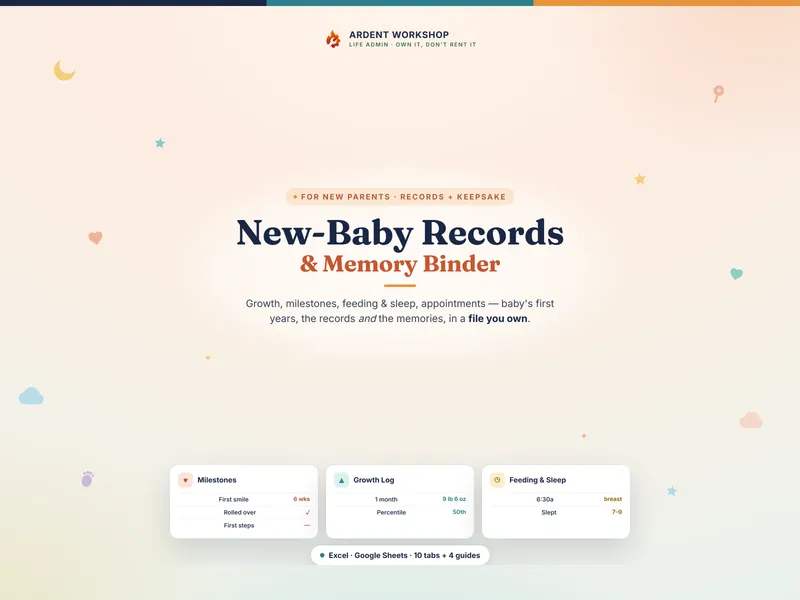
New-Baby & New-Parent Records Binder — Baby's First Years Growth, Milestone, Feeding & Sleep Tracker (Excel + Google Sheets)
A keepsake records binder for baby's first years — growth, milestones, feeding, sleep, and key documents in one file you own (Excel + Google Sheets).
Life AdminView details - $24.95 Spreadsheet
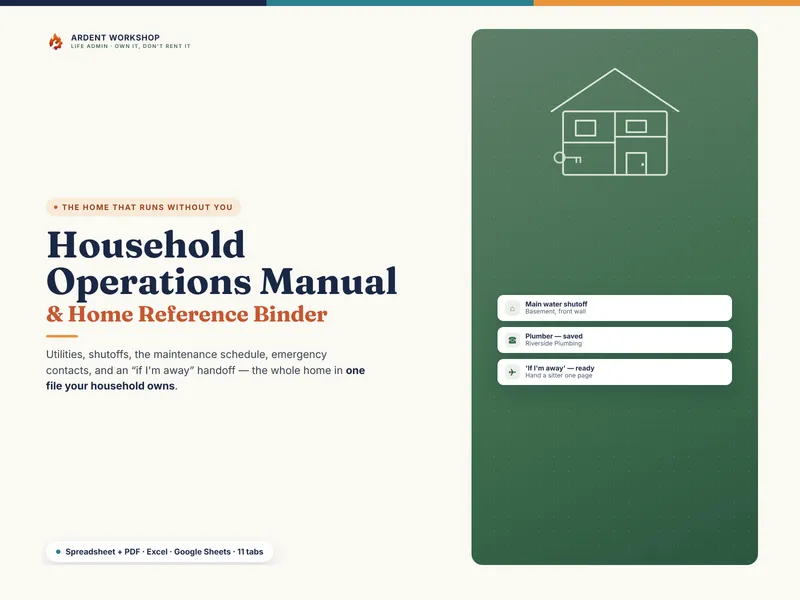
Household Operations Manual & Home Reference Binder — Utilities, Shutoffs, Maintenance, Emergency Contacts & House-Sitter Info (Excel + Google Sheets)
Run your whole home from one file — utilities, shutoffs, the maintenance schedule, emergency contacts, and an 'if I'm away' handoff, all in a file you own.
Life AdminView details