The formula
Labor cost percentage is deliberately simple:
- Labor cost percentage = total labor cost ÷ sales × 100. Both numbers cover the same period — a week, a day, a pay period. Use whichever matches how you plan.
- Total labor cost is what the schedule actually costs: each person's hours at their rate, including any overtime premium. For a forward-looking schedule it's an estimate; against actuals it's what payroll paid.
- Sales is the revenue you expect (or a budget you set) for the same period. Some operators use net sales; use the figure your business measures against and stay consistent.
A worked example
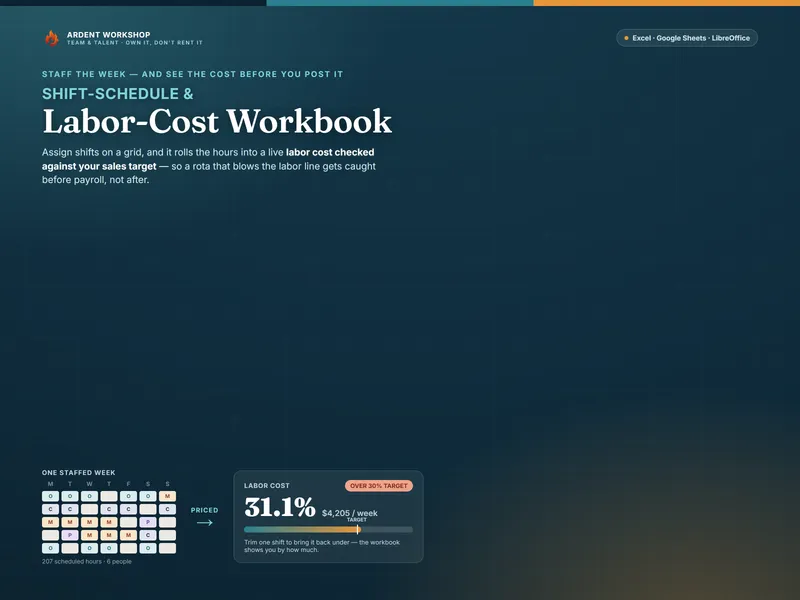
Say a small cafe staffs a week of six people and the schedule prices out to $4,205 in labor — regular hours plus one person's overtime. The owner expects $13,500 in sales that week. The labor cost percentage is 4,205 ÷ 13,500 = 31.1%. If the target is 30%, the schedule is over by a little — about $155 — and the fix is to trim the cheapest overlapping hours or the hours that tipped someone into overtime, then re-check the number before posting.
Why it matters to a shift manager
- It's the affordability test. Coverage tells you the schedule works; labor cost percentage tells you whether you can afford it. A well-covered week that runs the labor line too high still costs you.
- It's comparable across weeks. Because it's a ratio, a $6,000 labor bill on a busy week and a $3,000 bill on a slow week can be judged on the same footing — the percentage, not the dollars.
- It's a target you can set. Many operators run to a labor target that fits their margins; the exact figure varies by business type, service model, and region, so it's yours to set — the point is to measure against it every week.
How to lower it
- Cut overlap, not coverage. Two or three people stacked on a shift that needs one is the cheapest labor to trim without leaving a gap.
- Chase overtime first. Overtime hours cost half again as much, so the hours that pushed someone past the weekly threshold are the most expensive on the schedule — reassign them to someone under their limit.
- Match hours to demand. Shift hours off your slow days and onto the busy ones, where the same labor earns its cost.
- See the number as you build. The reason labor overruns survive is that the cost is invisible until payroll. A schedule that prices itself as you staff it turns the percentage into something you steer, not something you discover.
Labor cost percentage is a planning and management figure, not a payroll calculation or tax, HR, or legal advice. Overtime and break rules and what counts as paid time vary by jurisdiction and employer.
Templates that implement this
A workbook that tracks labor cost percentage
1 template
Staff the week on a grid and the workbook prices it into a labor cost, then checks that cost against your sales target as a percentage — with a flag the moment the schedule runs over.