You’re standing on the shoulder with your hazard lights ticking, absolutely certain you’ll remember this. The other driver’s face. What they said. Which lane you were in. It’s burned in.
It isn’t. Three weeks later an adjuster asks which direction the other car was traveling when you first saw it, and you discover that adrenaline is a spectacular way to feel like you’re recording something and a terrible way to actually do it.
The good news: almost all of it is capturable in ten minutes, on the phone you’re already holding.
The short version — document a crash in three passes. First, before any of it: check for injuries, call 911 if anyone is hurt, and get people out of the traffic lane. At the scene: photograph the vehicles where they stopped, all four corners of both cars, both plates, the other driver’s license and insurance card, the road and the weather, and your own odometer. In writing, before you leave: what was said, the other car’s make, model, year and plate, witness contacts, the officer’s name and badge number, and the accident report number. Within 48 hours: re-photograph in daylight, get any symptoms medically dated, notify your insurer, and check your state’s separate reporting deadline.
At the scene right now? Skip ahead to what to photograph.
Why the First 48 Hours Decide Your Claim
The window to collect evidence closes long before the claim does. Your car goes to a body shop. The intersection gets swept. The witness drives away. The claim grinds on for weeks — which is exactly when someone asks for details that no longer exist anywhere but your memory.
This isn’t a rare-catastrophe problem. Of an estimated 6,180,241 police-reported traffic crashes in 2024 (opens in new tab), NHTSA put 4,467,244 in the property-damage-only column — no injuries, just damage and paperwork. The ordinary crash is a documentation event, and nobody rehearses for it.
What to Photograph at the Scene
Before any of this: check for injuries, call 911 if anyone is hurt, and get people out of the traffic lane. Safety comes ahead of every photo below. If the cars are drivable and have to be moved, take the first shot on this list before you move them — it is the only one you cannot recreate.
Then shoot more than feels reasonable. Photos are free; a missing angle isn’t.
- The scene before anything moves — do this one first if it’s safe: the vehicles where they came to rest, from far enough back to show lane position and the road. Once the cars move, this shot is gone for good.
- All four corners of both cars — including the undamaged ones. Proving what wasn’t damaged matters as much as proving what was.
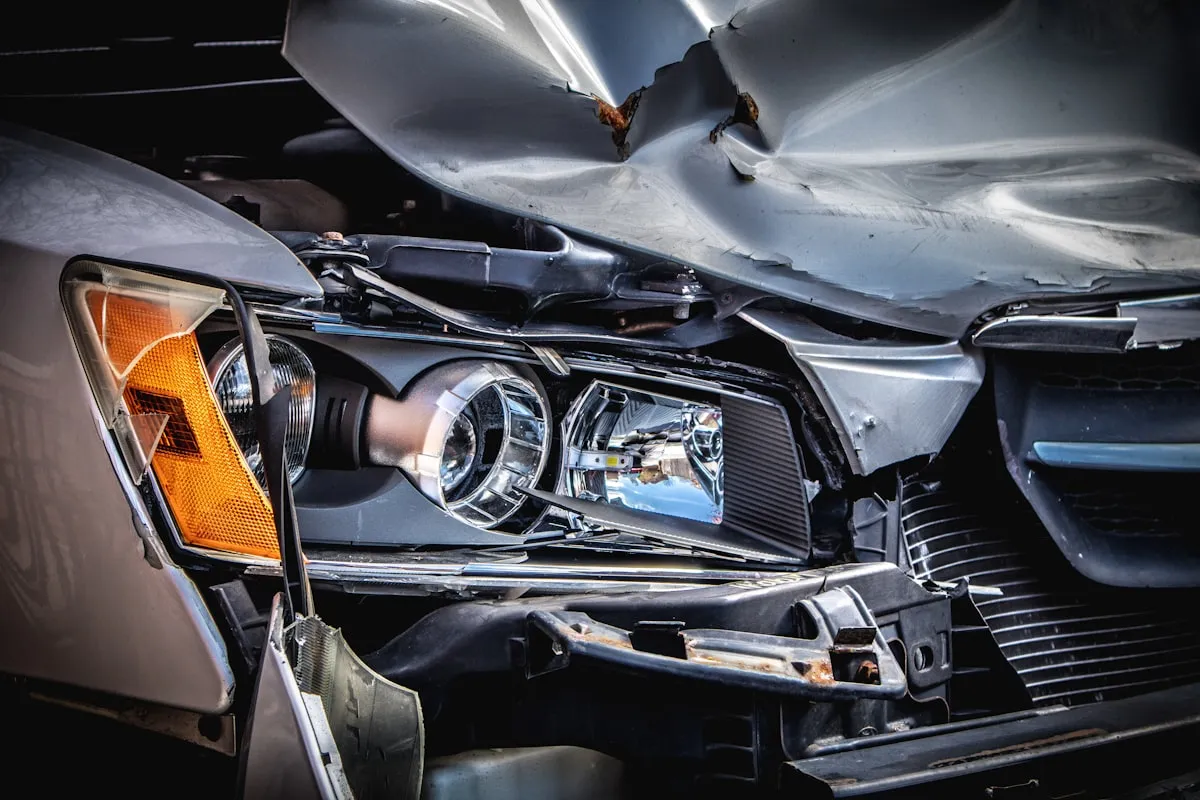
- Every point of contact — close up, then a wider shot of the same damage so it’s obvious which car it’s on.
- Both plates, plus the other driver’s license and insurance card — a photo beats transcribing a policy number under stress. Treat these as the other person’s documents, not yours; there’s a caveat on holding them.
- The road itself — skid marks, debris, traffic signals, stop signs, obstructed sightlines, standing water.
- The conditions — the sky, the light, the wet or dry pavement. “It was raining” is an assertion; a photo is evidence.
- Your dashboard — the odometer, plus any warning lights that came on after impact.
- Deployed airbags and interior damage — including any child seats. Whether a seat has to be replaced after a crash, and whether your insurer covers it, both get decided later; neither conversation goes anywhere if the seat isn’t in the photos.
What to Write Down at the Scene (That a Photo Won’t Capture)
Photos capture the scene; notes capture the people. The National Association of Insurance Commissioners’ guidance on what you should know about filing an auto claim (opens in new tab) is specific about what to write down:
- The other car — make, model, year and plate.
- Every witness — name and contact information.
- The time, date and exact location — with notes on “skid marks, weather, and road conditions.”
- The responding officer — name and badge number, and ask when and where to get the accident report, and the report number.
Add three more that are easy to skip and hard to reconstruct:
- What was said — as reported speech rather than interpretation. Apologies, admissions and “I didn’t see you” all matter later.
- Whether the car was drivable — and, once it’s towed, who took it and where. Ask the yard what it charges per day: storage is usually billed daily, and it’s easy not to find out until the bill arrives.
- A rough diagram, before you leave — two boxes and an arrow, drawn in your notes app in thirty seconds, beats your memory in a month.
The 48-Hour Follow-Up That’s Easy to Skip
The scene is only half of it. The next two days carry their own list:
- Re-photograph the car in daylight — calm, from the same angles. Damage reads differently without adrenaline and headlights.
- Get symptoms looked at and dated — symptoms that surface on day two aren’t unusual, and a dated medical record closes the gap between the crash and the complaint before anyone has to argue about it.
- Notify your insurer — the NAIC’s guidance (opens in new tab) is to call the number on your proof-of-insurance card as soon as possible. Your policy itself likely also carries a duty to report a loss promptly; check the wording of yours.
- Check your state’s separate reporting duty — it exists independently of the police and your insurer. California requires an SR-1 filed with the DMV (opens in new tab) within 10 days “if someone is injured (no matter how minor the injury) or killed, or property damage is over $1000”, and failing to file suspends your driving privilege (opens in new tab) under Cal. Veh. Code § 16004. Deadlines and thresholds vary by state; look yours up now, not on day nine.
Where All of This Should Actually Live
A camera roll is not a record. Forty photos scattered among two thousand others, a report number in a text message, a tow receipt in a jacket pocket — that’s the state evidence tends to be in when the adjuster calls.
Put it with the rest of the car’s history instead. The Vehicle & Auto Records Binder holds the register, service history, renewals and document locations in one file you own, so an incident folder sits beside the maintenance record proving the car was sound the day before. If the crash turns into injury bills, the Medical-Bill Review & Appeals Organizer matches bills to EOBs and counts down appeal deadlines.
One caveat on that file: some of it isn’t yours. The license and insurance-card photos, and the witness details, are other people’s personal information — a license alone carries a name, date of birth, an address and an ID number. Keep them with the claim rather than in a shared photo album, hand them only to your insurer, your attorney or the police, and delete the copies once the claim closes.
It also helps to already know how to organize insurance policies before you’re hunting for a declarations page from a roadside.
Ten minutes on the shoulder, twenty over the two days after. That’s the whole cost of never saying “I think so” to an adjuster.
Common Questions About Documenting a Car Accident
How long do I have to report a car accident?
Two different clocks are running. Your policy asks for prompt notice rather than setting a fixed number of days, so read its duties-after-a-loss section. Many states also impose a separate reporting duty with its own deadline: California’s SR-1 is due within 10 days when anyone is injured or property damage tops $1,000, and both the deadline and the damage threshold vary by state. Look yours up on your state DMV or state police site before you need it, not on day nine.
Should I still document a minor accident with no damage?
Yes. Damage that looks cosmetic on the shoulder has a way of becoming a sensor recalibration once the bumper cover comes off, and an injury that feels like nothing at 4pm can feel like something at 10am tomorrow.
What if I didn’t take photos at the scene?
Document what you still can, today. Photograph the vehicle in its current state, write down everything you remember while it’s closest to fresh, and request the police report by number.