Put the two brochures side by side and they read almost identically. The cruise says “everything included.” The all-inclusive resort says “everything included.” Both show a pool, a buffet, and a kid mid-cannonball. So you’d be forgiven for thinking the choice is a coin flip.
It isn’t. “Everything included” means very different things on a ship than it does at a resort — and the gap between the two is exactly where families get surprised, both by the final bill and by whether anyone actually relaxed. A cruise and an all-inclusive resort are not two versions of the same vacation. They’re two different answers to the question “what does my family want to do with a day off?”
So let’s settle the cruise-vs-all-inclusive-resort debate the useful way: what each one is genuinely great at, what each one quietly charges extra for, and a fast way to decide which fits your family — not the family in the brochure.
The short version: a cruise sells motion and variety; an all-inclusive resort sells stillness and a predictable bill. Choose by whether your family recharges by doing or resting — and by which headline price hides the most extras.
The honest answer: it comes down to two questions
Before any spreadsheet, the whole decision hinges on two questions about your particular family:
- Does your family recharge by doing or by resting? A cruise is motion — new port every day or two, a schedule, constant options. A resort is stillness — one pool, one beach, one week, no packing in between. Neither is better. They suit different people.
- How much of the “all-inclusive” price is actually inclusive? This is where the real money hides, and the answer is very different for each. Get this wrong and the “cheaper” option quietly becomes the expensive one.
Cruising is booming precisely because it nails the doing side for mixed-age groups. As Cruise Hive reported from CLIA’s 2026 State of the Cruise Industry data (opens in new tab), the industry hit a record 37.2 million passengers in 2025, roughly a third of sailings carried multiple generations, and nearly nine in ten guests said they’d sail again. But “most people love it” doesn’t tell you whether your toddler will nap on a moving ship or whether your teenager wants five ports or one hammock. Let’s break down both sides.
The case for a cruise
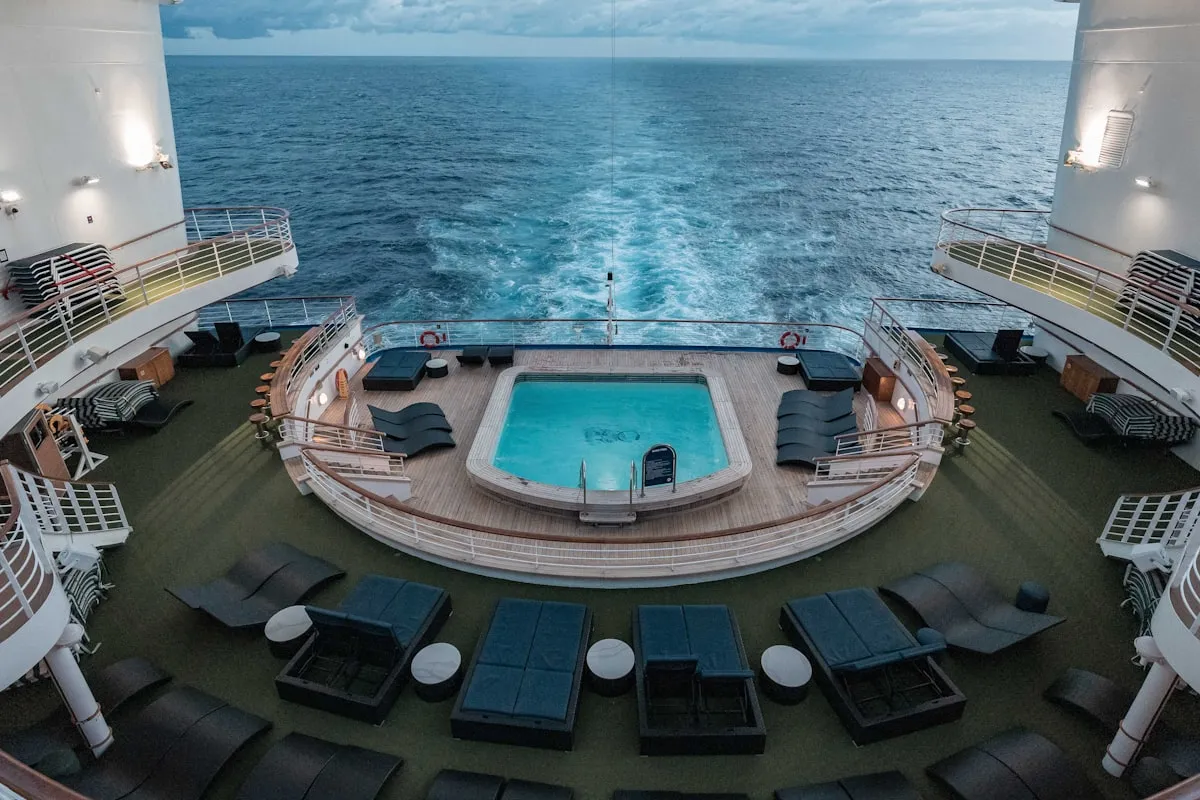
A cruise is the right call when your family gets bored sitting still. Its core advantage is variety without logistics: you unpack once, and the vacation comes to you — a new destination while you sleep, a different pool deck, a rotating menu of shows, clubs, and activities.
Where cruises win:
- Multiple destinations, one unpacking. You can see three or four places in a week without ever repacking a suitcase or booking a transfer. For families who’d otherwise never agree on a single spot, this is the peace treaty.
- Built-in, all-ages entertainment. Kids’ clubs by age band, teen lounges, pools, mini-golf, shows every night. Restless kids and different-aged siblings can each find their thing, which is why cruising skews so heavily multigenerational.
- Predictable base, structured days. The big-ticket items — cabin, meals in the main dining rooms, most onboard entertainment — are prepaid. There’s a rhythm to the day that a lot of parents find restful.
- Great for grandparents-included trips. Everyone shares a base but can split off: grandparents to the quiet deck, kids to the waterslide, parents to dinner.
Where cruises cost you:
- The base fare is a starting price, not a final one. Drinks packages, specialty restaurants, shore excursions, spa, and Wi-Fi are almost always extra — and they add up fast.
- Automatic gratuities. Most major lines now add a daily service charge of roughly $17–$20 per person, per day in 2026 (Forbes: how cruise gratuities really work (opens in new tab)). For a family of four on a seven-night sailing, that’s around $475–$560 before you buy a single soda.
- Short, scheduled time in each port. You get a taste of each place on the ship’s clock, not yours. Miss the all-aboard time and the ship leaves without you.
- Motion and crowds. Seasickness is real for some, and the biggest ships carry thousands of people. Special diets and picky-eater toddlers can also be harder to manage on a fixed dining schedule.
The case for an all-inclusive resort
An all-inclusive resort is the right call when your family’s idea of a great day is not having a schedule. Its core advantage is the opposite of the cruise: you go one place, you stop moving, and — at a genuinely all-inclusive property — you mostly stop paying, too.
Where resorts win:
- Fewer surprise charges. At a true all-inclusive, meals, snacks, non-alcoholic and alcoholic drinks, non-motorized activities, and tips are typically bundled into one upfront price. The mental math of “can we order another round” largely disappears.
- A slower pace built for young kids. One location means naps happen in your own room, the pool is thirty seconds away, and a blown-up afternoon nap doesn’t cost you a booked excursion. For families with little ones, this is the whole ballgame.
- Real downtime. No port schedule, no all-aboard alarm. If your version of a vacation is a lounger, a book, and a kid you can see from it, a resort delivers that better than a ship.
- Space and quiet. Even a busy resort feels less packed than a top-deck pool on a sea day.
Where resorts cost you:
- Same view all week. The flip side of “one location” is one location. Families who crave novelty can get restless by day four.
- “All-inclusive” quality varies wildly. There’s no standard definition of what “all-inclusive” has to cover, so it varies by property. One resort’s included buffet is a delight; another’s is a sad tray of the same three proteins. What’s bundled — top-shelf liquor, à-la-carte restaurants that require reservations, off-site tours — differs by property, so you have to read the fine print.
- Excursions and airport transfers are usually extra. Getting to the resort, and leaving it to see anything, is generally on you.
- You’re captive to one kitchen. If the food doesn’t suit your family, there’s no next port with new options.
The hidden cost is the whole comparison
Here’s the trap: both options advertise a headline price, and both leave things out — just different things. The honest comparison isn’t fare vs. fare. It’s what each headline price actually excludes. Here’s how they typically stack up.
| What families forget to count | Cruise | All-inclusive resort |
|---|---|---|
| Meals & snacks | Included in main venues; specialty dining extra | Almost always included |
| Drinks (soda / alcohol) | Usually a paid package | Usually included |
| Tips / gratuities | ~$17–$20 per person, per day, added automatically | Usually included in the price |
| On-site activities | Pools/shows included; some activities extra | Non-motorized usually included |
| Excursions / off-site tours | Extra, priced per person | Extra, priced per person |
| Getting there (flights/transfers) | Extra | Extra |
| Wi-Fi | Usually a paid add-on | Often included |
The pattern: a cruise’s low base fare tends to grow the longer you’re aboard, as drinks, tips, and excursions pile on. A good all-inclusive resort’s higher upfront price tends to stay put, because the daily extras are already inside it. That’s why the cheaper-looking option on the booking page is so often the more expensive one by the time you get home — and why comparing only the advertised numbers is how families overspend on the one big trip they take all year. (For a fuller reckoning of what a family beach week really runs, we broke down the real cost of a family beach vacation layer by layer.)
The dividing line: who each one is for
You don’t need to love the ocean or hate crowds to choose. Match the vacation to how your family actually behaves:
Lean cruise if:
- Your kids (or the adults) get bored staying in one place.
- You have a wide age range to satisfy in one trip.
- “See several places” beats “see one place well.”
- You like structure and prepaid big-ticket items.
Lean all-inclusive resort if:
- Your idea of rest is not moving.
- You have young kids on nap schedules.
- You want the most predictable possible bill.
- You’d rather go deep on one place than skim four.
If you’re still torn, the tiebreaker is usually the doing-vs-resting question from the top. Families who came home from their last trip saying “we needed a vacation from the vacation” almost always want the resort. Families who came home saying “we ran out of things to do by Wednesday” want the ship.
The verdict: score it, don’t argue it
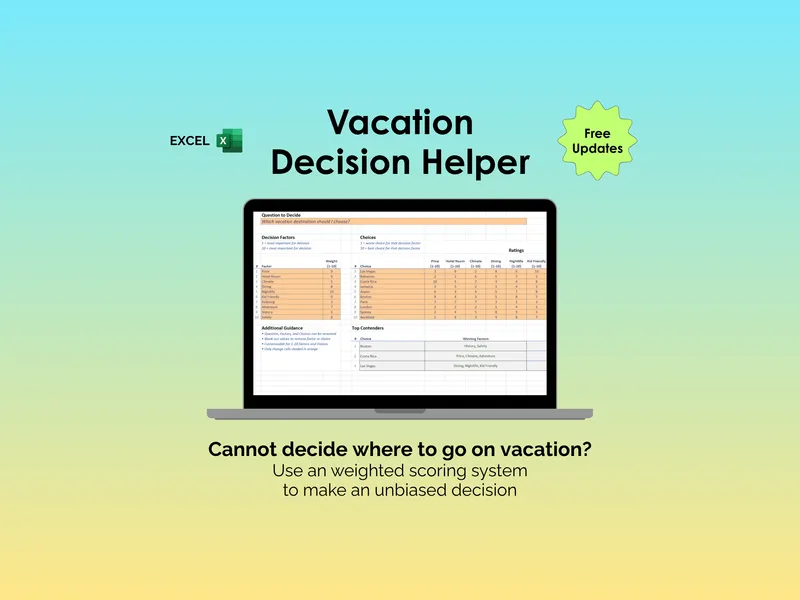
The mistake families make is treating this as a taste debate — a five-way argument nobody wins. It’s not. It’s a scorable decision with a handful of factors that actually matter to your family: total realistic cost, pace, kid-friendliness for your specific kids’ ages, variety, and downtime.
So do what you’d do with any high-stakes, one-time choice: list your two or three real options, agree on the factors that matter, weight them, and rate each option honestly. Let the numbers narrow it instead of the loudest voice at the dinner table. A vacation decision helper turns “cruise or resort?” into a fifteen-minute scored comparison — and because you keep the file, it’s just as useful next year for the next trip. It’s the same score-it-don’t-agonize approach that settles how to choose a vacation destination everyone agrees on once you’ve picked the format.
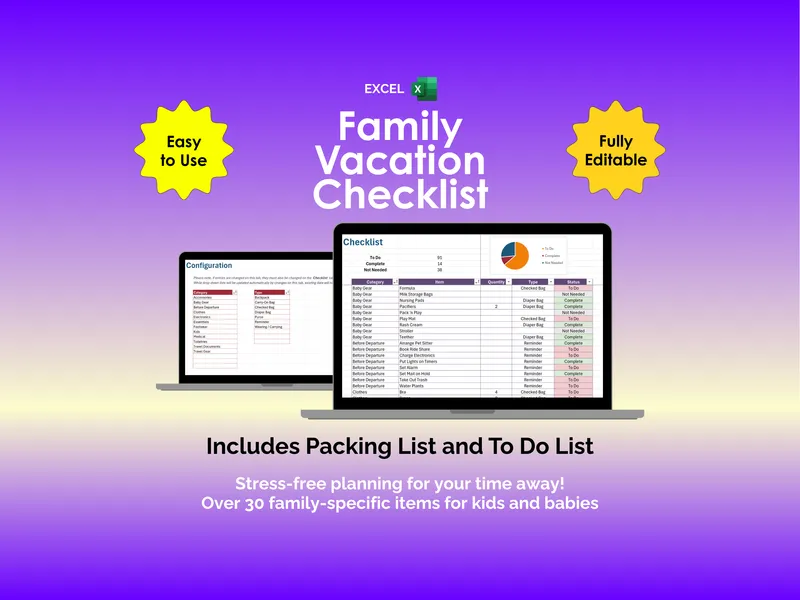
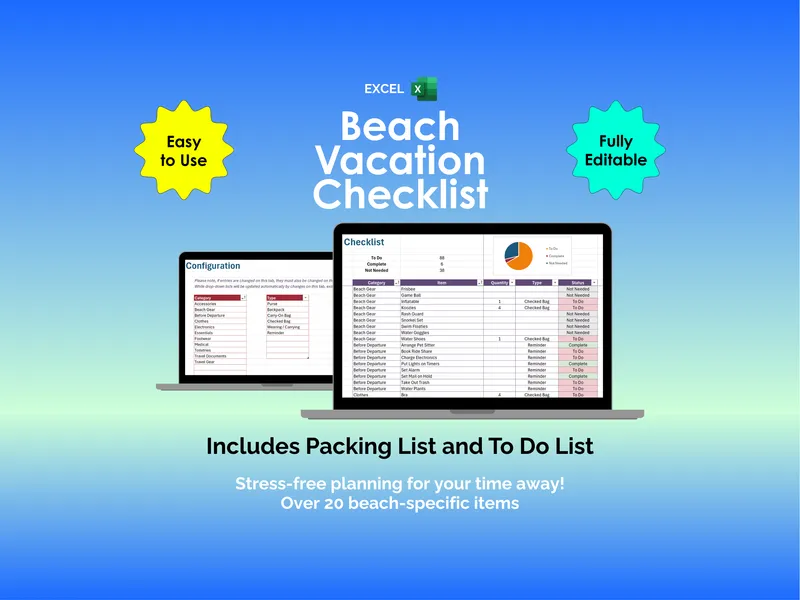
Once you’ve picked your lane, the packing lists diverge — a ship has formal nights and tiny cabins, a resort has all-day pool logistics — so build from the right checklist: a family vacation checklist for the trip itself, or the more sun-and-sand-focused beach vacation checklist if the resort’s on the water. And if the resort’s within driving distance, the other half of the math is whether to drive or fly to get there.
The bottom line: the smart pick isn’t the cheaper brochure — it’s the one that matches how your family spends a day and what your real, all-in total actually comes to. Restless family that recharges by doing, or a crew that just wants to stop moving? Figure out which your family is and what each option truly costs, score it, and book the trip everyone actually enjoys.