Ask five families whether to drive or fly to their summer vacation and you’ll get five confident, contradictory answers. One swears the road trip is always cheaper. Another won’t get in a car for more than three hours with kids in the back. Both are right — for their trip.
Americans clearly lean toward the road: AAA’s 2025 Independence Day forecast (opens in new tab) expected 61.6 million people to travel by car over the holiday week versus 5.84 million by air — roughly 85% behind the wheel. But “most people drive” doesn’t tell you what’s right for your family, your destination, and your tolerance for a 4 a.m. airport wake-up. So let’s settle the road-trip-or-fly debate the only way that actually helps: by the numbers first, then by the trade-offs the numbers don’t capture.
The honest answer: it comes down to two numbers
Driving usually wins on cost for bigger families and shorter trips. Flying usually wins on time for smaller parties and longer distances. The entire debate hinges on just two numbers: how many people are in your party and how far you’re actually going.
Here’s why those two numbers decide almost everything. The cost of driving is essentially fixed per car — a tank of gas costs the same whether one person or five is in the seats. The cost of flying is per person — every head is another ticket. That single difference is the hidden engine behind every “we always drive” and “flying is so worth it” opinion you’ve ever heard. Once you know which side of that math your trip falls on, the answer mostly decides itself.
The case for driving (Side A)
Driving wins when you’re moving a full car a moderate distance. Here’s the strongest version of the case:
- The cost is per car, not per head. AAA’s 2025 Your Driving Costs study (opens in new tab) puts the real operating cost — gas, maintenance, and tires — at about 24 cents a mile. A 1,200-mile round trip is therefore roughly $290 in actual out-of-pocket driving cost, and that number doesn’t budge whether you bring one kid or four.
- Total flexibility. Leave when you want, stop where you want, rewrite the plan from a rest-area parking lot. No gate changes, no rebooking fees, no missing the last flight out.
- Bring everything. Coolers, strollers, the good camp chairs, a week of gear, the dog. No baggage fees, no weight limits, no agonizing over the liquids rule.
- No “transfer tax” on your day. No security lines, no boarding groups, no renting a car the moment you land.
- The drive can be part of the vacation. For some families the playlists, the roadside diners, and the “look at that” moments are the trip, not an obstacle to it.
One honest caveat sellers of the road-trip dream skip: the 24-cents-a-mile figure is the marginal cost. The all-in cost of owning and running a car is much higher — the IRS’s 2026 standard mileage rate is 72.5 cents a mile (opens in new tab), because it folds in depreciation and insurance. But those are costs you largely pay just for owning the car, trip or no trip. For deciding between two vacations, the gas-and-wear number is the fair one to compare.
The case for flying (Side B)
Flying wins when the distance is long or your party is small. The strongest case for the skies:
- It buys back your time on long hauls. A flight turns a two-day drive into an afternoon. The 2025 average domestic itinerary fare was $387 according to the Bureau of Transportation Statistics (opens in new tab) — and for genuinely far destinations, that can be a bargain measured in hours saved.
- The per-person math can actually help you. For one or two travelers, a single round-trip ticket can undercut multi-day driving once you add the hotels and restaurant meals a long drive forces on you.
- You arrive rested instead of wrecked. Nobody starts vacation refreshed after ten white-knuckle hours of interstate construction zones.
- Some distances simply aren’t drivable. At 1,500-plus miles each way on a one-week trip, the road eats your entire vacation in transit.
- Fewer “are we there yet” hours. For young kids, a two-hour flight can genuinely be easier to survive than ten hours strapped into a car seat.
Where the real dividing line is
The dividing line is that per-car-versus-per-person math, and it slides with your party size. Let’s make it concrete with an illustrative trip: a family of four going 600 miles each way (1,200 miles round trip) to a summer destination. (The numbers below are a worked example to show the shape of the decision, not a quote for any specific route.)
- Driving: about $290 in gas and wear, plus maybe $60 in road snacks and one $120 split-the-drive hotel night → call it roughly $400–$500 out of pocket.
- Flying: four round-trip tickets at around $400 each — roughly the $387 average itinerary fare from the BTS data above, with summer and family-friendly dates tending to run higher — is about $1,600, and that’s before checked bags, airport parking, and the rental car you’ll likely need at the other end. Realistically, $2,000–$2,300 all in.
For four people, driving wins by four figures. Now flip the party size: a solo traveler on the exact same 600-mile route pays about the same $290 to drive but around $400 to fly — and flying saves hours. Same distance, opposite answer, purely because four plane tickets cost four times one while a tank of gas costs the same no matter who’s riding along.
And about that time savings — it’s smaller than the flight length makes it look. A two-hour flight realistically costs 6–7 hours door to door once you count the drive to the airport, security, boarding, baggage claim, and the drive from the arrival airport. Under about 300 miles, driving is frequently faster door to door. The flight only pulls clearly ahead somewhere past the 500-to-800-mile range.
Transport is also just the first line of the vacation budget. As we broke down in the real cost of a family beach vacation, lodging, food, and activities usually dwarf however you got there — so don’t let the drive-or-fly question swallow the whole planning conversation.
Here’s the quick read on which way each factor tilts:
| Factor | Tilts toward driving | Tilts toward flying |
|---|---|---|
| Party size | 3+ people (cost is per car) | 1–2 people (cost is per person) |
| Distance | Under ~500 miles | Over ~800–1,000 miles |
| Time off | You have days to spare | Every hour counts |
| Gear and pets | Lots of stuff, or bringing a pet | Light packers, no pet |
| At the destination | You’ll need a car there anyway | Walkable or good transit |
| Kid tolerance | Kids ride well for hours | Long car rides mean meltdowns |
A simple five-step way to decide
Run this gut check before you book anything. It turns “I have a feeling driving is cheaper” into an actual answer:
- Count the heads. Three or more travelers tilts the cost math hard toward driving; one or two tilts it toward flying. This is the single biggest factor, so start here.
- Measure the real drive time, not the mileage. Pull up the door-to-door estimate, then add stops — with kids, plan on a break every two to three hours. If it crosses two days, weigh flying seriously.
- Price the all-in of each option, not the sticker. Driving’s hidden costs are road meals and overnight stops; flying’s are checked bags, airport parking, and the destination rental car. Compare the bottom lines, not the gas pump versus the airfare.
- Ask whether you’ll need a car at the destination. If yes, flying quietly gets a few hundred dollars more expensive. If the place is walkable or transit-friendly, that penalty disappears.
- Weigh the kid factor and your own stamina. Honest question: can your crew handle the car for that long, and can you handle driving it? A miserable journey taxes the whole trip.
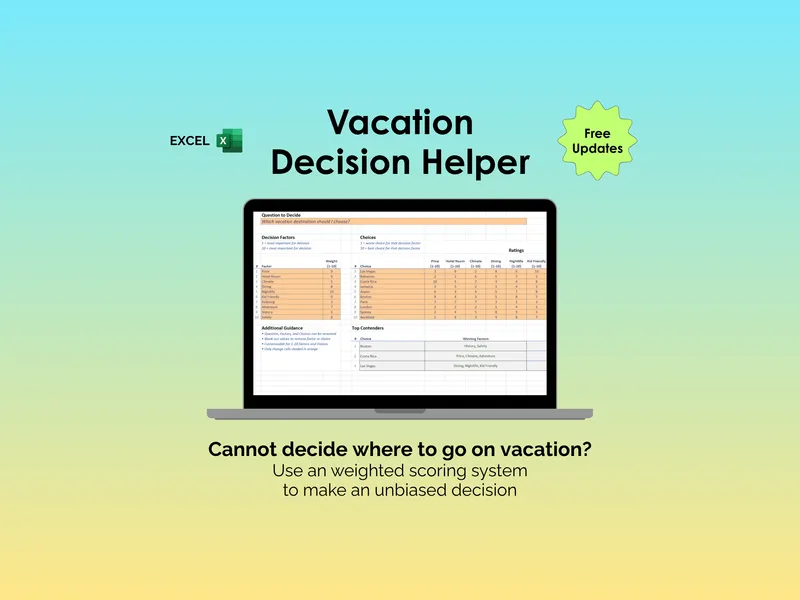
If you’d rather not eyeball it, a tool like the Vacation Decision Helper lets you score both options across cost, time, and hassle and see which one actually pencils out — and the Bill Tracker is handy for capturing the true all-in spend once the trip wraps, so next year’s decision starts from real numbers instead of a hunch.
It depends — but now you know exactly what it depends on.
Once you’ve decided, plan the trip you picked
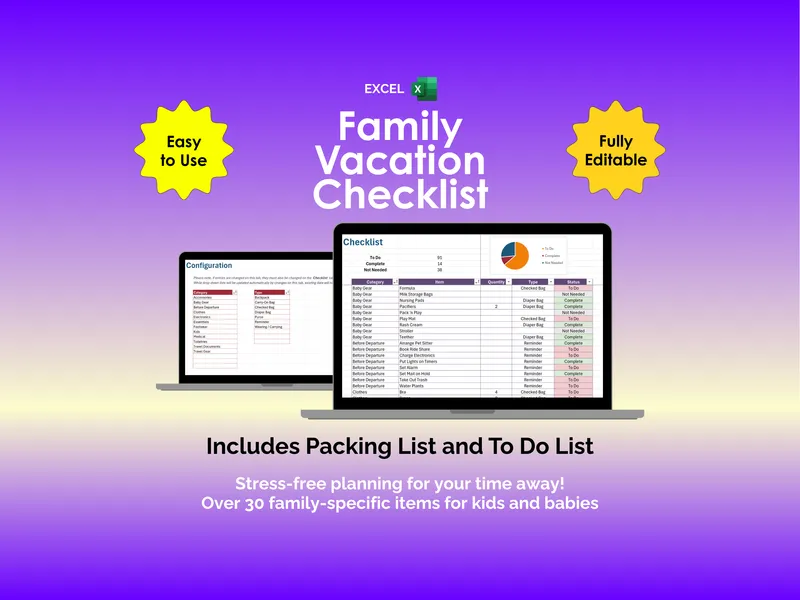
The vacation is half-won before you ever leave the driveway. Whichever way you go, the families who travel smoothly are the ones who decided the logistics in advance instead of at the gate or the on-ramp. Map your packing, your budget, and your buffer time, and the day-of stress mostly evaporates — a family vacation checklist keeps the gear, documents, and to-dos from turning into a frantic last morning. And if your dates are still loose, our guide to planning a last-minute getaway without overspending pairs nicely with whatever you choose here.
The takeaway: there’s no universally right answer to road trip versus flying — there’s only the right answer for your headcount, your distance, and your patience. Count the heads, measure the real time, total the real cost, and the choice stops being a debate and starts being arithmetic.