
What the markup is applied to
A markup is only as honest as the cost underneath it. For a handmade piece that cost has four parts, and skipping any one of them inflates the markup you think you are earning:
- Metal, by weight. The finished piece on a 0.01 g scale, grossed up for the scrap you paid for but did not sell, at your own cost per gram.
- Components. Stones, findings, chain by the inch, solder by the join — and the box, the card and the mailer.
- Studio overhead. Bench rent, torch gas, insurance, tools and show fees, divided by the hours you actually work, applied to the minutes the piece took.
- Your own time, at an hourly rate you decided on rather than one left over at the end.
Add those four and you have the piece's total cost. That is the number a markup multiplies — and it is also the floor beneath every price, because it already contains your wage.
Why 2x total cost is the number to know
Price a piece at twice its total cost and something useful happens. A shop can buy it from you at half your retail price — which is what keystone means, and what a stockist will expect — and both of you still work.
Price it below 2x and the arithmetic quietly closes the wholesale door: there is no longer room for a stockist's margin and your hourly in the same price. That is a perfectly legitimate business decision, and plenty of excellent makers sell only direct. The point is to make it a decision rather than a discovery.
| Markup on total cost | What it means in practice |
|---|---|
| 1.0x | You are paid exactly your target hourly and the business itself earns nothing to reinvest. This is the floor, not a price. |
| 1.5x | A direct-only price. It works at your own table, and on consignment at a shop's 30-40% commission — rarely at a gallery's 50%. A wholesale keystone leaves too little. |
| 2.0x | The handmade convention. A stockist can pay half and double it, and you still clear your hourly in both channels. |
| 2.5x-3x | Signature or one-of-a-kind work, where design, reputation and demand — not cost — set the price. |
Markup is not margin
The two get used interchangeably and they are not the same number. Both measure the same gap — price minus cost — but against different denominators:
- Markup % = (price − cost) ÷ cost. Measured against what the piece cost you.
- Margin % = (price − cost) ÷ price. Measured against what you charge.
- A "2x markup" is the same thing as a 100% markup — the multiple is 2, the percentage added is 100. A piece costing $50 sold at $100 is a 100% markup and a 50% margin.
- To convert between them: margin = 1 − 1 ÷ multiple. A 2x multiple gives 1 − 0.5 = a 50% margin; a 1.5x multiple gives 1 − 0.667 = a 33% margin.
Quote a "50% markup" to a shop when you meant a 50% margin and the difference is not academic. On that $50 piece a 50% margin prices at $100 and a 50% markup prices at $75 — a quarter less than you intended, and half the gross profit.
The number that matters more than the markup
A markup is a rule of thumb. What it is standing in for is the question you actually need answered: what does this piece pay my hands per bench hour?
Margin percentage will not tell you. At similar prices, a 60% margin on a piece that takes three hours is a worse business than a 45% margin on one that takes twenty minutes. Divide what is left after the materials and the studio by the hours the piece took, and your catalog reorders itself in ways the price tags never suggested — usually with the small, fast, repeatable pieces near the top.
Why a fixed markup drifts out of date
A markup is a multiple of a cost, and one of those costs moves on its own. Precious metal is quoted per troy ounce — 31.1034768 grams, not the 28.3495 g ounce on a kitchen scale — and the price changes daily. A pendant costed in the spring at one silver price is a different pendant in the autumn, at the same sticker.
Two habits fix it: re-enter your metal prices from your most recent invoice on the first of the month, and keep the costs in one place so a single change reprices the whole catalog instead of fourteen separate files.
Where markups go wrong
- Marking up the metal but not the drawer. Findings, solder, pickle, polishing papers and packaging routinely add up to more than the silver in a small piece.
- Costing a batch at the one-off rate. Making ten pairs is not ten times the work of making one — you set up, solder and tumble once. A run-rate is the difference between "wholesale never works" and a standing order.
- Using the kitchen ounce. Swapping 28.3495 g for 31.1034768 g puts every metal cost you calculate out by about 10%, in the same direction, forever.
- Treating consignment as wholesale. You keep more of the retail price, but you also carry the stock, the insurance risk and the wait. It is a third channel, not a nicer name for the second.
- Forgetting the scrap allowance. You paid for the whole sheet, including the part that became filings.
Related templates and concepts
A jewelry markup is applied on top of your cost of goods sold and produces the profit margin that decides whether a piece paid; keystone pricing is the convention that makes 2x the number to beat. To see the method applied end to end, read how to price handmade jewelry, or weigh a workbook against dedicated software in spreadsheet vs jewelry pricing app. Every tool for makers sits on the templates for craft sellers hub.
Templates that implement this
Tools that build the price from the cost
3 templates
A connected jewelry workbook that costs each piece from metal weight and a real bill of materials, then shows what retail, wholesale and consignment each pay you per bench hour.
- $24.95 Spreadsheet

Jewelry-Maker Pricing & Materials Workbook — Cost by Metal Weight, Component Inventory & a Wholesale/Consignment Price Ladder (Excel + Google Sheets)
Cost every piece from the metal it weighs and the components it consumes — then see what retail, wholesale and consignment each pay you per bench hour.
Operator OSView details - $24.95 Spreadsheet
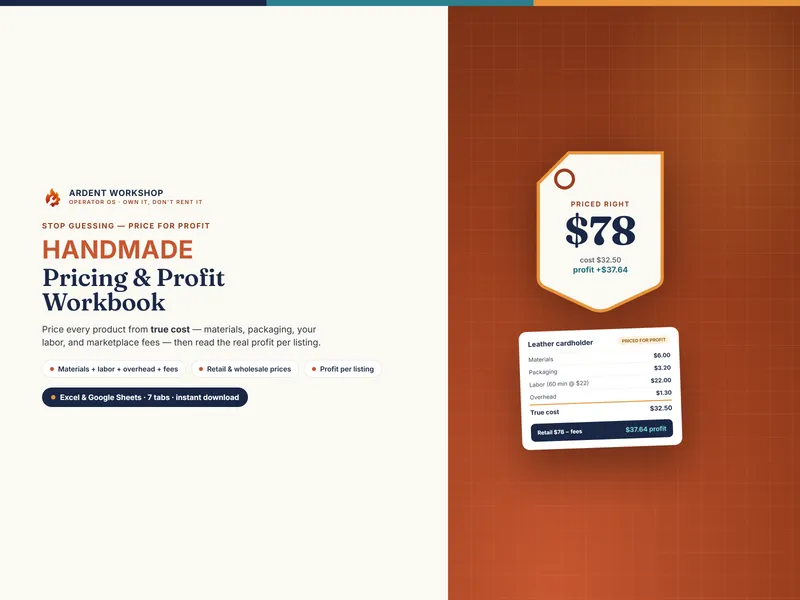
Handmade-Seller Pricing & Profit Workbook — Price Your Craft from True Cost, Markup vs Margin, Marketplace Fees & Wholesale (Excel + Google Sheets)
A handmade pricing workbook for Excel & Google Sheets — price every product from true cost (materials, labor, overhead, fees) and see the real profit on each.
Operator OSView details - $4.95 Excel
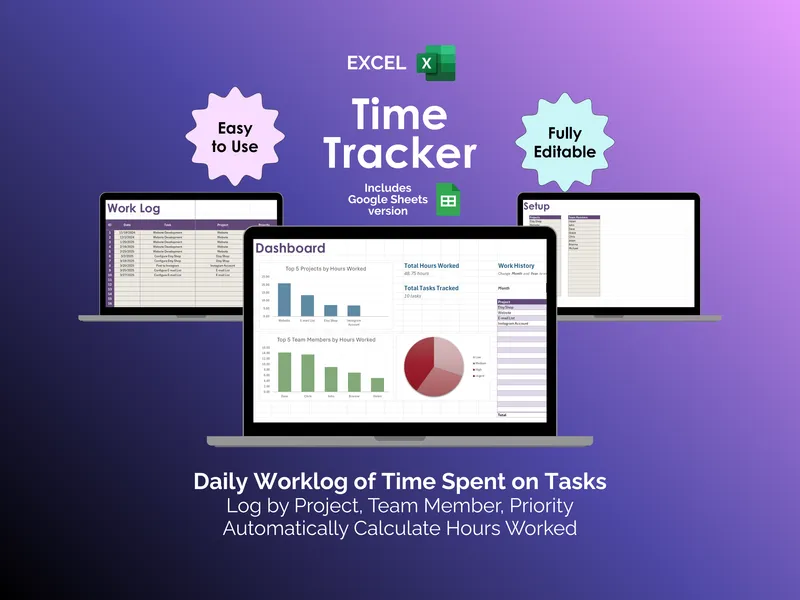
Time Tracker - Excel
It's Friday afternoon and you owe three clients an invoice. This excel time tracker logs hours by project, team member, and priority, then totals them for you.
Project ManagementView details