The formula
A common inventory calculation is beginning inventory plus purchases and other includible costs, less ending inventory. Manufacturing and other accounting methods can require additional adjustments. It is not simply the cash spent on ingredients this month.
IRS Publication 334 explains U.S. small-business inventory and COGS treatment. Packaging treatment depends on its function; not every box or mailer is an inventory cost. A sole proprietor cannot deduct the value of their own labor.
Keep the cost categories separate
- Record purchased goods and materials with invoices, quantities and dates.
- Keep paid production labor and other production costs identifiable.
- Record packaging, outbound shipping and selling fees separately for classification.
- Keep inventory records and ask your preparer which method applies to your business.
Choosing a convenient category does not make it appropriate for a return. Ask how each cost is treated, and avoid including it in both COGS and another expense line.
Gross profit and gross margin
Gross profit is revenue less COGS; gross margin is gross profit divided by revenue. A $40 sale with $18 in COGS has $22 gross profit and a 55% gross margin. This is before selling expenses and other overhead, and it is not necessarily cash available to spend.
How to calculate per-unit COGS for a handmade product
Start with quantities and purchase costs for the materials used, then identify the other production costs assigned under your accounting method. Divide an appropriate batch cost by its saleable yield. Track waste and unsold inventory rather than assuming every unit produced was sold.
For pricing, you can separately estimate the value of your own time, packaging, selling fees and overhead. Label the result a pricing-cost estimate. For example, $8 of materials plus $12 of estimated owner time gives a $20 planning subtotal, not automatically $20 of deductible COGS.
Common mistakes
- Using the same total for pricing, gross margin and taxable profit without checking what it contains.
- Counting supplies, shipping or labor twice.
- Ignoring waste, inventory on hand or changes in purchase costs.
- Confusing markup (profit divided by cost) with margin (profit divided by revenue).
Related templates and concepts
COGS is the input to profit margin and the focus of recipe costing for food sellers specifically. See the templates for home bakers, templates for craft sellers, and templates for Etsy sellers hubs for the full small-business toolset.
Templates that implement this
Templates that calculate COGS
7 templates
Ingredient costing, recipe pricing, packaging math, labor allocation — built for the small businesses that actually need to get this number right.
- $24.95 Spreadsheet
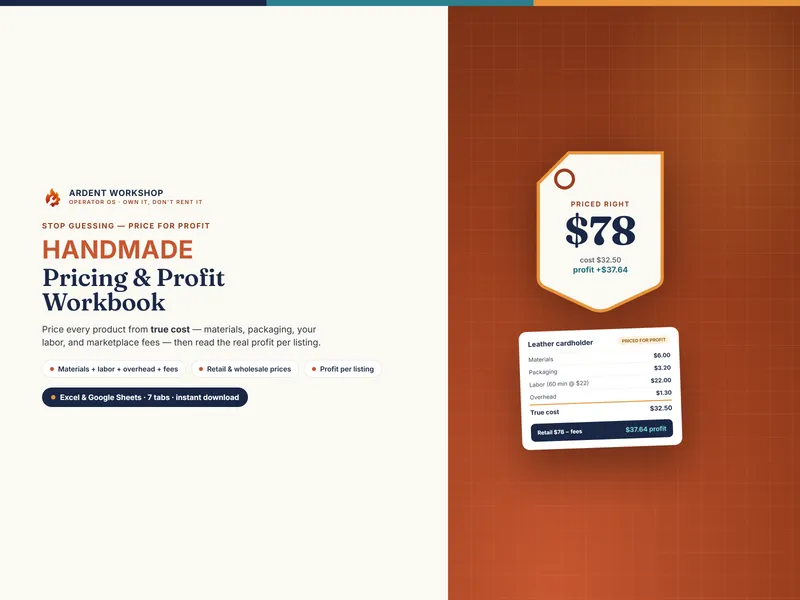
Handmade-Seller Pricing & Profit Workbook — Price Your Craft from True Cost, Markup vs Margin, Marketplace Fees & Wholesale (Excel + Google Sheets)
A handmade pricing workbook for Excel & Google Sheets — price every product from true cost (materials, labor, overhead, fees) and see the real profit on each.
Operator OSView details - $7.95 Excel
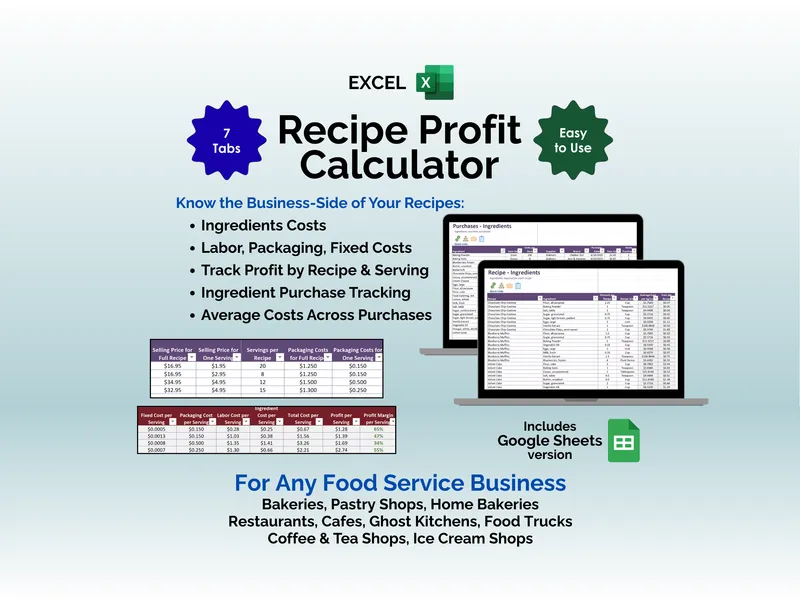
Recipe Profit Calculator - Excel
Pricing cakes by gut feel and hoping it covers cost? This excel recipe profit calculator turns ingredients, yield, and labor into a real margin per recipe and per serving.
Operator OSView details - $7.95 Sheets
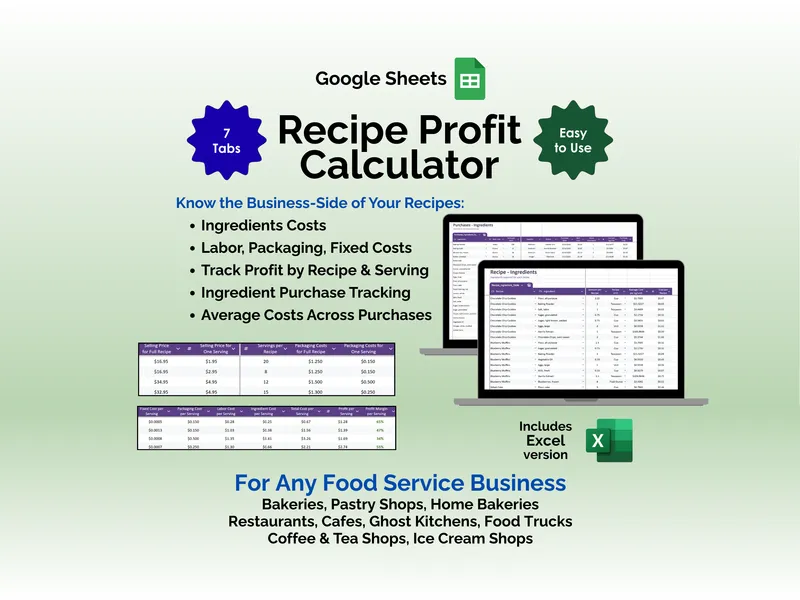
Recipe Profit Calculator - Google Sheets
Food businesses guess at pricing because the costing math is annoying. This google sheets recipe profit calculator returns per-recipe and per-serving margins automatically, with unit conversions and purchase averaging.
Operator OSView details - $29.95 Excel
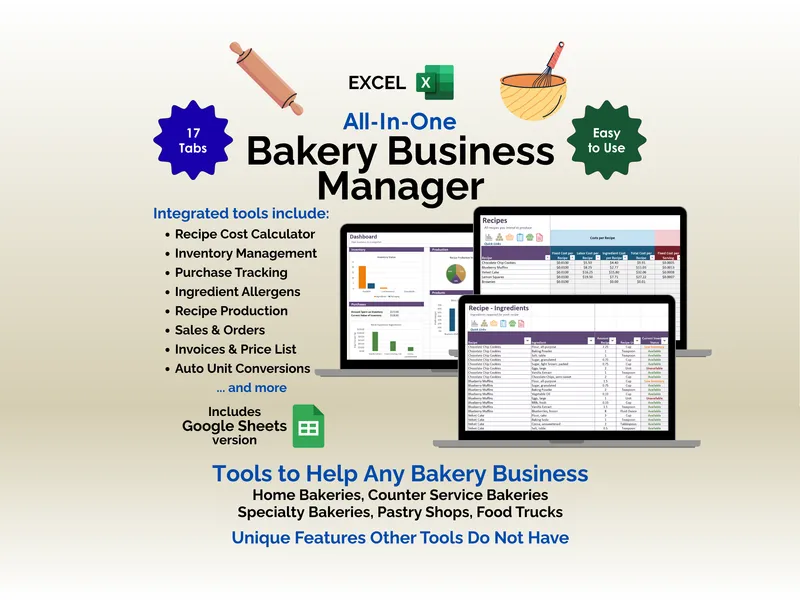
Bakery Business Manager - Excel
Bakery Business Manager is a 17-sheet workbook for home bakers and small bakeries, connecting ingredient inventory, recipe costing, sales, invoices, and profit. Excel and Google Sheets versions are included.
Operator OSView details - $29.95 Sheets
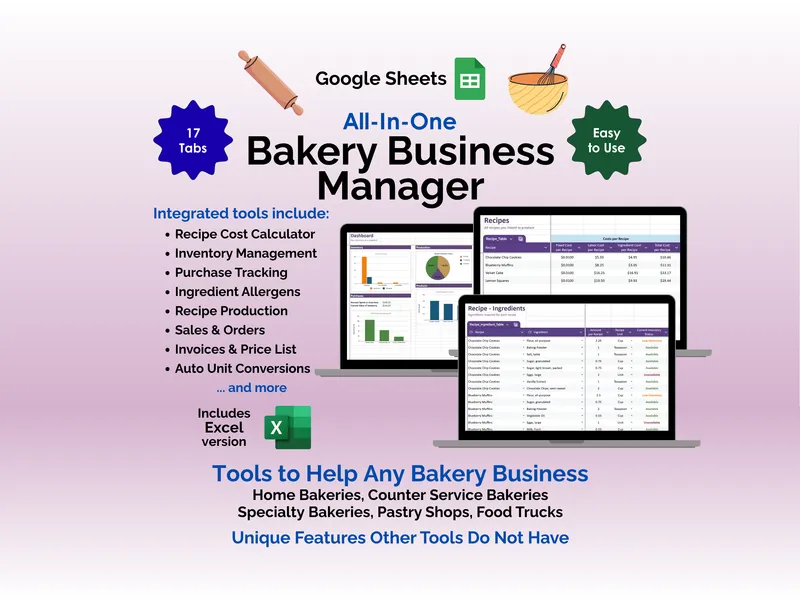
Bakery Business Manager - Google Sheets
Home bakers price by feel and lose money on every order. This Google Sheets bakery business manager turns recipe costs into product margins across 17 connected tabs.
Operator OSView details - $29.95 Excel
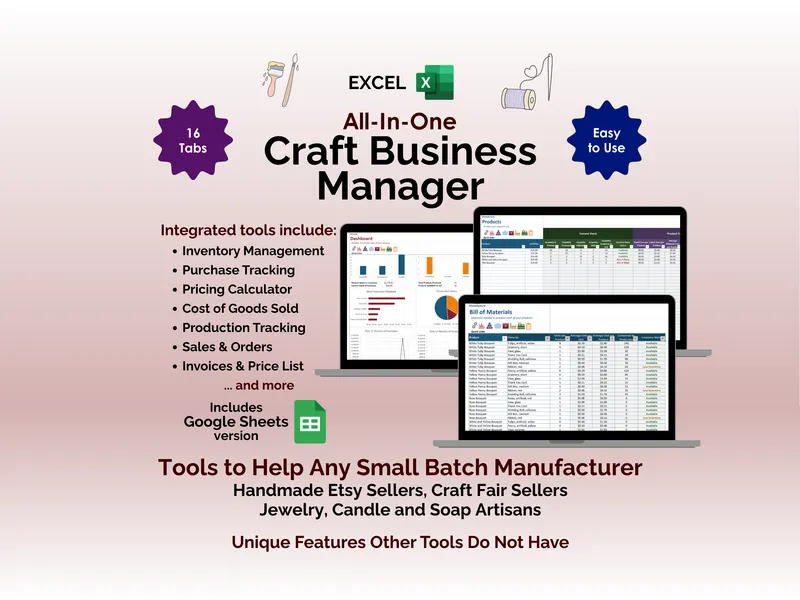
Craft Business Manager - Excel
Craft Business Manager is a 16-tab workbook for handmade sellers, connecting materials, product costs, production batches, sales, and invoices. Excel and Google Sheets versions are included.
Operator OSView details - $29.95 Sheets
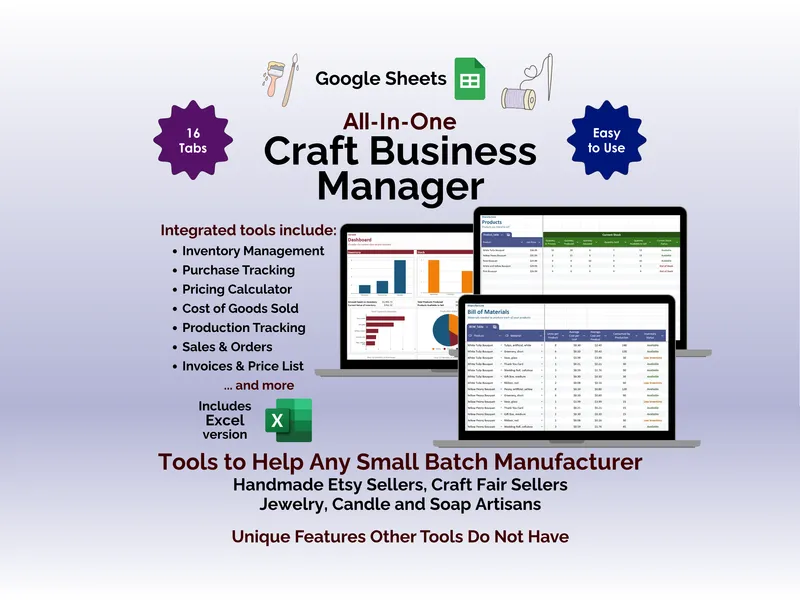
Craft Business Manager - Google Sheets
Sit ten craft sellers down and you'll get two answers about margin. This google sheets craft business manager turns raw material costs into priced products automatically.
Operator OSView details