The three main kinds
- Airline miles. Earned by flying (and often by co-branded card spend), redeemed for flights and upgrades. Miles frequently expire after a period of account inactivity rather than on a fixed date.
- Hotel points. Earned by staying (and card spend), redeemed for free nights. Some expire on inactivity; some don't expire at all.
- Credit-card points. Earned by spending on a rewards card. Some are fixed to one airline or hotel; the most flexible are transferable points you can move to several partners. Card points usually don't expire while the card is open.
Points aren't dollars — value varies
A balance of 50,000 points means nothing until you know what a point is worth to you. The common yardstick is cents per point: divide what an award would cost in cash by the points it takes. Airline miles are often worth somewhere around a cent or a bit more; hotel points frequently less; transferable card points can be worth more moved to the right partner. But these are ranges, not facts — your redemption sets the real value, and programs change award prices constantly.
Expiration is the biggest risk
The most painful way to lose points is to let them expire — and it's the most avoidable. Many programs tie expiration to inactivity: no earning or redeeming for, say, 18 or 24 months. That's actually good news, because almost any activity — a small portal purchase, a points transfer, a modest redemption — usually resets the clock. The catch is you have to notice before the date. A tracker that flags anything expiring soon is what turns "I forgot I had those" into "I kept them."
Why track programs in one place
Each program's app shows only its own slice, and none warn you across the others. Hold balances in ten programs and you have ten places to check and no single view of what you have, what it's worth, or what's about to lapse. Pulling them into one owned file — like the Travel Points & Miles Rewards Tracker — gives you the picture no single program app will: total value, every expiration, and how close you are to the trips you're saving for.
A note, and a limit
This is general background, not financial or travel advice, and not affiliated with any program. Every program sets its own rules for earning, expiration, award prices, and transfers, and those change — always confirm the current terms with the program itself before you count on a balance or a redemption.
Related tools and concepts
To list your balances for free, the free rewards-balances starter flags what's expiring; the full Travel Points & Miles Rewards Tracker adds value, award goals, and a card-fee calendar. See how to keep airline miles from expiring, and spreadsheet vs. a points-tracking app for how an owned tracker compares.
Templates that implement this
Tools that keep your programs straight
2 templates
Every airline, hotel, and card balance in one owned file — with an estimated value, an expiration countdown, and award goals — so nothing quietly lapses.
- $13.95 Spreadsheet

Travel Points & Miles Rewards Tracker — Balances, Expiration, Award Goals & Card Fees for Excel & Google Sheets
A travel points & miles tracker for Excel & Sheets — every airline, hotel, and card balance with expiration flags, award goals, and a card-fee calendar.
TrackersView details - $6.95 Spreadsheet
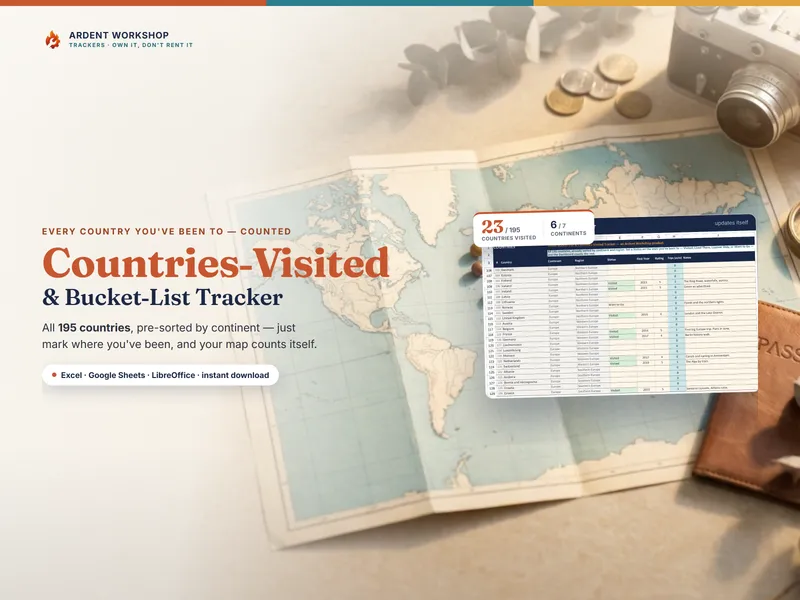
Travel Bucket-List & Countries-Visited Tracker — Excel & Google Sheets
A travel tracker for Excel & Google Sheets — mark the countries you've visited on a pre-loaded list of all 195, then count your map, continents & bucket list.
TrackersView details