The policies you are actually asked for
There is no legal list of policies a nonprofit must have. There is something more practical: a list of policies you will be asked about, by people whose answer matters — a funder deciding on a grant, an insurer pricing your cover, an auditor, and the annual information return itself.
That list is short, and it is worth knowing that the return’s own governance section opens by saying these are policies not required by the tax code. They are asked about anyway, the answers are published in a document anyone can read, and funders read them.
| Policy | Who asks | Why it matters |
|---|---|---|
| Conflict of interest, plus an annual disclosure form | The return (three separate lines), the exemption application, most grant applications | It is the one everyone asks for, and the one most often adopted and then never operated |
| Whistleblower and non-retaliation | The return; some insurers | The retaliation provision of the Sarbanes-Oxley Act is one of only two parts of that law that reaches nonprofits |
| Document retention and destruction | The return; auditors | The other Sarbanes-Oxley provision that reaches nonprofits is the document-destruction one |
| Gift acceptance | Schedule M, by name | It asks specifically whether the policy requires review of nonstandard contributions |
| Board member role and commitment | Funders, indirectly | Many foundations ask what percentage of the board gives |
| Volunteer screening, conduct and safeguarding | Insurers, parents, licensed programs | The signed screening consent is the clause liability insurers tend to ask about |
| Confidentiality and privacy | Everyone, after something goes wrong | The valuable line is the one telling someone who to call in the first hour |
The four to adopt first
If you can only get through a few this year, do these, in this order:
- Conflict of interest, with its annual disclosure form. It is asked on the exemption application, three times on the annual return, and by funders. The IRS publishes a sample policy in Appendix A of the Form 1023 instructions, and says plainly that adopting one is not required to obtain exempt status — it is asked about regardless.
- Whistleblower and non-retaliation. The one thing to get right here is a reporting route that does not run through the executive director, since the executive director is the most likely subject of a serious report.
- Document retention and destruction. The schedule is the work; the legal-hold clause is the part that matters. The moment litigation, a subpoena, an audit or an investigation becomes foreseeable, routine destruction stops — including automatic email deletion.
- Gift acceptance, if you accept anything other than cash. The moment someone offers a used van is the wrong moment to work out your position.
Adopting those four takes a single board meeting and changes four answers on your next return.
The three questions inside a conflict of interest policy
It is worth knowing why this one is asked about three separate times, because it explains the most common failure. The return asks whether you have a written policy; whether officers, directors and key employees are required to disclose annually; and whether you regularly and consistently monitor and enforce compliance — with a Yes on that last one to be described on Schedule O.
Two out of three is a No. And the pattern in small organizations is almost always the same: a good policy adopted once, filed, and never operated. The fix is a form that goes to everyone every year — including the people with nothing to declare, because a blank signed form is the evidence that the question was asked of everyone — and minutes that record a declared conflict, the recusal, and the vote when one arises.
The step almost everybody skips
A filled-in policy is a draft. It becomes your organization’s policy when the board votes to adopt it and the vote is recorded. That is the whole ceremony, it takes about ninety seconds per policy, and it is missing from almost every downloaded template — because the site that published the template had no reason to mention it.
Five steps:
- Circulate it with the agenda, several days ahead, so directors can actually read it.
- Put it on the agenda marked Decide, not Discuss.
- Move it in words that will still make sense in five years: “That the board adopt the Conflict of Interest Policy in the form circulated with the agenda, effective today.”
- Record the motion, the mover, the seconder and the vote in the minutes.
- Write the adoption date, the motion number and the next review date into a register — in the same five minutes as the vote, because nobody will do it later.
What a small nonprofit should not write from a template
Some documents should not come from a template at all:
- Articles of incorporation and bylaws. They are your organization’s constitution, they are measured against state law, and a defect is expensive to unwind.
- The exemption application. It is a tax filing, not a form-fill.
- Employment contracts, personnel handbooks, and terminating an employee. Employment law is state-specific and unforgiving.
- Fiscal sponsorship, joint ventures, and lobbying or political activity. Each carries a real risk to exempt status.
- Anything specific to a licensed program — childcare, health, housing, education, food service — where your license sets rules that override any general template.
Where to start today
Before adopting anything, spend twenty minutes filling in a one-page register of what you already have: each policy, when the board adopted it, when it was last reviewed, and where it is filed. That exercise is what shows you the real gaps — and it is startlingly often the moment somebody discovers the IRS determination letter exists in exactly one departed staff member’s email account.
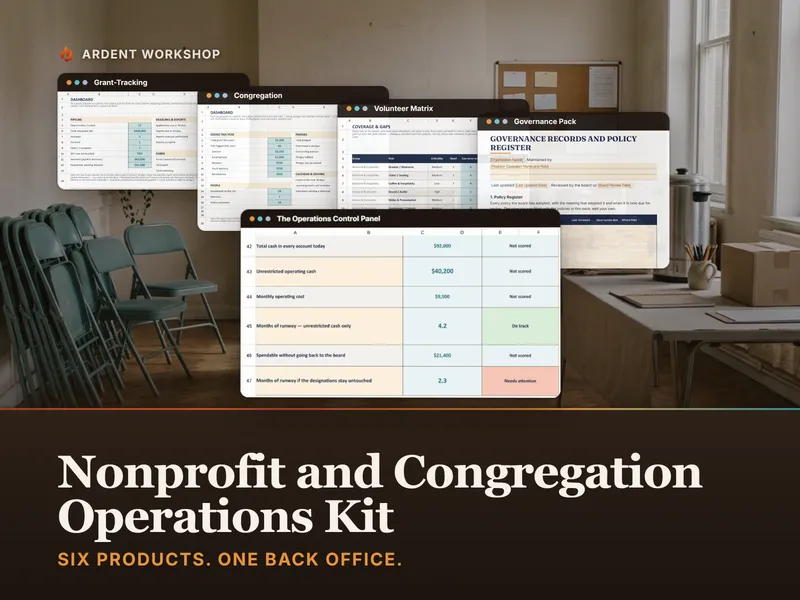
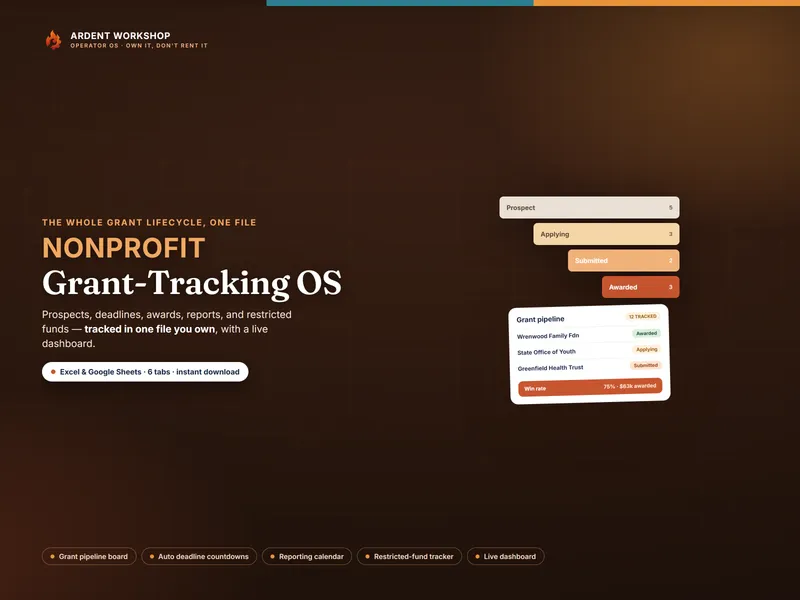
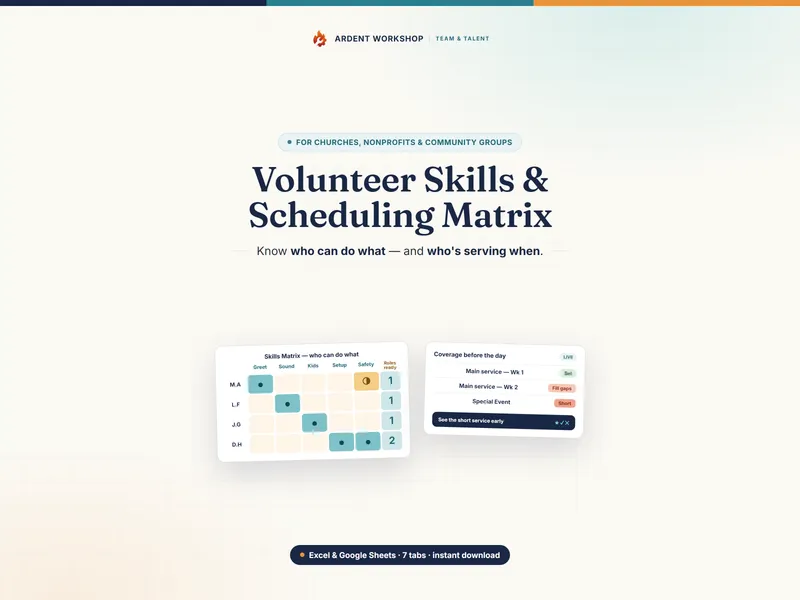
The free board meeting agenda and minutes templates are ungated and give you the two documents this whole process runs through: an agenda with a decide-or-discuss column, and minutes in the motion-and-vote format that makes an adoption vote provable. The Nonprofit Board & Volunteer Policy Template Pack adds the sixteen documents themselves, a printable map from each governance question to the document that answers it, and a guide that gives every document its own page. That pack also ships inside the Nonprofit & Congregation Operations Kit, which sets it beside the grant, giving and volunteer files a board is asked about in the same meeting.
For the vocabulary, see what a conflict of interest policy is and what a gift acceptance policy is. Weighing the build-or-hire question? See policy templates vs hiring a nonprofit lawyer.
This is general information about how small nonprofits organize their governance paperwork, not legal, tax, or compliance advice. Requirements differ by state and change over time, and where anything here and your own articles or bylaws disagree, your bylaws win. Have a lawyer who knows nonprofit law in your state review anything before your board adopts it as policy.