The Japanese animation industry just hit a record 3.84 trillion yen — roughly $25 billion — in 2024, with overseas revenue growing 26% in a single year (AJA Anime Industry Report 2025, via Anime News Network (opens in new tab)). Crunchyroll just crossed 21 million paid subscribers (opens in new tab), up from 17 million a year earlier. Demon Slayer just printed money at the global box office.
So why are studios quietly walking away from the 13-episode format that built all of it?
If you’ve watched anime seriously over the last two years, you’ve felt this shift even if you couldn’t name it. Shows that would have been a clean, single-cour adaptation in 2018 are now arriving as split releases, 2-cour commitments, or open-ended weekly runs with no clear “season finale” in sight. The lean 13-episode adaptation — the format that taught a generation of viewers what “seasonal anime” even meant — is not dead, but it is losing market share fast.
Here’s what’s actually happening underneath the headlines, why studios are doing it, and what it means for the way you watch.
What “1-cour” means (and why it became the default)
A cour is a Japanese broadcast quarter — about 10 to 13 weekly episodes. A “1-cour” anime is the single-quarter, ~13-episode show: pick it up in spring, finish it in summer, move on. For most of the 2010s, this was the default shape of TV anime. It fit Japanese broadcast slots cleanly, it was a manageable production commitment, and — critically — it acted as a 13-episode commercial for the source manga or light novel.
That last point matters more than most viewers realize. The economic engine of modern anime isn’t usually the anime itself. It’s the merchandise and licensing (opens in new tab) that the show drives, plus the manga sales spike that reliably follows a successful adaptation. A 1-cour adaptation that covers the first few volumes of a hit manga is often the single biggest sales catalyst that manga ever gets. That’s the deal: the show is the trailer, the manga is the product.
When that’s the model, 13 episodes is the right number. Long enough to hook viewers. Short enough to ship before quality collapses. Cheap enough that a studio can take a risk on it.
The shift: split-cour, multi-cour, and continuous runs
The 1-cour adaptation isn’t gone. But the share of the schedule it occupies is shrinking, and three other formats are eating its lunch:
| Format | What it looks like | Why studios are choosing it |
|---|---|---|
| Split-cour | 12–13 episodes, a break of one or two seasons, then another 12–13 episodes counted as the “second cour” of the same season | Buys production breathing room without losing audience continuity |
| Multi-cour (2-cour, 4-cour) | 24–26 or 48–50 episodes airing back-to-back | Locked-in slots for tentpole IP; better unit economics on a guaranteed hit |
| Continuous weekly | No clear season boundary; the show just keeps going | Reserved for top-tier flagship IP (One Piece, Detective Conan, Doraemon) |
Industry coverage in late 2025 and into 2026 keeps coming back to the same observation: record production volume is colliding with a labor and schedule crunch, and split cours are how studios are absorbing the impact (GamesRadar, May 2026 (opens in new tab)). Even One Piece — historically the most continuous show on television — is slowing to a maximum of 26 episodes in 2026, split into two cours. Netflix’s JoJo’s Bizarre Adventure: Steel Ball Run was announced as a split-cour release (opens in new tab) across its entire run, with the second STAGE arriving weekly in fall 2026.
When the biggest franchises in the industry stop treating “1-cour and done” as the default, the rest of the schedule follows.
Why studios are actually doing this
Three forces are pushing in the same direction at once.
1. Streaming economics reward retention, not bingeing
Crunchyroll’s reported jump from 17 million to 21 million subscribers in a single year wasn’t driven by people signing up to binge a finished season and cancel. It was driven by week-to-week appointment viewing — the same dynamic that makes split-cour and multi-cour shows valuable. A 26-episode run, split or otherwise, keeps a subscriber locked in for two billing quarters instead of one. From the streamer’s perspective, that math is dramatically better.
Sony’s Pictures Entertainment segment posted operating income of $858 million for FY2025, with much of the strength attributed to the Crunchyroll business (Deadline (opens in new tab)). When the streaming half of your business is the strongest half, you commission shows that protect that subscriber base. That means longer formats and split cours.
2. The production pipeline literally cannot keep up
Trade outlets keep flagging the same problem: too many shows in production, not enough animators, schedules slipping into “we shipped a recap episode because nothing else was finished” territory. Split-cour is a polite way of saying we need three more months to finish the back half. Multi-cour with a known long pre-production runway is another way of saying the same thing more elegantly.
A 1-cour show offers no slack. If a key episode falls behind, the whole season’s reputation tanks. A split-cour show has a built-in buffer that doesn’t look like a delay — it looks like a “second cour.”
3. The overseas market grew 26% in one year, and it wants more
The most underrated number in the AJA report (opens in new tab) is the gap between domestic and overseas growth. Japan’s domestic anime market grew 2.8% in 2024. The overseas market grew 26%. Overseas now accounts for 56% of total industry revenue — the first time foreign sales have decisively outweighed the home market.
International audiences who arrived via Netflix, Crunchyroll, and Disney+ in the last five years have very different expectations than the domestic TV audience. They binge. They want long arcs. They came in through Attack on Titan’s 4-season epic and Demon Slayer’s movie-and-cour cycle, not through 1-cour late-night slots. Studios are reshaping output to fit the audience that’s actually paying.
What this means for your watchlist
If you’re a casual viewer who picks up one or two shows a season — say, the headliners from our summer 2026 anime preview — you’ll barely notice. But if you’re a completionist who actually wants to finish your backlog, three things change.
- Your “currently watching” pile gets older. A split-cour show with a one-season gap means you’ll be tracking the same title across six to nine months. That’s harder than it sounds when three new seasons of fresh shows have aired in between.
- The “wait until it’s all out” strategy gets longer. A 4-cour show takes a year to finish airing. A split-cour with one break takes nine months. The classic “I’ll wait until the whole season is done” approach now means waiting close to a year for some shows.
- Dropped-and-forgotten becomes the default failure mode. When the gap between cours is long enough, viewers who liked the first half don’t always come back for the second. A tracker that surfaces “you watched cour 1, cour 2 starts next week” is now genuinely useful, not just a nice-to-have.
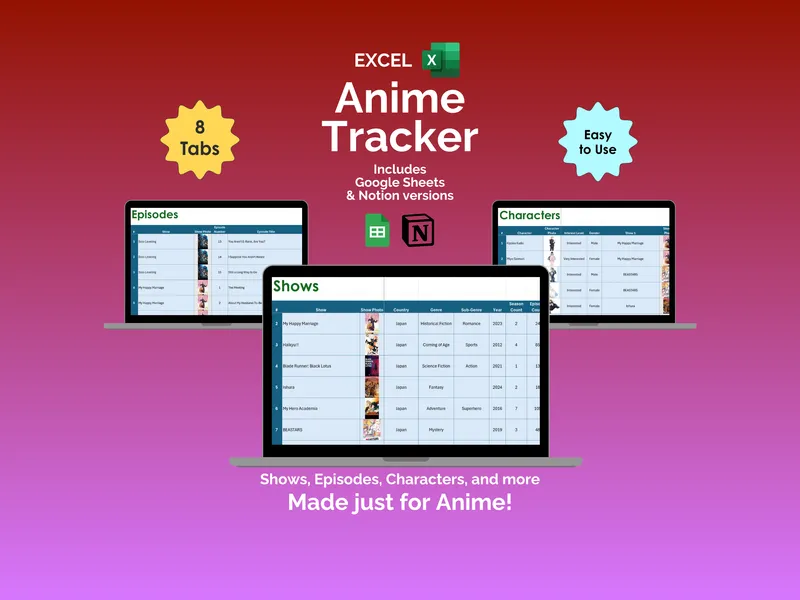
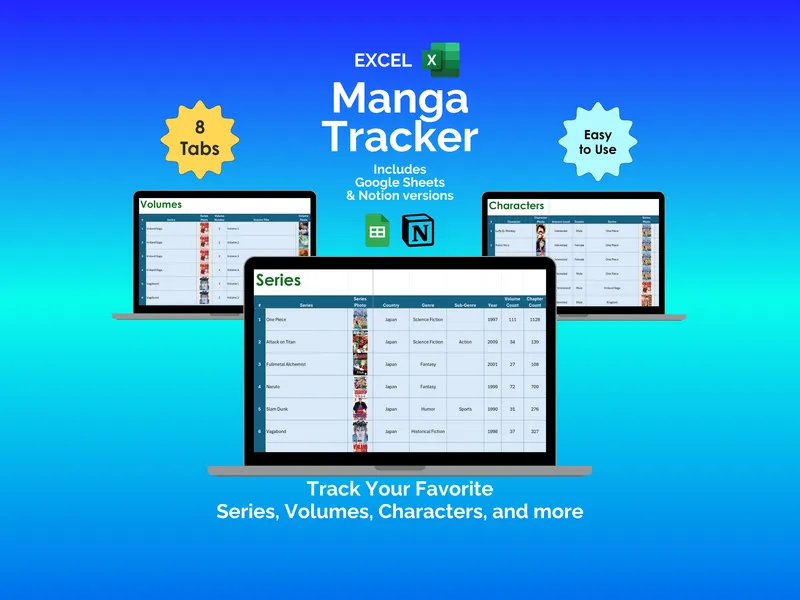
This is exactly why a structured watchlist beats brain-only tracking right now. The Anime Tracker lets you log not just shows but their cour structure — current cour, gap, expected return — so a show paused for two seasons doesn’t quietly vanish from your radar. Pair it with the Manga Tracker if you’ve started following the source material between cours (which, increasingly, is the smart move), or grab the Asian Media Bundle to cover anime, manga, K-dramas, and K-pop in one shared structure.
What to watch for in the rest of 2026
Three things to keep an eye on as the year unfolds:
- Whether the 13-episode count survives at all for mid-tier shows. Studios may compress to 10–11 episodes for shows that don’t justify 12-13 — moving toward a “prestige short” model for adaptations of less-proven manga.
- How streamers handle the gap between cours. Expect more “recap movies,” more inter-cour OVAs, and more cross-promotion with the source manga during the off months. The gap itself is becoming a marketing surface.
- Whether the next major flagship adaptation gets announced as 1-cour or multi-cour out of the gate. Five years ago, almost everything started as 1-cour and only earned a sequel if it hit. Increasingly, the biggest properties are being greenlit as multi-cour from day one. That’s the real signal of where confidence sits.
The 13-episode format isn’t dead. It’s still the right shape for a one-shot adaptation of a contained story. But as the default operating mode of the industry? That era is quietly ending — and 2026 is the year the receipts are starting to show up in the schedule.
Sources
- Global Anime Market Grew 15% to Record 3.84 Trillion Yen in 2024 — Anime News Network (opens in new tab)
- Japan’s Anime Market Hits Record $25 Billion, Driven by Global Boom — Variety (opens in new tab)
- Crunchyroll Reaches 21 Million Subscribers — Broadband TV News (opens in new tab)
- Sony Pictures’ FY Sales Boosted By Crunchyroll But Profits Dip — Deadline (opens in new tab)
- JoJo’s Steel Ball Run to Stream 2nd STAGE Weekly in Fall 2026 — Anime Corner (opens in new tab)
- New anime in 2026: the biggest upcoming and ongoing shows — GamesRadar+ (opens in new tab)