What goes in an emergency binder
An emergency binder — the grab-and-go record a household keeps ready — gathers the information you'd reach for if you had ten minutes to leave, or had to file a claim after a loss:
- An evacuation plan — where the household meets (near home and outside the neighborhood), the out-of-area contact everyone calls, where you'd go, the routes, and who grabs what.
- A document grab-list — the papers to take in a hurry (IDs, insurance, deeds, titles), where each original is, and whether you have a digital copy ready.
- A home inventory for claims — what you own, room by room, with an estimated replacement value, so an insurance claim after a fire or flood is a document you already have.
- Insurance and emergency contacts — every policy with its claims phone, and the numbers you'd want on paper when a phone is dead.
- Medical and medications — each person's medications, conditions, allergies, and doctors — the details a pharmacy or an ER needs.
- A go-bag checklist and utility shutoffs — what's packed and what's still missing, and where the gas, water, and power shutoffs are.
An emergency binder is not professional advice
This is the most important distinction. An emergency binder organizes a household's own information so it's ready before an emergency and faster to recover after one; it does not respond to the emergency itself. It is not professional emergency, medical, insurance, or legal advice, and it is not a substitute for the guidance of local authorities, a doctor, or an insurer. In an actual emergency, always follow the instructions of local officials and call your local emergency number. The replacement values you record are your own estimates for organizing a claim, not appraisals.
Record the facts, never the credentials
Because an emergency binder is carried in a go-bag, printed for the household, and sometimes handed to a neighbor, the rule that keeps it safe is to record the facts and where things live — never the credentials: write the policies, the contacts, and where the documents are — never a password, a PIN, or a full account number. Real logins belong in a password manager; the binder just notes which account exists. And keep a copy you can reach when the power's out: printed in the go-bag, and in a phone-reachable cloud account. That's the same own-it logic behind a life-admin binder.
The home inventory inside an emergency binder
The part that pays for itself after a disaster is the home inventory — a room-by-room record of what you own with replacement values. After a fire or flood, an insurer asks what you lost and what it was worth; a household that built the inventory in advance answers with a document instead of a memory test months later. A good emergency binder builds the inventory in before you ever need it, and totals it for you.
Where to start with an emergency binder
Begin with the free Emergency Grab-List — the one page of documents to grab and people to call — then organize the rest in a binder you own. If you're weighing a subscription app instead, see emergency binder vs readiness app, and if you want the exact steps, read how to make an emergency grab-list. This is a record-organizing approach — not professional emergency, medical, insurance, or legal advice.
Templates that implement this
Build your emergency binder
3 templates
A workbook that organizes your plan, the documents to grab, a home inventory that totals itself for claims, insurance, contacts, medical needs, the go-bag, and utility shutoffs — a readiness record the household owns.
- $21.95 Spreadsheet
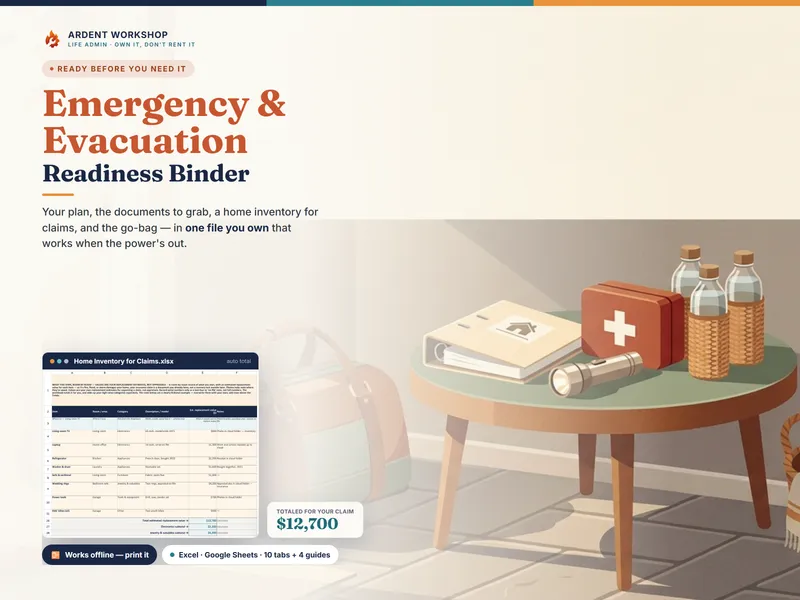
Emergency & Evacuation Readiness Binder — Family Plan, Document Grab-List, Home Inventory & Go-Bag (Excel + Google Sheets)
An emergency & evacuation readiness binder for Excel & Google Sheets — your plan, documents to grab, home inventory & go-bag in one file you own.
Life AdminView details - $14.95 Excel
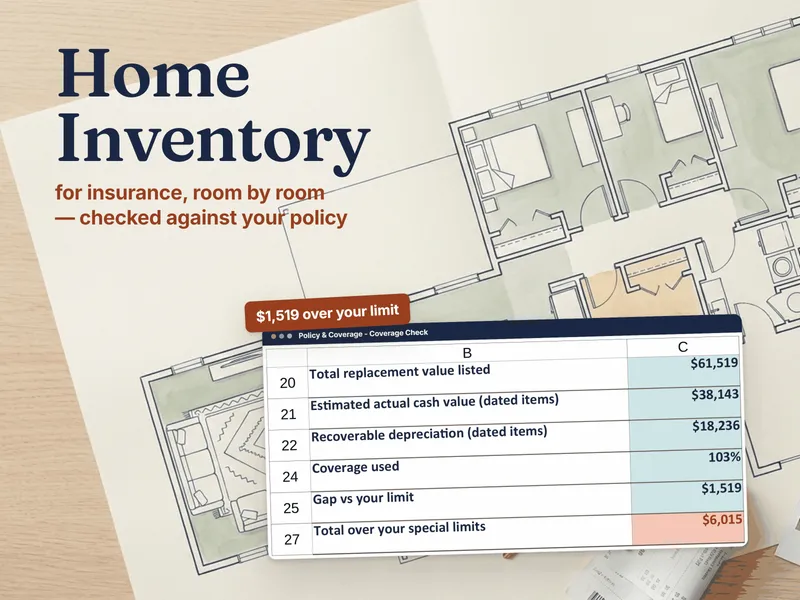
Home Inventory Spreadsheet for Excel — Room-by-Room Insurance Inventory with Proof Score, Coverage Check, Estimated ACV & Claim Worksheet
Excel home inventory for insurance: log what you own room by room, score your proof, check it against your policy limit and build a claim schedule.
Life AdminView details - $29.95 Spreadsheet
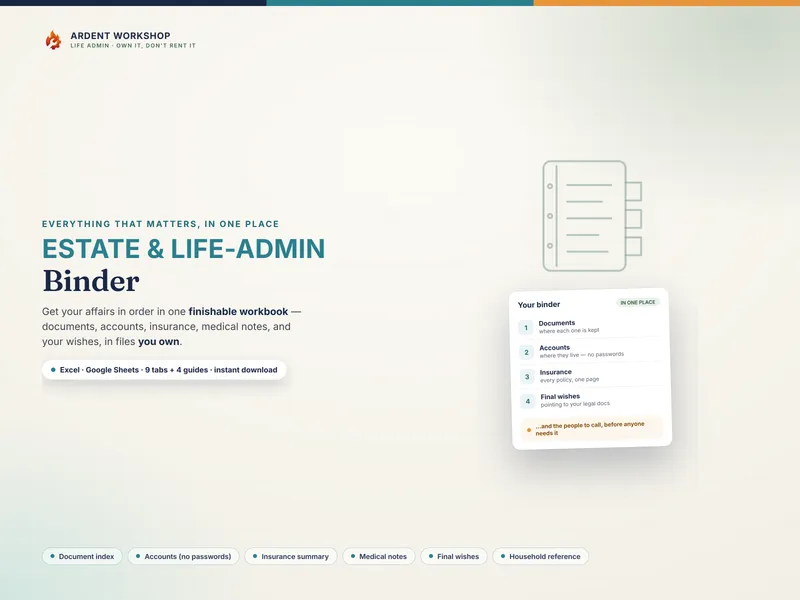
Estate & Life-Admin Binder — Important Documents, Accounts, Insurance & Final Wishes Organizer (Excel + Google Sheets)
An estate & life-admin binder for Excel & Google Sheets — organize important documents, accounts, insurance, and final wishes in one file you own.
Life AdminView details