You finally hired help for your shop. Now you’re standing in your own business wondering which parts are actually safe to let go of — and quietly terrified you’ll hand off the wrong thing and spend more time fixing it than you saved.
Here’s the 5-minute answer. What you delegate first should be the repeatable, rule-based tasks where a mistake is cheap and easy to undo. Hand those off this week. Keep the judgment calls for yourself until your helper has earned them.
The one test that decides what to hand off
Before you delegate anything, run each task through a single question:
If this goes wrong, is it cheap and reversible — or expensive and hard to undo?
A mispacked order you can reship. A wrong price that sat live for a week, or a snippy reply to an angry customer, you can’t take back. That gap is the whole framework. Cheap-and-reversible-and-rule-based tasks go first. Expensive-or-irreversible-or-judgment-heavy tasks stay with you.
That’s it. Everything below is just applying that one test.
Cheap and reversible: what those words actually mean
The test only works if you’re honest about the two words in it, and most people fudge them. So, precisely:
- Cheap means the cost of the mistake is small — the postage on a reship, twenty minutes redoing a photo, one refunded item. It is not about how important the task feels. Packing orders is important. Getting one wrong is still cheap.
- Reversible means you can put it back the way it was, and the customer either never knows or doesn’t care. A mislabeled box comes back. A public price change that thirty people saw doesn’t.
They’re two different dimensions, and it’s the combination that decides. Laid out as a grid:
| | Cheap to fix | Expensive to fix | | Easy to undo | Delegate first. Your whole left column lives here. | Delegate later, with a checkpoint before it goes live. | | Hard to undo | Delegate later, once there’s a written script to follow. | Keep it. This is your column, and it stays yours. |
Most tasks aren’t ambiguous once you plot them. Packing an order: cheap, easy to undo — top-left, go. Setting a price: expensive, hard to undo — bottom-right, yours. Replying to a routine “where’s my order?” message: cheap, easy to undo — top-left. Replying to a furious one-star reviewer: expensive, hard to undo — yours.
The tasks that feel hard to sort are almost always sitting in one of the two off-diagonal boxes, and the answer there is the same: not never, just not yet — and not without a written procedure.
What to delegate first, later, and never
It’s easy to try to figure this out task by task and freeze. Don’t. Sort every job you do into three buckets:
| Delegate first (this week) | Delegate later (once proven) | Never hand off |
|---|---|---|
| Packing and shipping orders | Inventory counts and restock alerts | Pricing and margin decisions |
| Order status updates to buyers | Writing listing copy from your template | Final quality check on what ships |
| Photographing finished stock | Light social posting from a calendar | Bank, payout, and password access |
| Re-listing sold-out items from a saved template | Custom-order intake and quoting drafts | Your reply to an escalated or angry customer |
| Answering FAQ messages from a script | Sourcing and reordering supplies | The brand voice and final say on returns |
| Data entry and label printing | Drafting your weekly to-do list | Anything tied to your name legally or financially |
Start with the entire left column. It’s the bulk of the hours, it’s the most repetitive, and a mistake there costs you a re-ship, not your reputation.
The middle column waits until your helper has run the left column cleanly for a couple of weeks. The right column is yours — maybe forever, maybe until you trust someone enough to apprentice them into it. Letting go of pricing or your customer voice on day one is how good helpers accidentally do expensive damage.
What the left column is actually worth
The reason to start with the boring column isn’t that it’s safe. It’s that it’s where your hours are. Judgment work feels like the bulk of the job because it’s the part that’s stressful — but stress and hours are not the same thing, and the arithmetic usually says something uncomfortable.
Here’s a worked example. The numbers are placeholders — run it with your own week and your own volume.
Say you ship 40 orders a week. Time yourself honestly on one pass of each task:
| Left-column task | Time each | Times per week | Weekly hours |
|---|---|---|---|
| Pack and label an order | 6 min | 40 | 4.0 |
| Send an “order shipped” message | 1 min | 40 | 0.7 |
| Photograph finished stock | 4 min | 15 | 1.0 |
| Re-list a sold-out item from a template | 5 min | 10 | 0.8 |
| Answer an FAQ message from a script | 3 min | 20 | 1.0 |
| Data entry and label printing | — | — | 1.5 |
| Total | 9.0 |
Nine hours. Every one of them cheap, reversible, and rule-based — meaning every one of them is delegable this week, before your helper has earned a single judgment call.
Now compare that to what you’d get back by handing off the scary stuff. Pricing decisions might take you forty minutes a month. The final quality check is two minutes an order. The angry-customer reply happens twice a quarter. The right column is a small number of hours attached to a large amount of consequence. The left column is the reverse. That asymmetry is the whole reason the framework works: you can hand off most of your time without handing off most of your risk.
If nine hours a week sounds high for a shop your size, time yourself for one week before you argue with it. Almost nobody guesses this number correctly, and almost everybody guesses low.
The 5-minute move
Here’s how to actually do this today, not someday:
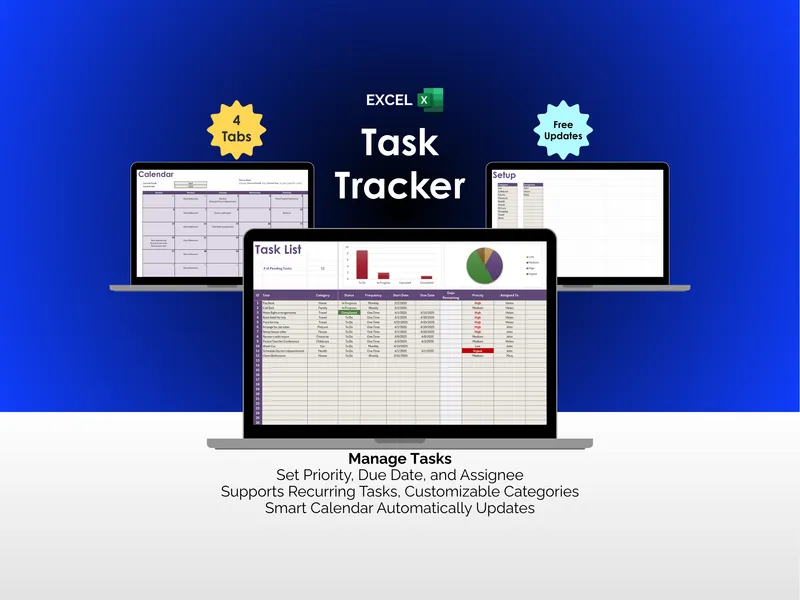
- Capture a week of your work. Open a simple list and write down every task you touched this week, however small. Don’t organize — just dump. A running task tracker makes this painless because the list already exists.
- Tag each task with the one test: cheap-and-reversible, or expensive-and-irreversible.
- Hand off the cheap-and-reversible ones first. Those are your left column. Your helper starts there Monday.
You’re not building a perfect org chart. You’re answering one question — what’s safe to let go of right now — and acting on the top of the list.
The part everyone skips: write it down once
A task isn’t really delegable until it lives somewhere other than your head. Handoffs often fail not because the helper is bad, but because the “system” was a sequence of steps only you knew.
So before you delegate a task, spend ten minutes writing the steps down once. The packing process. The exact words for an “order shipped” message. The template you re-list from. Those mini-procedures are the difference between teaching something once and re-explaining it every week. A maker’s business operating system gives those processes a home you own, instead of re-renting your own knowledge from your memory every time.
Then track what your helper can actually do yet. A training matrix — a simple grid of tasks down one side and people across the top — turns “I think they’ve got it” into “they’ve done this unsupervised three times.” It’s also how you spot, early, when one task is still done by only one person.
If you want the longer version of this, here’s a full onboarding plan for your first hire and how to train seasonal help fast without losing your rush.
How to hand a task off so it actually sticks
Picking the right task is half of it. The other half is the handoff itself — and “here, you do this now” is where most first delegations quietly fail. Four steps, in order:
- Do it once while they watch. Narrate what you’re doing and why — “I put the card face-up so it’s the first thing they see.” The why is what lets them handle the case you forgot to mention.
- They do it once while you watch. Don’t touch anything. Don’t take the tape out of their hands. Let a small mistake happen — that’s what “cheap and reversible” bought you. Correcting it in front of you now is worth ten corrections by text later.
- They do it alone; you check the output, not the process. Look at the finished box, not over their shoulder. If the output’s right and they got there differently than you would, the output is right. This is the step where most owners can’t help themselves, and it’s the step that decides whether you’ve delegated or just supervised.
- They do it alone; you stop checking. Set the date in advance — “after three clean runs, I stop looking.” Say it out loud so they know the finish line exists. A handoff without a defined end is just permanent surveillance.
That’s roughly a week per task for the simple ones. Run two or three tasks through it at a time, not ten.
Common questions about delegating shop work
What if I can’t afford for it to go wrong at all?
Then it isn’t cheap, and it belongs in the right column — that’s the test doing its job, not failing. But be careful about inflating the stakes. “I can’t afford a mispacked order” usually means “I’d be embarrassed,” not “it would cost me the business.” Embarrassment is a real cost; it’s just a much smaller one than the hours you’re burning to avoid it.
My helper is my spouse / my kid / my best friend. Does this change?
The sorting doesn’t — the conversation does. Family helpers get handed the right column fastest, because the trust is already there and it feels rude to withhold. Trust and training are different things, and skipping the ladder because someone loves you is how a good relationship absorbs a business mistake. Run the same four handoff steps you’d run with a stranger.
How do I know when to promote a task from “later” to “first”?
Two conditions: they’ve run the current column cleanly for a couple of weeks, and the task has a written procedure they can follow without you. Both, not either. A training matrix makes this concrete — you’re not promoting on a feeling, you’re promoting on “they’ve done this unsupervised three times.”
They do it differently than I do. Is that a problem?
Only if the output is different. If the box arrives right, the message reads right, and the photo looks right, you’ve found a different route to the same place — which is what having help is supposed to feel like. Insisting on your exact method is how you turn an employee into a slower copy of yourself.
How many hours does a helper need to save before hiring is worth it?
Run the arithmetic rather than the vibe: total the left-column hours (nine, in the example above), multiply by what you’d pay per hour, and compare that against what you’d do with those nine hours instead. If the answer is “make more product” or “finally do the marketing,” the trade is usually easy. If the answer is “I don’t know,” you have a planning problem, not a hiring problem.
The takeaway
Delegate the cheap, repeatable, reversible work first. Keep the irreversible judgment calls until they’re earned. Capture a week of your tasks, sort them with one test, write down the top ones, and hand off the left column on Monday. That’s a 5-minute decision standing between you and a few hours back every week.
And when your shop outgrows the spreadsheet that’s holding it all together, Ardent Seller (opens in new tab) is the next step — inventory, orders, and workflows in one place built to be handed off.