The two halves of cost-per-mile
Every cost of running a truck falls into one of two buckets, and the split is what makes cost-per-mile behave the way it does.
- Fixed costs are what the truck costs whether it rolls or sits: the truck and trailer payment, insurance, apportioned plates and permits, the Form 2290 heavy-vehicle use tax, and the ELD subscription. They don't change with the miles you drive.
- Variable costs are what each mile burns: fuel above all, then maintenance, tires, tolls, and DEF. The more you drive, the more you spend — but the cost per mile stays roughly steady.
Add a year of both, divide by the miles you run, and you have what every mile costs before you've paid yourself a dime.
How to calculate cost-per-mile
The arithmetic is simple once the costs are sorted:
- Fuel cost per mile = price per gallon ÷ your MPG. Diesel at $4.00 a gallon and 6.5 MPG is about $0.62 a mile, just for fuel.
- Fixed cost per mile = total annual fixed cost ÷ annual miles. The same fixed costs spread over fewer miles cost more per mile — which is why empty miles and a parked truck are so expensive.
- Cost per mile = fixed per mile + variable per mile. That's your break-even — what it takes just to keep the truck running.
You can run your own numbers in the free cost-per-mile calculator — enter your fixed costs, fuel, miles, and pay, and it returns your break-even and all-in rate without the arithmetic.
Break-even vs. all-in: your pay is a cost
The most common mistake is treating your own pay as whatever's left at the end. It isn't. A truck that "breaks even" without paying its driver is losing money — it just hasn't noticed yet. So there are two cost-per-mile numbers worth knowing:
- Break-even cost-per-mile — fixed plus variable. The rate that keeps the truck running, before you take a wage. A load below this loses money on the spot.
- All-in cost-per-mile — break-even plus the pay you decide to take, spread across your miles. This is the rate you must actually average to earn the living you set.
Why deadhead miles matter
Cost-per-mile applies to every mile, loaded or empty. Deadhead — the empty miles you drive to reach a pickup, or to get out of a market after a delivery — costs exactly the same to run and earns nothing. Those miles belong in the denominator when you build the number: you divide by the miles you actually turned, not by the miles somebody paid you for.
That makes your deadhead percentage a cost driver in its own right. The same fixed costs spread across fewer paid miles raise the loaded-mile rate you need just to break even, which is why two owner-operators with identical trucks and identical expenses can need quite different rates to survive. Cutting empty miles lowers that floor without your having to cut a single expense.
Whichever mile base you build on, use the same one on both sides — a cost built on total miles has to be compared against revenue per total mile, never against the loaded-mile rate a load board advertises. Applying that to an offer in front of you is a separate job: see whether to take a load at the rate per mile you're offered.
Common cost-per-mile mistakes
- Leaving your own pay out. Break-even is not a living. Build the wage you need into the number.
- Forgetting fixed costs spread over miles. Run far fewer miles than you planned and every fixed-cost cent per mile climbs.
- Judging loads on loaded miles only. Deadhead is real cost; count it.
- Using last year's number. A fuel-price swing, an insurance renewal, or a payment paid off all change your cost-per-mile. Recompute it.
- Ignoring a maintenance reserve. The repairs haven't happened yet doesn't mean they aren't a per-mile cost — they are.
Cost per mile for a household car
The same arithmetic — fixed costs plus variable costs, divided by the miles driven — answers a different question for somebody pricing a family car rather than booking a load, with one substitution: the fixed half is dominated by depreciation, the fall in the car's market value over the years you keep it, which is usually the largest cost of owning it and is never invoiced. Financing, insurance and registration join it on the fixed side; fuel or charging, servicing and tires make up the variable half.
Because the split between the two halves differs from car to car, the cheaper car on paper can be the more expensive one per mile, and the ranking can flip at a particular annual mileage and again at a particular holding length — the argument worked through in cost per mile vs sticker price. The free True Monthly Cost of a Car Estimator returns the number for one car with no signup, and the Car Total Cost of Ownership Calculator solves for both flip points across up to three. Both are files you own outright rather than a calculator that wants your email address.
Related templates and concepts
Cost-per-mile is the floor under every freight rate, and it pairs with cost of goods sold and profit margin as the numbers that decide whether work pays. To see when a workbook is enough and when dedicated software earns its keep, read spreadsheet vs trucking-management software, or browse every tool on the templates for owner-operators hub.
Templates that implement this
Tools that build your cost-per-mile for you
4 templates
A connected workbook that turns an owner-operator's fixed and variable costs into a true cost-per-mile and carries it onto every load, a household-car version of the same engine, and time trackers for the hours behind the wheel.
- $24.95 Spreadsheet

Owner-Operator Trucking Ops Workbook — Cost-Per-Mile Calculator, IFTA Log, Load Profit & Settlements (Excel + Google Sheets)
An owner-operator trucking workbook for Excel & Google Sheets — your true cost-per-mile, IFTA log, per-load profit, and settlements in one file.
Operator OSView details - $12.95 Spreadsheet

Car Total Cost of Ownership Calculator — Cost Per Month and Per Mile, Depreciation Curve & Lease vs Finance vs Cash (Excel & Google Sheets)
Work out what a car really costs — per month and per mile — for three cars at once, and find the mileage where the cheapest one changes.
Big DecisionsView details - $4.95 Excel
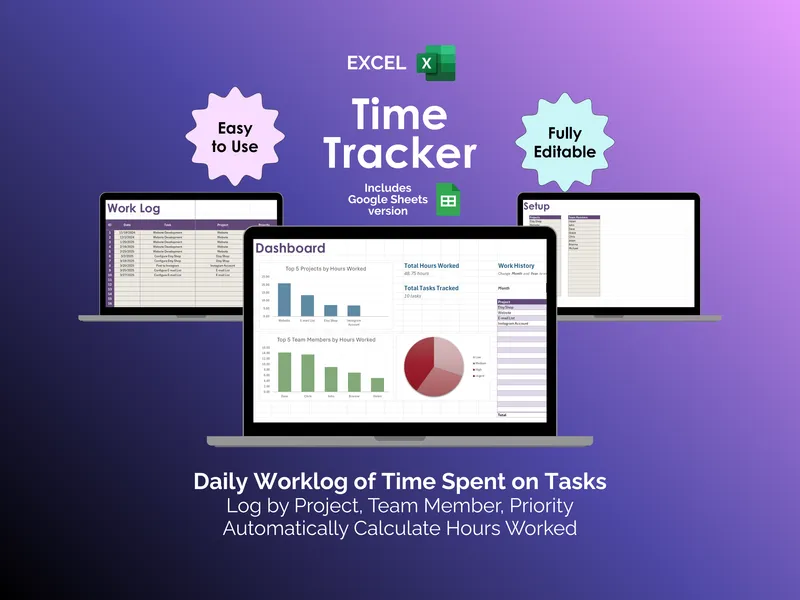
Time Tracker - Excel
It's Friday afternoon and you owe three clients an invoice. This excel time tracker logs hours by project, team member, and priority, then totals them for you.
Project ManagementView details - $4.95 Sheets
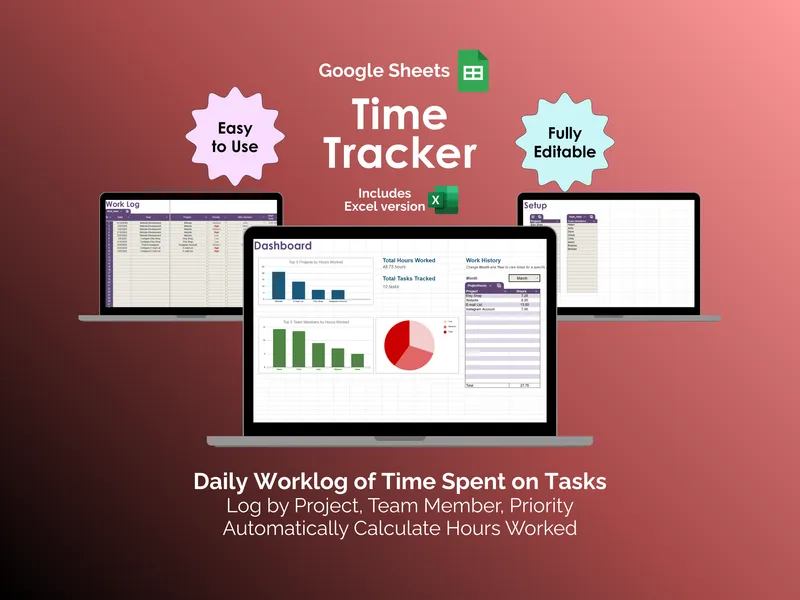
Time Tracker - Google Sheets
When was the last time your invoice matched what you actually worked? This google sheets time tracker logs daily hours and totals them for you.
Project ManagementView details