
What cost of doing business actually includes
CODB has two halves, and most pricing mistakes come from leaving one of them out:
- Overhead — what the studio costs whether or not the camera fires this month: gear depreciation, liability and equipment insurance, editing software and your computer, studio or workspace, marketing and your website, backups and client delivery, plus licenses and professional fees.
- Your pay — the salary you need to live on, treated as a cost of the business and not as whatever happens to be left over at the end of the year.
Add a year of both, divide by the hours you can actually bill, and you have your cost per hour. A studio that "breaks even" without paying the artist is losing money — it just hasn't noticed yet.
The formula, with a worked example
The math is simple; the honesty in the inputs is the hard part:
- Cost per hour = (overhead + your target pay) ÷ billable hours.
- Break-even per hour = overhead ÷ billable hours — what keeps the doors open, before you pay yourself.
Take an illustrative solo photographer with $11,000 of yearly overhead, a $45,000 target salary, and 1,000 billable hours in the year:
| Step | Amount | Per billable hour |
|---|---|---|
| Yearly overhead | $11,000 | $11.00 |
| + Target salary | $45,000 | $45.00 |
| Break-even cost per hour | — | $11.00 |
| All-in cost per hour | — | $56.00 |
So every billable hour has to earn about $56 just to cover overhead and pay the photographer the salary they set. That's the floor — profit comes from the margin you add on top.
Be honest about billable hours
The denominator is where photographers fool themselves. Billable hours are the hours you actually charge for — time behind the camera plus culling, editing, retouching, and delivery — not your whole work week. A huge share of the week goes to marketing, email, bookkeeping, and travel that no client pays for directly. A realistic figure for a busy solo shooter is often 800 to 1,200 billable hours a year, not 2,000. The lower and truer that number, the higher and truer your cost per hour.
Why it's the floor under every package
Once you know your cost per hour, a package price stops being a number you copy from a competitor and becomes one you build. Count the editing hours, not just the shoot — a one-hour session with four hours of post is a five-hour job. Multiply the real hours by your cost per hour, add the job's direct costs (second shooter, album, travel), and put your margin on top. Because the salary is already inside the hourly, that margin is real profit, not your wages in disguise.
You can price a single package from your cost per hour with the free session & package pricing calculator — no signup — or see the full method, step by step, in how to price a photography package.
CODB vs. just "what others charge"
Pricing down from a competitor's published rate tells you what they charge, not what it costs them — or whether they're profitable. Cost-up pricing from your own CODB is the only kind you can defend in a slow month without panic-discounting. It also makes the effective hourly rate visible across your packages, so you can tell which work actually pays. The Photographer / Videographer Studio Ops Workbook builds your cost of doing business once, then carries it onto every package and every shoot — and the photography hub collects the tools built for exactly this.
Templates that implement this
Tools that build your cost per hour for you
3 templates
A connected studio workbook that turns your overhead and target pay into a cost per hour, then prices every package from it — plus time trackers for the billable hours behind the number.
- $29.95 Spreadsheet

Photographer / Videographer Studio Ops Workbook — Package Pricing, Booking & Profit Calculator (Excel + Google Sheets)
Photography business workbook for Excel & Google Sheets — price packages from true cost, track bookings and balances, and see which shoots actually pay.
Operator OSView details - $4.95 Excel
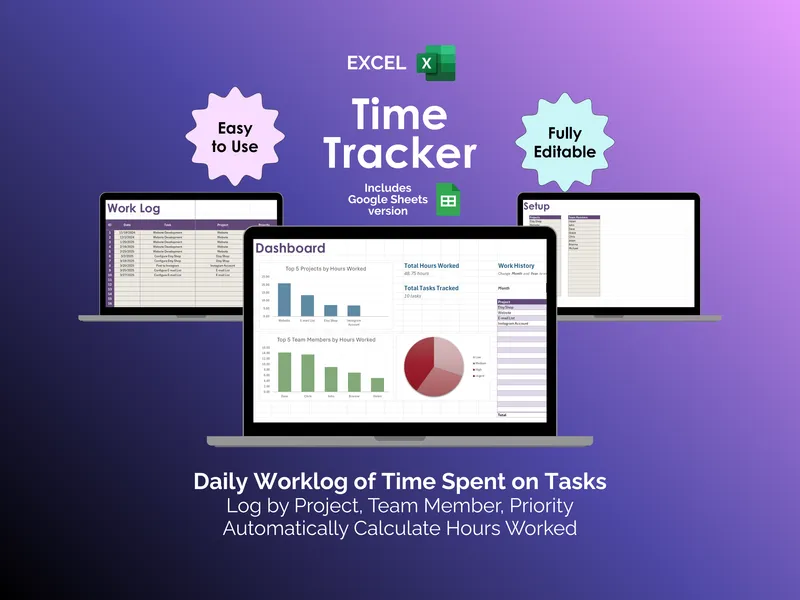
Time Tracker - Excel
It's Friday afternoon and you owe three clients an invoice. This excel time tracker logs hours by project, team member, and priority, then totals them for you.
Project ManagementView details - $4.95 Sheets
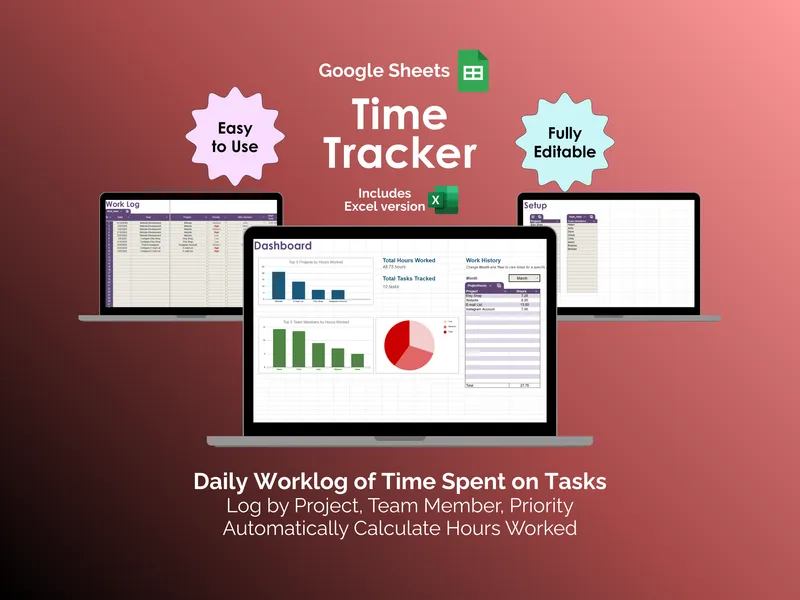
Time Tracker - Google Sheets
When was the last time your invoice matched what you actually worked? This google sheets time tracker logs daily hours and totals them for you.
Project ManagementView details