The job ended. The bills didn’t.
That’s the part nobody warns you about. The day the paychecks stop, your rent or mortgage, your insurance, your car payment, the streaming charges you forgot you had — all of it keeps marching out of your account on schedule, indifferent to the fact that nothing is marching in. The search itself is stressful enough. What quietly eats people alive is the money clock ticking in the background while they try to focus on interviews.
Here’s the good news: the goal between jobs isn’t to slash everything to zero and live on rice. It’s to stretch the money you have far enough to outlast the search — without making panic decisions that cost you more later. That’s a solvable problem, and it starts with a single number.
The short version:
- Calculate your runway first — how many months your savings cover your essential bills. Everything else depends on this number.
- Plan for a longer search than you expect. The average job search runs longer than the typical one, and you want margin.
- Build a bare-bones survival budget that protects essentials and pauses the rest.
- Move fast on unemployment benefits and health coverage — both are time-sensitive and worth real money.
- Raid your retirement accounts last, after you understand the penalties.
First, Figure Out Your Runway
Your runway is the number of months you can cover your essential bills using money you can actually access right now. It’s the most important number you have between jobs, and most people never calculate it — they just watch the balance drop and feel vaguely sick.
Calculate it with one piece of division:
Runway (in months) = Liquid savings ÷ Bare-bones monthly spending
“Liquid savings” means money you can reach without a penalty: checking, savings, money market. Not your 401(k). Not the equity in your house. “Bare-bones monthly spending” is what it costs to keep the lights on and the family fed if you cut everything optional — we’ll build that number in a minute.
Here’s how the math plays out with illustrative numbers:
| Your situation | Amount |
|---|---|
| Cash you can access today | $12,000 |
| Bare-bones monthly spending | $3,000 |
| Runway | 4 months |
Four months. That’s your real timeline — not a vague “I have some savings,” but a concrete deadline that tells you how aggressively to cut, how quickly to find bridge income, and how much pressure each week of the search actually carries.
Knowing the number changes how you behave. A person with eight months of runway can be selective and wait for the right role. A person with six weeks needs bridge income immediately and shouldn’t turn down a reasonable stopgap. Same job market, completely different strategy — and you can’t tell which one you are until you do the division.
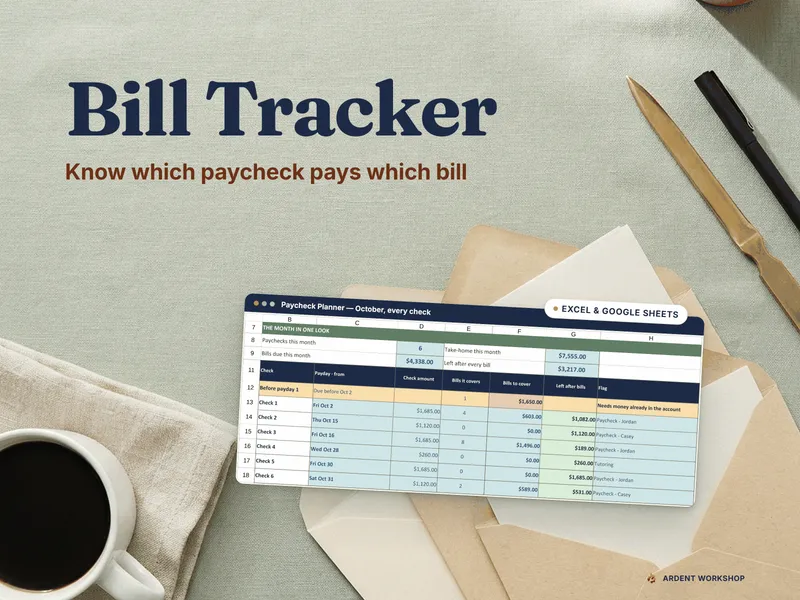
If you’ve never mapped your fixed monthly bills in one place, this is the moment. A simple bill tracker lays out every recurring obligation, its due date, and its amount, so your “bare-bones monthly spending” is a real figure instead of a guess that’s off by hundreds of dollars.
Plan for a Longer Search Than You Think
Most people dramatically underestimate how long a job search takes — and budget for the best case instead of the likely one. The data says to do the opposite.
In the Bureau of Labor Statistics Employment Situation report (opens in new tab), the median duration of unemployment recently sat around 11.6 weeks — roughly two and a half months. That sounds manageable. But the average duration was about 26 weeks — a full six months. The gap between those two numbers is the whole story: a chunk of searches drag on far longer than the typical one, and roughly a quarter of unemployed people were out of work for 27 weeks or more, dragging the average way up.
Here’s what that means for your budget:
- Don’t plan for the median. Plan for something closer to the average and treat a fast search as a happy surprise.
- A good rule of thumb: budget as if the search will take six months, and celebrate if it takes three. Margin is what keeps a manageable situation from becoming a crisis if month four arrives and you’re still interviewing.
- Your runway target shifts accordingly. If your runway is shorter than the search you should plan for, that’s not a reason to panic — it’s a signal to start cutting and looking for bridge income now, while you still have options instead of an overdraft.
The point isn’t to scare you. It’s to make sure you’re sized for reality. People who assume “I’ll have something in a month” and spend accordingly are the ones who get blindsided. People who quietly prepare for six months rarely need all of it — but they job-hunt from a place of calm instead of desperation, and that calm shows up in interviews.
Build a Bare-Bones Survival Budget
A survival budget is a temporary spending plan that protects essentials and pauses everything else until income returns. It is not your normal budget with a little trimming — it’s a deliberate downshift into a lower gear you can hold for months.
The fastest way to build one is to sort every expense into three buckets:
| Bucket | What goes here | What to do |
|---|---|---|
| Keep | Housing, utilities, groceries, insurance, minimum debt payments, transportation to interviews | Protect these. Don’t touch. |
| Trim | Phone plan, groceries (cheaper swaps), variable utilities, kids’ activities | Reduce, don’t eliminate |
| Pause | Streaming, subscriptions, dining out, gym, memberships, non-essential shopping | Cancel or freeze until you’re working again |
The “Pause” bucket is where the surprises live. Recurring charges are designed to be invisible — a few dollars here, a monthly auto-renewal there — and between jobs they’re pure runway leaking out the bottom of the boat. The Federal Reserve’s 2024 Survey of Household Economics and Decisionmaking (opens in new tab) found that nearly four in ten adults couldn’t cover a $400 emergency expense with cash. A lot of that fragility isn’t dramatic overspending — it’s death by a thousand subscriptions nobody’s tracking.
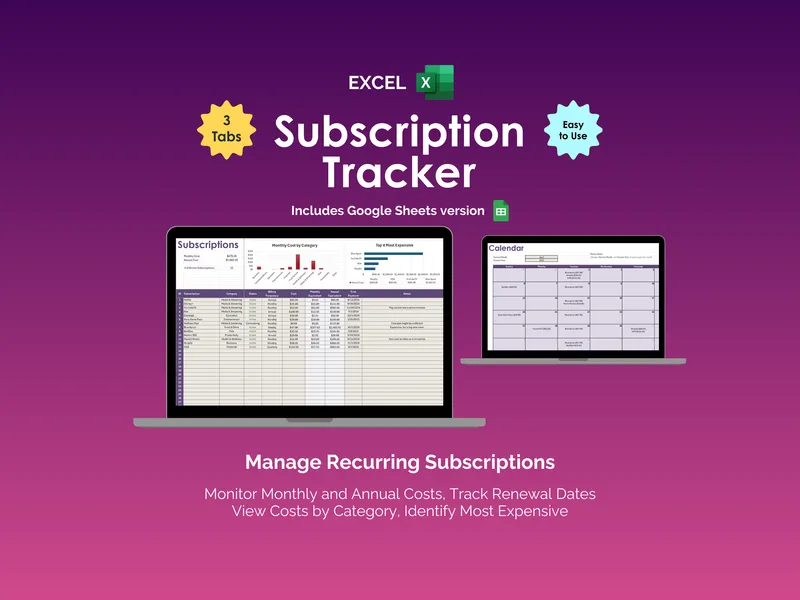
Go through every recurring charge on your last two statements and ask one question: would I notice if this stopped today? If the answer is no, cancel it now — you can always re-subscribe when you’re earning again. A subscription tracker makes the leaks visible in one view, which is exactly what you need when you’re hunting for every recoverable dollar.
A few rules that keep a survival budget humane instead of miserable:
- Keep one small “sanity” line. A single cheap pleasure — coffee out once a week, one streaming service — costs little and keeps a months-long stretch sustainable. Total deprivation never lasts.
- Don’t cut the things that get you hired. Reliable internet, a working phone, transportation to interviews, and a clean interview outfit are investments, not luxuries.
- Trim before you eliminate. You usually don’t need to cancel your phone — you need the cheaper plan. Call and ask; “I’m between jobs” gets you retention offers more often than you’d expect.
Move Fast on Unemployment and Health Coverage
The two most time-sensitive money decisions between jobs are filing for unemployment and locking in health insurance. Both have deadlines, both are worth real money, and both reward people who act in the first week instead of the first month.
File for unemployment immediately
File for unemployment benefits as soon as you’re out of work — don’t wait until savings run low. Unemployment insurance is administered by your state (opens in new tab), so the amount, duration, and eligibility rules vary, and benefits generally start from when you file, not from when you lost the job. Waiting “until you really need it” usually just means leaving weeks of benefits on the table. Even if you’re unsure you qualify, file and let the state decide.
Don’t let health coverage lapse
Losing job-based health insurance is itself a qualifying event that opens options — but the clock is short. You generally have two paths:
- COBRA lets you keep your existing employer plan, usually for up to 18 months (opens in new tab). Same doctors, same coverage — but you pay the full premium yourself, which is often a shock once the employer’s share disappears.
- The health insurance marketplace treats losing job-based coverage as a special enrollment period — roughly 60 days (opens in new tab) to pick a new plan. With lower income during your search, you may qualify for subsidies that make a marketplace plan dramatically cheaper than COBRA.
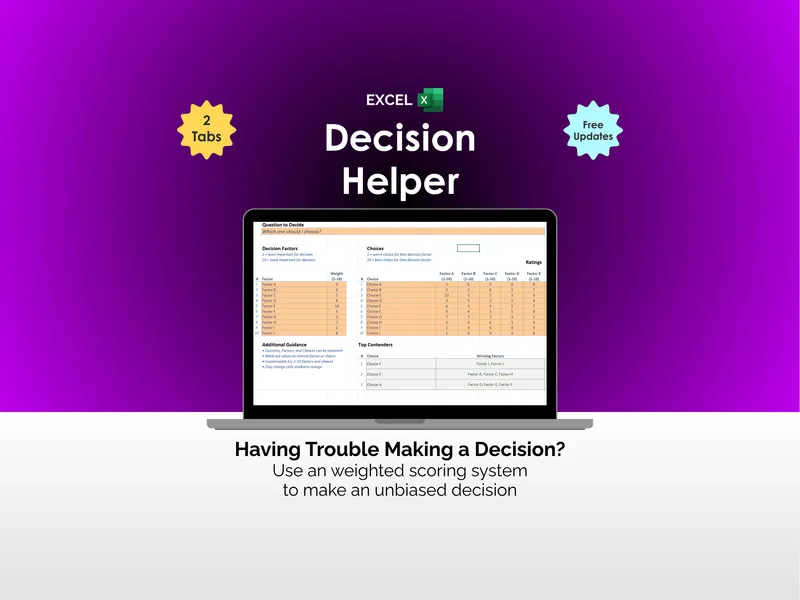
For most people watching their runway, a subsidized marketplace plan beats full-price COBRA — but it genuinely depends on your prescriptions, your doctors, and your family’s situation. This is exactly the kind of either-or where laying the options side by side beats deciding in your head; a decision helper lets you score COBRA against a marketplace plan on cost, coverage, and keeping your current doctors so you choose on facts, not stress.
The one thing you can’t afford is to do nothing and let coverage silently lapse. One uninsured emergency can erase a year of careful budgeting.
Find Bridge Income Without Derailing Your Search
Bridge income is temporary money that extends your runway while you keep hunting for the right full-time role. The key word is temporary — the goal is to slow the bleed, not to replace the search.
Worth considering, roughly in order of least to most disruptive:
- Severance and unused PTO. If you got a severance package or a payout for unused vacation, treat it as runway, not a windfall. Park it and let it extend your timeline.
- One-off and freelance work in your existing skill set. A few projects can cover the “Trim” and “Pause” gap without eating the hours you need for applications and interviews.
- Flexible gig or part-time work when runway is short. There’s no shame in a stopgap. If you have six weeks of runway and a job offer that pays the rent while you keep looking, take it — desperation is more expensive than a temporary pay cut.
- Selling what you don’t use. The decluttering you’ve been meaning to do can fund a month of groceries. It won’t save you, but it buys time and momentum.
The discipline here is protecting your search. If bridge work crowds out applications entirely, your temporary situation becomes permanent. Block real hours for the hunt and treat it like the job it is — which is far easier when your applications, contacts, and follow-ups live in one place instead of scattered across your inbox. A dedicated job search tracker keeps every lead and deadline visible so bridge income supplements the search instead of swallowing it.
Raid Your Retirement Savings Last
Your 401(k) and IRA are the very bottom of the list — the money you touch only after every other option is exhausted. Cashing out retirement accounts early is one of the most expensive ways to fund a job search, and it’s worth understanding exactly why before you’re tempted at month five.
If you withdraw from a traditional 401(k) or IRA before age 59½, the IRS generally applies a 10% additional tax on top of ordinary income tax (opens in new tab) on the amount you take out. So a $10,000 withdrawal can easily net you far less than $10,000 after the penalty and taxes — and you’ve also wiped out years of future compound growth on money that’s painful to rebuild.
A few things to know before you go near it:
- There’s a narrow exception worth knowing. Under the so-called “rule of 55,” if you leave your job in or after the year you turn 55, you can generally take penalty-free withdrawals (opens in new tab) from that employer’s 401(k) — though ordinary income tax still applies.
- Order matters. Tap cash savings first, then bridge income, then taxable investments, and only then retirement accounts. Each step down the ladder gets more expensive.
- A 401(k) loan is not the same as a withdrawal, but it carries its own trap: if you’re already separated from the employer, the loan can come due fast, and an unpaid balance may be treated as a taxable distribution. Tread carefully.
The instinct to grab the biggest pile of money you have is understandable when the runway gets short. But the retirement account is usually the most expensive dollar you own. Exhaust the cheaper options first, and if you do have to touch it, understand the cost going in.
Your Week-One Checklist
When you’re between jobs, the first week sets the tone. Here’s the sequence that protects your money fastest:
- Calculate your runway (liquid savings ÷ bare-bones monthly spending)
- File for unemployment benefits with your state
- Choose and enroll in health coverage before the special enrollment window closes
- List every fixed bill and recurring subscription in one place
- Cancel or pause every “would I notice?” charge
- Call providers (phone, internet, insurance) and ask for hardship or retention rates
- Set up a simple tracker for the job search itself
- Identify two or three realistic bridge-income options before you need them
Do these eight things and you’ve converted a vague sense of dread into a plan with numbers attached. That shift — from “I’m scared about money” to “I have four months of runway and here’s my survival budget” — is the difference between job-hunting from panic and job-hunting from a position of quiet control.
Being between jobs is genuinely hard. But the money side of it is one of the few parts you can actually manage. Get the runway calculated, protect the essentials, move fast on the time-sensitive stuff, and you give yourself the one thing every good search needs: enough room to wait for the right offer instead of grabbing the first one that clears the rent.
Sources
- U.S. Bureau of Labor Statistics — Employment Situation report (opens in new tab) (duration of unemployment)
- Federal Reserve — Economic Well-Being of U.S. Households in 2024 (opens in new tab) ($400 emergency expense)
- U.S. Department of Labor — Unemployment Insurance (opens in new tab)
- HealthCare.gov — If you lose job-based coverage (opens in new tab)
- HealthCare.gov — COBRA coverage when you’re unemployed (opens in new tab)
- IRS — Topic No. 558, Additional tax on early distributions (opens in new tab)
- IRS — Exceptions to tax on early distributions (opens in new tab)