Here’s what you’ll have by the end of this post: a dead-simple system to track every shared dollar on a group trip and settle up in five minutes — without the passive-aggressive group chat that ends a friendship.
Splitting trip costs with friends goes wrong for one reason. Everyone tracks money in their head, nobody agrees on the rules until the bill arrives, and the person who fronted the rental car quietly seethes for three weeks. The fix isn’t an app or a math degree. It’s deciding the rules before the trip and writing everything down during it.
This pairs naturally with knowing what a trip actually costs in the first place — if you’re still in the planning stage, our breakdown of the real cost of a family beach vacation shows where the money really goes.
Let’s set it up.
The Move: One Shared Ledger, Settle Once
The entire system is two habits: log every shared expense the moment it happens, and settle the whole thing once at the end. That’s it. No Venmo-ing back and forth at every gas station. No mental tally. One running list, one final reckoning.
Step 1: Pick one place everyone can see
A shared spreadsheet, a shared note, a whiteboard in the rental — it doesn’t matter, as long as everyone can view it and add to it. The only rule: it lives in one place, not in four people’s memories.
Step 2: Log four things per expense
Every time someone pays for something the group shares, write down:
- Who paid
- How much
- What it was for
- Who it’s for (everyone? just the three who went to dinner?)
That last column is the one that prevents almost every money fight. More on it in a second.
Step 3: Decide the split rule up front
Before anyone swipes a card, agree on how you split. The three honest options:
| Split rule | How it works | Best for |
|---|---|---|
| Even | Total ÷ number of people | Costs everyone uses equally (rental, gas, the house) |
| By participant | Only the people who did it pay for it | Activities, meals, drinks some people skip |
| By usage | Pay for what you personally consumed | Wildly different spending (the steak vs. the salad) |
You don’t pick one rule for the whole trip. You tag each expense with the rule that fits it. The shared house is even. The 2 a.m. taco run for three people is by participant. Done.
Step 4: Settle once, at the end
When the trip’s over, total it up and net it out — don’t pay each transaction individually. If you owe Alex 60 and Alex owes you 25, you send Alex 35. One transfer. Everyone’s square.
The Worked Example That Makes It Click
Let’s say four friends — call them Alex, Bri, Cam, and Dev — take a long weekend. Here’s the ledger with illustrative numbers:
| Expense | Paid by | Amount | Split | Who’s in |
|---|---|---|---|---|
| Rental house | Alex | 800 | Even | All 4 |
| Gas | Bri | 120 | Even | All 4 |
| Group dinner | Cam | 240 | Even | All 4 |
| Concert tickets | Dev | 180 | By participant | Alex, Cam, Dev (3) |
| Spa morning | Bri | 100 | By participant | Bri, Cam (2) |
Now the math. The even costs (house + gas + dinner = 1,160) split four ways: 290 each. The concert (180 ÷ 3 = 60) hits Alex, Cam, and Dev. The spa (100 ÷ 2 = 50) hits Bri and Cam.
| Person | Owes total | Paid | Net |
|---|---|---|---|
| Alex | 350 | 800 | +450 (gets back) |
| Bri | 340 | 220 | −120 (pays) |
| Cam | 400 | 240 | −160 (pays) |
| Dev | 350 | 180 | −170 (pays) |
Bri sends 120, Cam sends 160, Dev sends 170 — all to Alex. Three transfers, everyone’s even, and nobody paid for a concert they skipped or a spa they didn’t book. That’s the whole point: fair isn’t always equal.
The One Rule That Prevents Resentment
Split by who actually used it, not by who’s standing there. The fastest way to poison a group trip is making the non-drinker chip in on the bar tab or charging the friend who stayed back for the excursion they sat out. The “who’s for” column does this automatically — tag the expense to the people who were actually in, and the unfairness disappears before it starts.
Agree on this out loud on day one. “Shared stuff splits even, activities split among whoever does them.” Ten seconds of conversation saves a month of weird energy.
Bonus Level: The Awkward Edge Cases
A few things worth settling before they become a problem:
- The big earner who says “don’t worry about it.” Let them treat the group occasionally if they offer — but still log it as their contribution so it nets out fairly. Generosity shouldn’t break the books.
- The person who “forgot their wallet” repeatedly. The shared ledger makes this visible without anyone having to be the bad guy. The numbers do the confronting.
- Tipping and rounding. Decide up front: round to the nearest 5, don’t sweat the change. Precision to the penny is where fun goes to die.
- One person books everything in advance. Reimburse the big pre-trip charges (house deposit, tickets) before you leave, so nobody’s floating 800 on a credit card for a month.
Set It Up in Five Minutes
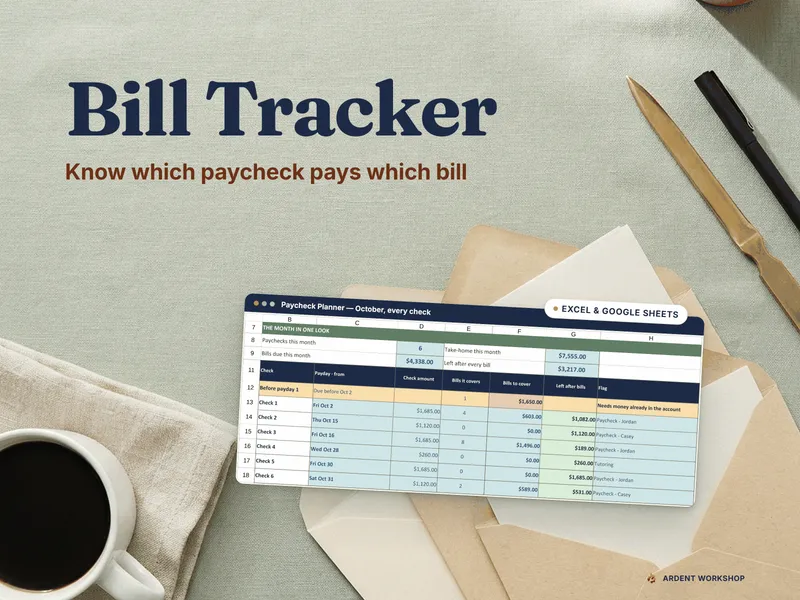
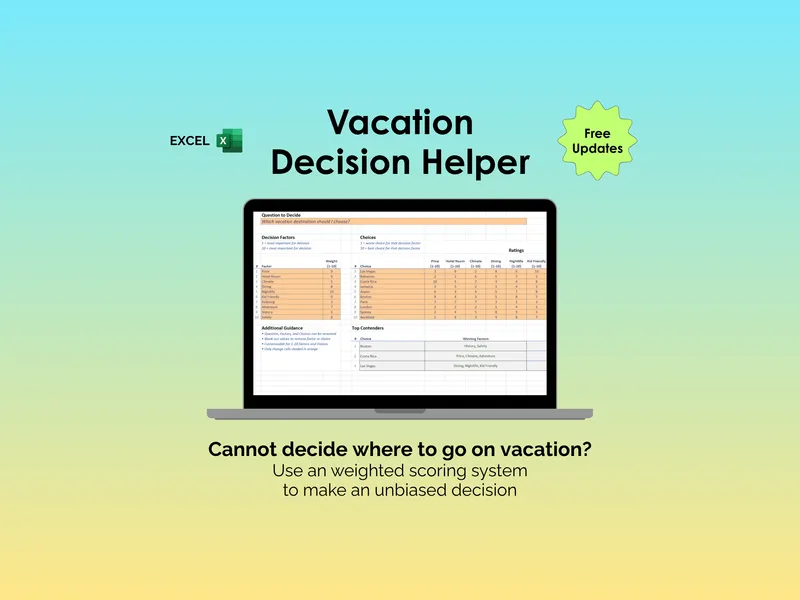
You don’t need anything fancy to run this — a spreadsheet handles it perfectly. Drop in the columns from Step 2, tag each row with a split rule, and let the totals do the work. If you’d rather not build the formulas yourself, the Bill Tracker gives you a ready-made grid for logging who-paid-what, and the Vacation Decision Helper keeps the planning side organized before a dollar gets spent.
The system works because it removes the two things that cause trip-money fights: ambiguity and memory. Write it down, agree on the rules, settle once. Then the only thing left to argue about is whose turn it is to drive — and if that trip is coming together last-minute, our guide to planning a getaway without overspending covers the rest.