What makes a recipe a "heritage" recipe
Plenty of recipes are written down in cookbooks and on cards. A heritage recipe is different in three ways, and all three are why it's at risk:
- It's handed down, not published. It came from a person — a grandmother, an aunt, a neighbor from the old country — and moved from one cook to the next by watching and doing, not by being written out.
- It's measured "by feel." The amounts live in the cook's hands: "a handful" of flour, "a good pour" of oil, "until it looks right." Nothing is weighed, so nothing is written.
- It carries a story. The dish is tied to an occasion, a place, or a person — the holiday bread, the funeral casserole, the birthday sauce. Losing the recipe means losing a piece of the family's history, not just a meal.
Why heritage recipes get lost
A heritage recipe is fragile precisely because it was never written down. It lives in one person's memory and muscle memory, and when that cook is gone — or simply can't cook anymore — the recipe goes with them. Families discover this too late: someone tries to recreate the dish from taste memory and it's close, but never quite right, because the "handful" was really a specific amount and the "until it looks right" was really a specific step. The dish becomes a story about a dish. Writing it down while the cook can still show you is the only way to keep it.
How to turn a "by feel" recipe into one anyone can cook
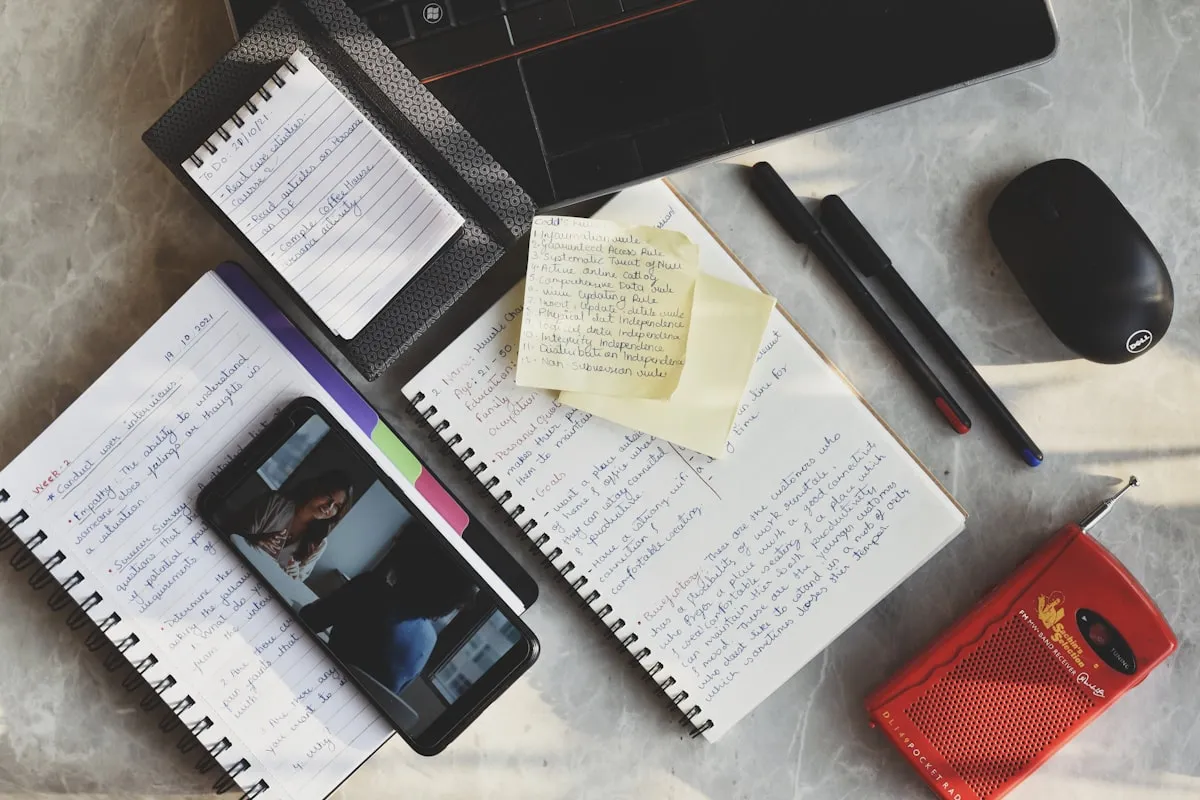
The work of preserving a heritage recipe is mostly translation: turning the cook's hands into numbers, without losing their voice. The method is to sit with the cook while they make it, measure what they do — catch the "handful" in a measuring cup on its way into the bowl, weigh the "hunk" of butter — and write down the amounts alongside their own words. You keep the story and the phrasing ("Nonna always said..."), and you add the measurements that let a grandchild in another kitchen get the same result. That's the difference between a recipe that's remembered and one that's preserved. There's a full walkthrough in the tutorial on how to write down a grandparent's recipe.
A heritage recipe vs. a recipe card or an app
A blank recipe card is where most people start, and it's better than nothing — but a card has no room for the origin, the story, or the "by feel" amounts, and a shoebox of cards is easy to lose. A recipe app is the other extreme: it holds your dishes on someone else's server, behind an account that can lapse or shut down, which is a precarious home for something you want to hand to the next generation. The middle ground is an owned keepsake — a file you keep, print, and copy for every kitchen in the family. See keepsake binder vs recipe app for the full comparison.
Where to start preserving a heritage recipe
Start with the one dish you'd most hate to lose. The free One Recipe, Written Down printable gives you a single page to capture it — the dish, who it came from, the ingredients with room for the "a handful" amounts, the steps, and a note for the story. When you're ready to preserve the whole family's recipes, the Family Recipe Heritage Keepsake Binder is the owned workbook for it: a Recipe Register that turns every "by feel" amount into a real measurement, a cooks roster, a food-traditions tab, and a Sources tab for where each original lives. See the templates for family historians and templates for grandparents hubs for the full set. This is a keepsake and record-keeping approach — not tested recipes or professional cooking, nutrition, or food-safety advice.
Templates that implement this
Preserve your family's heritage recipes
3 templates
An owned workbook that captures every handed-down dish with its origin, the cook it came from, and the 'by feel' amounts turned into real measurements — plus the estate and new-parent binders that keep the rest of a family's records in one place.
- $19.95 Spreadsheet

Family Recipe Heritage Keepsake Binder — Preserve Handed-Down Recipes, Their Origins & "By Feel" Amounts (Excel + Google Sheets)
A family recipe keepsake binder for Excel & Google Sheets — preserve handed-down recipes, their origins, and the "by feel" amounts, in a file you own.
Life AdminView details - $29.95 Spreadsheet
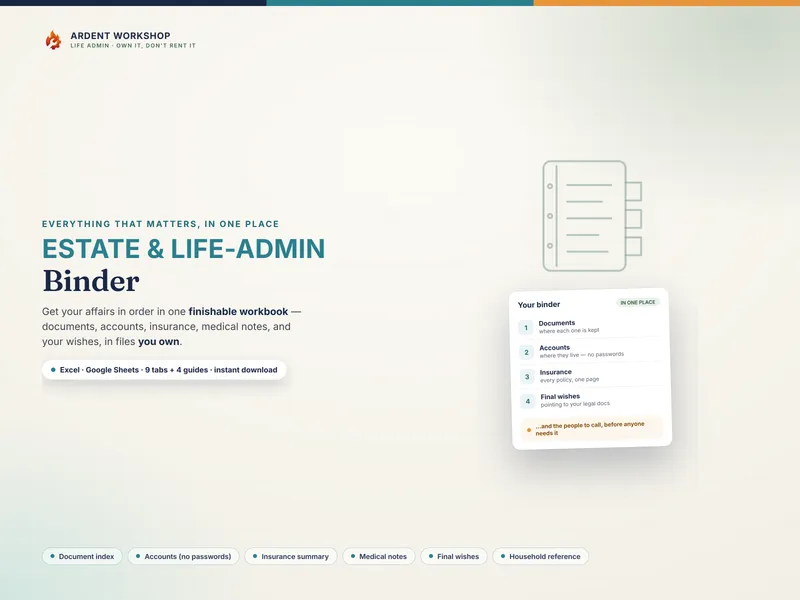
Estate & Life-Admin Binder — Important Documents, Accounts, Insurance & Final Wishes Organizer (Excel + Google Sheets)
An estate & life-admin binder for Excel & Google Sheets — organize important documents, accounts, insurance, and final wishes in one file you own.
Life AdminView details - $19.95 Spreadsheet
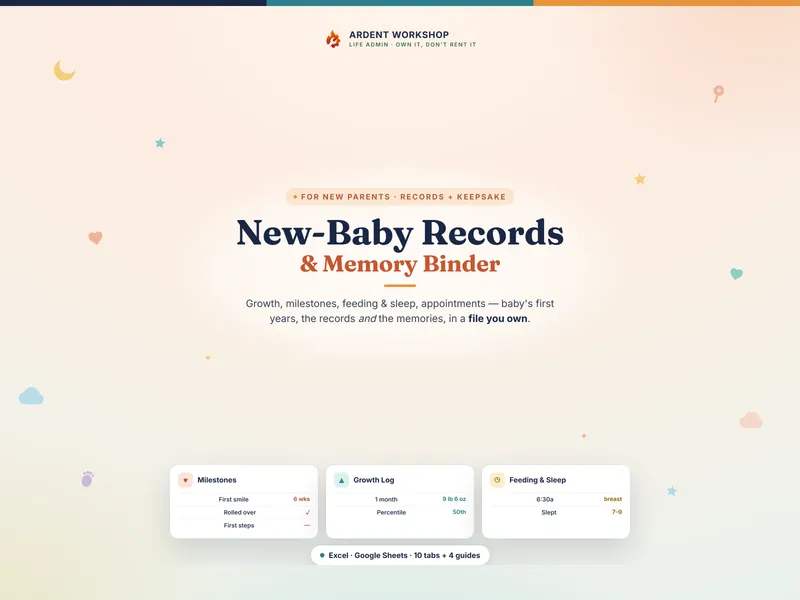
New-Baby & New-Parent Records Binder — Baby's First Years Growth, Milestone, Feeding & Sleep Tracker (Excel + Google Sheets)
A keepsake records binder for baby's first years — growth, milestones, feeding, sleep, and key documents in one file you own (Excel + Google Sheets).
Life AdminView details