Step 1 — The takeoff: list every scope item
Before any pricing, you list what the job actually requires. For a mid-size bathroom remodel: demo, tile, a new vanity and top, fixtures (faucet, toilet, shower trim), plumbing rough-in, electrical, drywall and paint. The takeoff is the checklist the rest of the bid hangs on — miss a line here and you eat the cost later.
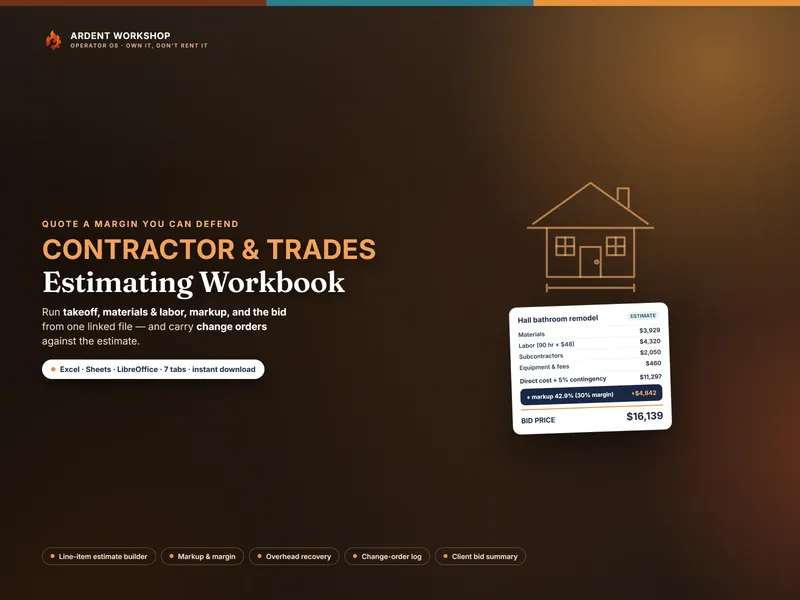
We’ll build each number by hand below so the method is clear; the Contractor & Trades Estimating Workbook does the same in one linked file if you’d rather not start from a blank sheet.
Step 2 — Materials, with a waste allowance
Price each material line, then add a waste percentage — tile gets cut, paint gets over-bought, fittings get swapped. 8% is a reasonable starting allowance for a remodel — adjust it to your own history.
| Material | Cost |
|---|---|
| Tile & setting materials | $1,400 |
| Vanity & countertop | $900 |
| Fixtures (faucet, toilet, shower trim) | $1,100 |
| Plumbing rough & fittings | $600 |
| Drywall, paint & trim | $500 |
| Materials subtotal | $4,500 |
| Waste allowance (8%) | $360 |
| Materials with waste | $4,860 |
Step 3 — Loaded labor
Labor is priced at a loaded rate — not just the wage, but the wage plus payroll taxes, workers’ comp and the non-billable time that comes with employing someone. If your crew costs $55/hour loaded and the remodel takes 60 hours of carpentry, tile and install, that’s $3,300 of labor.
Step 4 — Subcontractors
The trades you don’t self-perform get their own lines at the price they quoted you — and they get marked up too, because they carry your scheduling, coordination and warranty risk.
| Subcontractor | Quote |
|---|---|
| Plumber | $1,200 |
| Electrician | $700 |
| Subs subtotal | $1,900 |
Step 5 — Direct cost and a contingency
Add the three together and put a small contingency on top for the surprises every remodel hides behind a wall:
| Direct cost | Amount |
|---|---|
| Materials (with waste) | $4,860 |
| Loaded labor | $3,300 |
| Subcontractors | $1,900 |
| Contingency (~5%) | $500 |
| Total direct cost | $10,560 |
Step 6 — Overhead and margin: the step that sets the price
Direct cost is what the job costs you. The price has to also cover overhead — your truck, insurance, tools, the hours you spent estimating — and leave a profit. Both come out of your gross margin. Say you need a 30% gross margin to cover overhead and profit. Price isn’t cost × 1.30 — that’s the markup-vs-margin trap. The right math:
- Price = cost ÷ (1 − margin) = $10,560 ÷ 0.70 = $15,086
- That’s a 42.9% markup on cost, not 30%.
- Gross profit on the job = $15,086 − $10,560 = $4,526 to cover overhead and net profit.
Round to a clean client number — $15,100 — and that’s your bid. You can sanity-check any single job’s markup and margin with the free bid-markup & job-cost calculator before you send it.
Step 7 — The change order (where margin usually leaks)
Mid-job the client asks for a heated tile floor. The instinct is to do it as a favor. Don’t — price it as the small job it is, at the same margin:
| Change order: heated floor | Amount |
|---|---|
| Heating mat & thermostat (materials) | $450 |
| Added labor (6 hrs @ $55) | $330 |
| Electrician (added) | $250 |
| Added direct cost | $1,030 |
| Change-order price (30% margin) | $1,471 |
Logged against the original bid, the change order keeps the job’s margin intact instead of quietly eating it. “While we’re here” is the most expensive phrase on a job site — until it’s a priced line.
Build the whole bid in one connected file
Every number above lives on its own scratch sheet for most contractors — which is how a forgotten waste allowance or an un-marked-up sub turns a 30% margin into 12%. The Contractor & Trades Estimating Workbook runs this exact flow — takeoff, materials with waste, loaded labor, subs, overhead, markup and change orders — in one linked workbook, so changing a tile price re-prices the bid and the client summary in one move. It ships with a bathroom-remodel example already built, and the method fits every trade — see the landscaping estimate tutorial for the same flow on a paver patio, or browse the contractor & trades hub.