
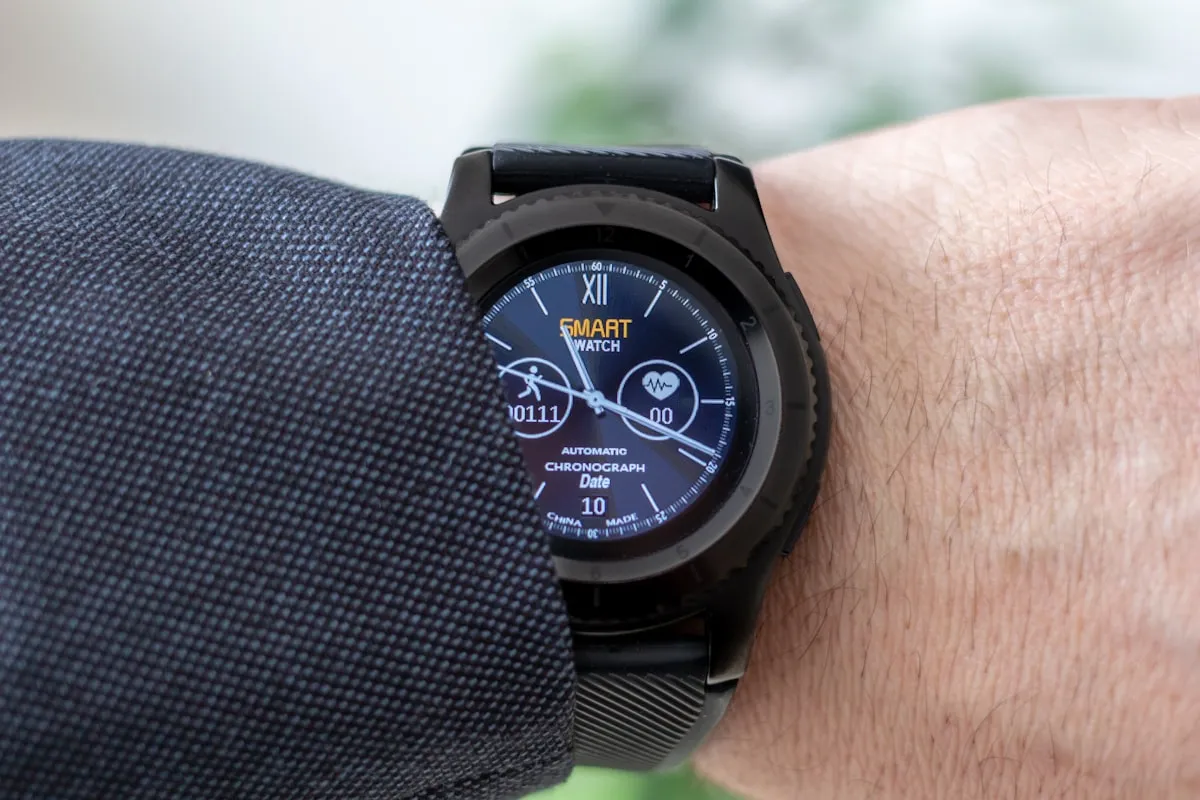
You’re in the exam room. The nurse asks, “How’s your blood pressure been running at home?”
You pull out your wrist. You tap. You swipe. You eventually land on a chart — some kind of cardiac line that scrolls forever and tells you almost nothing. You shrug. “It seemed fine.”
The nurse nods politely and writes “patient reports normal” in the chart. Your doctor will spend ninety seconds looking at a cuff reading taken in a noisy hallway and make decisions based on that.
Every piece of health data your watch collected in the last year — gone, or may as well be.
This is the gap almost nobody talks about. Smartwatches and fitness bands are incredible pieces of consumer electronics. But they are not medical records. They track activity beautifully and produce almost nothing a real clinician can use. If you actually want to understand your own health over time — or walk into an appointment with something your doctor can act on — you need a different tool layered on top.
That tool is almost always a spreadsheet.
The Reframe: Sensors vs. Lab Notebooks
Think of it this way. Your smartwatch is a sensor. A great one. It reads your pulse every few minutes, counts your steps, estimates your sleep stages, and buzzes when you’ve been sitting too long.
A lab notebook is something else entirely. It’s a deliberate, dated, annotated record of what you measured, when, and under what conditions. Scientists and engineers have used lab notebooks for centuries because raw sensor data alone is meaningless without context.
Your doctor doesn’t want sensor data. Your doctor wants a lab notebook. That’s the reframe.
Once you see it, a lot of frustrating things start making sense:
- Why your cardiologist asked you to use a cuff, not your watch, for morning and evening blood pressure readings.
- Why your primary care doc barely glances at your watch’s sleep chart but wants to know how many hours you felt rested.
- Why your physical therapist wants weight recorded weekly under the same conditions, not whatever your smart scale logged randomly.
The watch is doing what it was built to do: gather a firehose of continuous signals. The job of turning that into decisions belongs to you and your provider — and the tool for that job is a notebook, digital or otherwise.
What Your Smartwatch Does Well (and Where It Stops)
Let’s be fair. A modern smartwatch is astonishingly capable. Here’s where the average consumer wearable genuinely earns its keep:
- Trend awareness. You can tell at a glance whether your resting heart rate is creeping up over weeks or staying steady.
- Activity nudges. Step counts, stand reminders, and movement goals demonstrably help sedentary people move more.
- Anomaly alerts. Falls, irregular rhythms, and unusually elevated heart rates during rest are things a watch can flag that you might otherwise miss.
- Sleep patterns. Not clinical sleep staging, but good-enough trend data on total sleep duration and disruptions.
That’s real value. Don’t throw your watch in a drawer.
But here’s where it stops being enough:
- Clinical-grade accuracy. Watch-based blood pressure readings — where they exist at all — are not validated for diagnostic use. Doctors want cuff readings.
- Context. The watch knows your heart rate was 95 at 2pm on Tuesday. It has no idea you’d just had three coffees, argued with your landlord, and were climbing stairs. Without context, the number is noise.
- Patterns across systems. Did your blood pressure spike correlate with the new medication you started? With high-salt days? With poor sleep? Your watch can’t tell you — because it’s only looking at one dimension at a time.
- Portability. Switch ecosystems and you often lose years of history. Export the CSV and you get 400,000 rows of heart-rate samples you can’t do anything with.
- Something a doctor can actually read. Nobody at a ten-minute appointment is scrolling through your app. They need a printed page or a short list of dated readings.
A spreadsheet fills every one of those gaps.
The Five Things a Spreadsheet Does That a Smartwatch Can’t
If you’ve never thought about a health spreadsheet before, here’s what makes it different from any app on your phone:
1. It captures context alongside the number
A blood pressure reading of 138/88 means nothing on its own. The same reading is reassuring if you just walked up three flights of stairs and alarming if you just woke up. A spreadsheet lets you put a notes column right next to the number — medications taken, meals eaten, stress level, time of day. This is exactly what your provider needs to interpret the data.
2. It accepts measurements from real instruments
Your watch can’t take a clinical blood pressure reading. A $30 upper-arm cuff can. A simple spreadsheet lets you record the result from any instrument — a thermometer, a pulse oximeter, a glucometer, a bathroom scale — in one unified place. The watch is one sensor; the spreadsheet is the hub.
3. It produces something you can print or email
This one is underrated. When a specialist asks for “three months of home blood pressure readings,” they mean a list they can scan in 30 seconds. Printing the last 90 days from a spreadsheet takes one keystroke. Pulling the equivalent from a smartwatch app involves screenshots, cropping, and apology emails.
4. It reveals correlations your watch will never spot
When you log blood pressure, hydration, sleep, and weight in the same place, patterns start jumping out. You notice your pressure trends higher on low-hydration weeks. You notice your weight is stable within a two-pound band except when you travel. You notice your resting heart rate drops a beat or two in the weeks after you start a new exercise routine. Correlations across metrics is where real insight lives — and that can only happen when metrics live together.
5. It outlives the device
Smartwatches break, get replaced, and change platforms. Apps get discontinued. Ecosystems change. A spreadsheet you own is yours forever. Ten years from now, your doctor can look at a decade of readings. Try that with a watch you bought in 2020.
What to Actually Track (Start Small)
The temptation with any new system is to track everything from day one. Resist it. The people who stick with health tracking start with one or two metrics and build from there. Here’s a sensible starting lineup by goal:
| If you want to… | Track | How often |
|---|---|---|
| Understand cardiovascular health | Blood pressure (morning + evening) | Daily for 1 month, then 3x/week |
| Monitor a weight goal | Weight, waist measurement | Weekly (same day, same time) |
| Build a hydration habit | Water intake, urine color | Daily for 2-4 weeks |
| Prepare for a specialist appointment | All vitals (BP, pulse, temp, oxygen sat) | Daily for 2 weeks before |
| Spot patterns in chronic symptoms | Symptom severity + triggers | Daily, with notes |
Notice what’s not on that list: every metric your watch already does well. There’s no point duplicating step counts or continuous heart rate in a spreadsheet — your watch handles that. The spreadsheet is for the things your watch can’t measure, or measurements your doctor needs in a cleaner form.
A 10-Minute Setup That You’ll Actually Keep Using
Here’s the shortest path from “I should start tracking” to “I have something my doctor can use”:
- Pick one metric. Blood pressure is the most common because it’s the most medically useful. Weight is the easiest if you’re just getting started.
- Buy the right instrument. An upper-arm cuff for blood pressure. A digital scale for weight. Both are under $50. Stop using the watch for these specific numbers.
- Open a spreadsheet. Columns: Date, Time, Reading (or two columns for BP systolic/diastolic), Notes. That’s it.
- Measure at the same time each day. Morning before coffee is the gold standard for BP. Same day of the week for weight.
- Write one thing in the Notes column. Even “slept poorly” or “took med at 7am” or “nothing unusual.” Future you will thank present you.
- Set a phone reminder. Not a watch reminder — a phone reminder. You want to walk to the spreadsheet, not glance at your wrist.
Do this for two weeks before you add a second metric. If you get bored or forget, that’s fine — a blood pressure log with three weeks of entries is still more useful to your doctor than zero.
Tools That Make This Easier
If you want a ready-made template instead of building columns from scratch, we’ve built one for every core health metric:
- Blood Pressure Tracker — morning/evening logging with automatic charts and averages, designed to print cleanly for appointments.
- Weight Tracker — for goal tracking without the obsession. Weekly inputs, trend lines, and honest averaging.
- Hydration Tracker — a habit-builder for people who know they should drink more water but can’t remember whether they did.
- Vital Signs Tracker — the all-in-one: blood pressure, pulse, temperature, oxygen saturation, and respiratory rate in a single doctor-ready log.
If you’re going to track more than one thing, the Health & Wellness Bundle packages the whole set for less than the price of three trackers individually.
The Mental Model to Take With You
Here’s the one-sentence version of everything above:
Your watch measures. Your spreadsheet remembers.
Measuring is the easy part — technology has solved that. Remembering, contextualizing, and presenting your health history in a form that’s actually useful is the work that still falls to you. A good spreadsheet is the tool that does that work.
You don’t have to choose between your smartwatch and a spreadsheet. The best home health tracking setup uses both: the watch for continuous signals and real-time alerts, the spreadsheet for the measurements that matter clinically and the context that makes them meaningful.
Next time you’re in the exam room and someone asks how your blood pressure has been running, you’ll have an answer — and it’ll be the kind of answer your doctor can actually do something with.
Disclaimer: This post is for informational and educational purposes only and does not constitute medical advice. Home health tracking is a supplement to, not a substitute for, professional care — and tracking tools, instruments, and targets that are right for one person may not be right for another. Consult a licensed physician or appropriate healthcare provider before making decisions about diagnosis, treatment, or medication based on home measurements.