
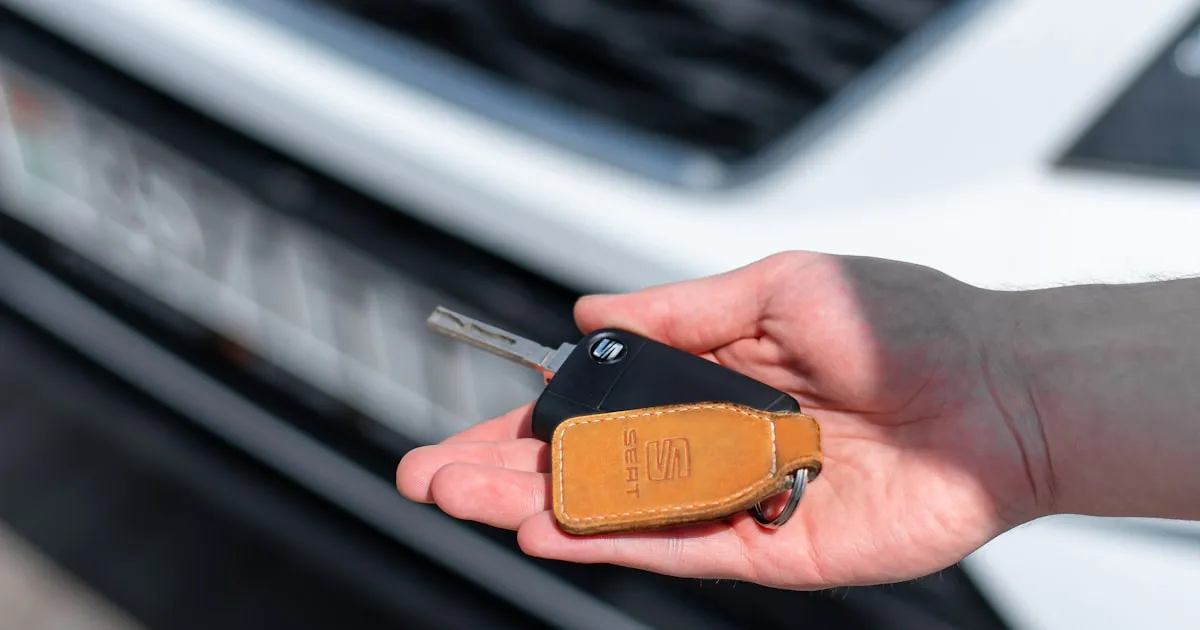
Ask Five People Whether to Buy or Lease a Car. Get Five Different Answers.
Your coworker swears leasing is the only sensible move now that monthly payments are out of control. Your dad insists you “always buy and drive it into the ground” — that’s how he ended up with a 2009 Camry that still runs. Your friend who works in finance starts a sentence with “well, the opportunity cost of capital…” and you tune out by word three.
They’re all partly right. That’s the problem.
Buying or leasing a car in 2026 is not a universal yes or no. It’s a conditional decision — one that depends on your annual mileage, your cash situation, how long you keep cars, and whether you actually understand what each option costs over time. Most people skip the math entirely and pick whichever option has the friendlier-looking monthly payment on the dealership chalkboard. That’s how you end up locked into a deal that quietly drains money for years.
This post lays out the strongest case for each side, then draws a clear line between buyers who should lease and leasers who should buy. By the end, you’ll know which side of the line you’re on.
What “Buying” and “Leasing” Actually Mean in 2026
Before the debate, a quick definition pass — because half the bad advice out there assumes the wrong baseline.
Buying means you’re acquiring ownership of the vehicle. You either pay cash up front or finance it through an auto loan (typically 60-84 months in 2026). At the end of the loan, the car is yours. You can drive it for as long as you want, sell it whenever, modify it, and rack up unlimited miles.
Leasing means you’re paying to use the vehicle for a fixed term — usually 24, 36, or 39 months. You don’t own it. At the end of the lease, you either return the car, buy it out at a pre-set residual price, or roll into a new lease. Leases come with mileage caps (typically 10,000-15,000 miles per year) and wear-and-tear standards that get expensive fast if you go over.
That’s the surface-level difference. The financial difference is bigger and more interesting.
The Case for Buying
You’re Building Equity Instead of Renting Time
Every loan payment chips away at the principal. After 60 months, you have an asset worth somewhere between $5,000 and $20,000 depending on the car. After 60 months of leasing, you have a stack of receipts and a polite handshake.
For people who keep cars long-term, this matters enormously. A car bought in 2026 and kept until 2034 will have its loan paid off around 2031, leaving roughly three years of “free” driving where the only costs are insurance, fuel, and maintenance. Lease that same car for eight years and you’re making payments forever — three lease cycles, three down payments, three sets of fees.
Long-Term Math Favors Owners (If You Hold the Car)
Here’s a simplified illustrative comparison for a typical $35,000 mid-size SUV over 8 years. These numbers are a worked example for illustration — not a quote — but the relative shape is consistent across most real-world scenarios.
| Approach | Monthly Cost | Total Spent (8 yrs) | Asset Value at Year 8 |
|---|---|---|---|
| Finance & keep 8 years | ~$580 (60-month loan) | ~$45,000 | ~$10,000 |
| Lease 3 cycles back-to-back | ~$420 | ~$50,000 | $0 |
| Cash purchase, keep 8 years | $0 monthly | ~$42,000 (purchase + ops) | ~$10,000 |
The buyer comes out ahead by roughly $15,000 in net cost over 8 years versus the perpetual leaser, assuming they keep the car. That’s not nothing. That’s a year of community college, half a kitchen renovation, or a chunk of a down payment on a house.
Unlimited Mileage and No Wear Penalties
Lease penalties are real and they bite. Going 5,000 miles over your cap typically costs $0.20-$0.30 per mile — that’s $1,000-$1,500 you didn’t see coming. Scratches, dings, curb rash on a wheel, an interior stain — wear-and-tear assessments at lease return regularly hit $500-$2,000.
When you own the car, none of that matters. Drive 50,000 miles next year. Let the kids spill juice on the seats. Curb a wheel pulling out of a tight spot. The only person you have to apologize to is yourself.
You’re Free to Adapt
Job change that requires a 90-mile commute? Fine. Suddenly need a truck for a side business? Sell it and buy something else. Want to keep the car for 12 years and run it into the ground like your dad’s Camry? Go ahead.
Owning a car gives you optionality. Leasing gives you a contract.
The Case for Leasing
Lower Monthly Payments for the Same Car
In 2026, with new car prices hovering around $48,000 average and interest rates sitting in the 7-9% range for auto loans, monthly payments to buy a mid-tier vehicle have become uncomfortable. A 60-month loan on a $40,000 SUV at 8% is roughly $810 per month before tax, title, and insurance.
The same car on a 36-month lease might run $450-$550 per month — a 30-40% lower payment for the same metal in your driveway. For families on tight monthly budgets, that gap can be the difference between affording the car you actually need and forcing yourself into a smaller, older one.
You Always Drive a Newer, Safer Car
Auto safety improves measurably every few years. Adaptive cruise control, automatic emergency braking, blind-spot monitoring, lane-keeping assist — features that were optional in 2020 are now standard in most 2026 trims. Lease for 36 months and you’ll be in a current-generation safety package indefinitely.
You also get the warranty. Lease terms almost always fit inside the manufacturer’s bumper-to-bumper warranty (typically 36,000 miles / 36 months), meaning major repairs are someone else’s problem. No surprise transmission rebuild at year five. No timing-belt math. The car simply works for the duration.
Predictable Costs and No Resale Headache
Leasing turns car ownership into a predictable subscription. Same payment every month. No worries about depreciation. No haggling with private buyers, no Carvana lowballs, no trade-in negotiation theater. When the term ends, you hand back the keys.
For people whose lives are already chaotic — running a small business, raising young kids, managing a high-stress job — that predictability has real value. Mental load is a cost too.
Tax Deduction If You Use It for Business
If you genuinely use the vehicle for business (not commuting — actual business use, with mileage logs to back it up), leasing typically simplifies the tax write-off. You can deduct the business-use percentage of the lease payment directly. Buyers can also deduct vehicle costs, but the depreciation calculation is more complex and capped by IRS limits (the so-called “luxury auto” rules).
This is not a reason to lease if you’re not running a real business. It is a meaningful tilt for people who already are.
Where the Real Dividing Line Sits
Here’s the part most articles skip. The buy-vs-lease question doesn’t have one answer because it depends on three specific variables about you, not the car.
Variable 1: How Long Do You Actually Keep Cars?
Be honest. Look at your last three vehicles. How long did you have each one?
- Less than 4 years on average → Leasing is worth a hard look. You’re already paying the steepest depreciation portion of ownership and walking away before you ever get the “free driving” years that make buying worth it.
- 4 to 7 years → It’s a coin flip. Run the math both ways.
- 7+ years → Buy. You’re the person leasing is mathematically punishing. Every lease cycle hands the back-end equity to the dealership.
Most people overestimate their patience. They tell themselves they’ll keep the next car for ten years and then get itchy at year four when a new model launches. If you’ve traded in three cars in the last decade, your past behavior is the prediction — not your stated intention.
Variable 2: How Many Miles Do You Drive a Year?
Pull up your last 12 months of mileage. Most cars track this; you can also check oil-change records or your insurance app.
- Under 12,000 miles/year → Lease mileage caps are no problem. Either option works.
- 12,000-15,000 miles/year → Pay attention to which lease tier you’re signing. The default 10K/year lease will destroy you.
- Over 15,000 miles/year → Buy. Leases above 15,000 miles get expensive, and high-mileage lease returns rack up extra-mile penalties even with a cushion. Long-term, owning is strictly better.
Variable 3: How Stable Is Your Cash Position?
Buying — even financing — usually requires more cash up front (down payment, taxes, full sales tax in most states). Leasing typically asks for less at signing, though “$0 down” lease ads almost always have hidden first-payment-plus-fees costs.
- Tight cash, stable income, no emergency fund yet → Lower-payment lease can buy breathing room while you stabilize.
- Comfortable cash, building wealth, dependable income → Buy. The long-term math favors you and you can absorb the bigger up-front hit.
- Self-employed, irregular income → Lean toward owning a paid-off used car. Both new-car options become risky when income drops unexpectedly mid-term.
The Comparison at a Glance
| Factor | Buying | Leasing |
|---|---|---|
| Monthly payment | Higher | Lower (typically 25-40% less) |
| Up-front cash needed | Higher (down payment + sales tax) | Lower |
| Mileage limits | None | Yes (typically 10K-15K/year) |
| Wear-and-tear penalties | None | Yes (returns can cost $500-$2,000) |
| Long-term cost (8+ years) | Lower | Higher |
| Short-term flexibility | Sell anytime, but depreciation hurts | Locked in for term, then walk away clean |
| Maintenance risk | All on you after warranty | Mostly covered during term |
| End of term | Asset worth $$ | Hand back keys |
| Best for | Long-haulers, high-mileage drivers | Short-cyclers, low-mileage drivers, business use |
The Verdict (With Caveats)
If you held us to a single recommendation: for most people in 2026, buying a 2-3 year old used car beats both new-car buying and leasing on pure economics. Someone else absorbed the steepest depreciation hit. The car is still under or near factory warranty. Modern vehicles regularly last 200,000+ miles. You skip the worst part of new-car ownership while keeping all the benefits of ownership.
That said, here’s how the verdict shifts based on real life:
- You drive 8,000 miles a year, hate car shopping, and want predictability → Lease. Roll into a new one every 3 years. The premium you pay for that predictability is real but defensible.
- You drive 18,000 miles a year and your last car lasted 9 years → Buy. Leasing would penalize both habits. Buy used if you can; finance new only if a specific model can’t be found used.
- You’re a small business owner with documented business mileage → Lease, write off business-use percentage, redo the math with your CPA before signing.
- You can pay cash → Buy used. The “investing the difference instead” argument loses to the avoided-interest math at current rates.
- Your income just got rocky → Don’t do either right now. Drive what you have. A cheap reliable used car bought outright beats both options when the next paycheck isn’t certain.
How to Actually Run the Numbers Before You Sign
The biggest mistake car shoppers make isn’t picking the wrong option — it’s picking either option without comparing the total cost honestly. Dealerships make their money on the parts of the deal you don’t think about: the interest rate spread, the residual assumption, the add-on warranties, the lease disposition fee.
Before you walk into a showroom or click “buy now” on a private listing, build out the actual comparison. List the candidate cars. List the financing scenarios (cash, finance, lease). Project total cost over the period you actually plan to keep the car. Score each option against the factors that matter to you — not just price, but reliability, fuel costs, insurance, resale value, and how it fits your life.
That sounds like a lot of work because it is. But there’s a tool built specifically for this kind of decision. The Car Buying Decision Helper is a weighted scoring spreadsheet that lets you rate up to ten cars across ten weighted factors and produces a clear ranked score — so you stop comparing on monthly payment alone and start seeing the full picture.
If you want a more comprehensive shopping system that also tracks dealers, test drives, reviews, and ongoing comparisons, the Car Buying Tool is the upgrade. And for any major purchase decision beyond cars — house, college, job offer — the general-purpose Decision Helper works the same way.
The Bottom Line
Buying versus leasing isn’t a values question. It’s a fit question. The right answer depends on how long you keep cars, how many miles you drive, and how stable your cash situation is. Run the math with honest inputs, not the version you wish were true, and one option usually pulls clearly ahead.
If you’re still on the fence after reading this, you probably need to see your own numbers in front of you instead of in your head. That’s exactly the moment a structured tool earns its keep.
Disclaimer: This post is for informational and educational purposes only and does not constitute financial, tax, accounting, or legal advice. Auto financing terms, interest rates, tax treatment, and lease structures vary by state, lender, and personal situation, and the rules can change between when this is written and when you sign. Consult a licensed financial advisor, CPA, or attorney before making decisions based on this content.