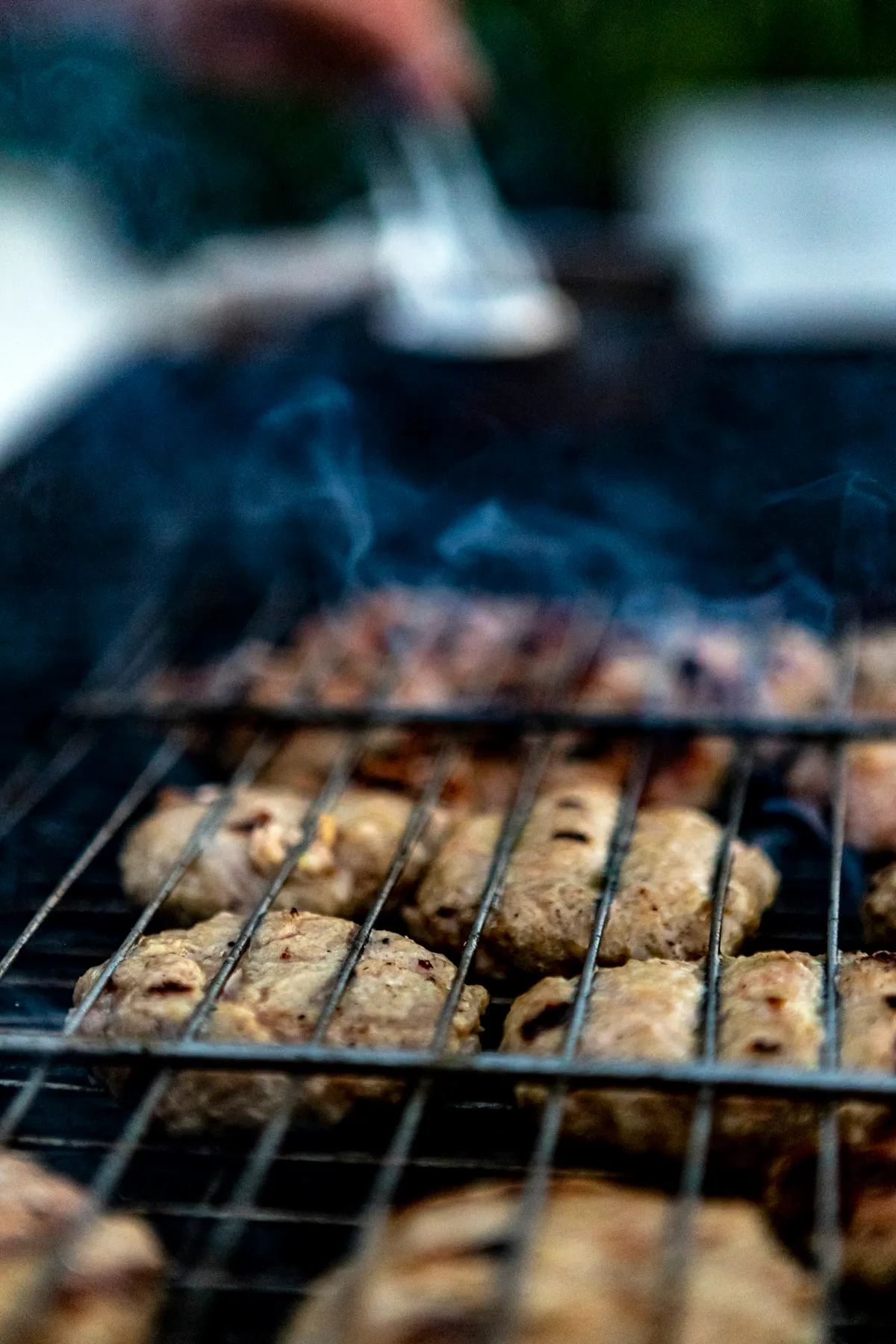
Memorial Day weekend is the official start of grilling season — and the country shows up for it. The Hearth, Patio & Barbecue Association reports that 58% of grill owners fire up on Memorial Day, making it the second-biggest grilling holiday after the Fourth of July.
Which means this weekend, somewhere within a five-mile radius, all nine of these hosts are out in their backyards right now. You’ve been invited to at least one. You might be one.
This is a field guide — half affectionate, half useful. Each archetype has a recognizable move and a tell. More interestingly, each one reveals a different theory of how to plan a gathering. The host you are at a backyard BBQ is usually the host you are at every other event in your life. Read it as entertainment. Steal what works.
1. The Spreadsheet General
How to spot them: They sent a Google Form with the RSVP. The form had a dietary restrictions field, a “what are you bringing” dropdown, and a parking note. There’s a tab in their planning doc called “Cooler Logistics.”
Their theory of planning: If it’s not on the list, it doesn’t happen.
What works: Nothing burns. Nothing runs out. The Spreadsheet General knows exactly how many burgers per adult versus per kid, what’s in the fridge already, and what time the brisket needs to come out. They are unflappable because they did the unflappable work last Tuesday.
What breaks: The plan assumes the universe will cooperate. Three uninvited cousins show up. The propane tank reads empty at the worst possible moment. Suddenly the Spreadsheet General is recalculating, visibly. They don’t improvise well — every deviation is a problem to be solved rather than absorbed.
The fix: Add a “buffer column” to the plan. Twenty percent extra of everything. The plan is a floor, not a ceiling.
2. The Improvisor
How to spot them: They texted you yesterday — yesterday — saying “come over Sunday, I’ll figure out the food.” When you arrive, they’re driving back from the store with two grocery bags and a confident expression.
Their theory of planning: Energy and charm cover most logistics. The food is just an excuse to hang out.
What works: The Improvisor’s parties feel low-pressure because the host is low-pressure. Nobody’s stressed because nobody had time to get stressed. Conversations are loose, plans are flexible, and the vibe is genuinely fun.
What breaks: Ice. They always run out of ice. Also: condiments, charcoal, a clean spatula, a third chair, and any dietary need that isn’t “meat.” Around 5 p.m. someone makes a quiet beer run.
The fix: Keep a “BBQ closet” stocked year-round — paper goods, charcoal, a sealed bag of hot dog buns in the freezer. Improv works when the inventory is already there.
3. The Grill Theologian
How to spot them: They’ve been talking about the burgers since Wednesday. They have opinions about charcoal versus gas, lump versus briquette, and a strong stance on whether you should press down on a patty with the spatula (don’t). The grill has a probe thermometer and possibly a Bluetooth app.
Their theory of planning: Get the meat right and everything else is decoration.
What works: The protein is excellent. Genuinely. You will eat a burger that ruins fast food for you for a week.
What breaks: Everything that isn’t on the grill. Side dishes are an afterthought. The Grill Theologian forgot to put out plates because they were tending to a 4-zone fire. Dessert? “Oh, I think someone was bringing something?” Spouse rolls eyes for the seventh time.
The fix: Delegate the rest. Side dishes, drinks, and serving logistics go to a co-host or a written list. Don’t try to be both the chef and the producer of the event — pick one.
4. The Reluctant Host
How to spot them: They didn’t want to host. They got volunteered because nobody else has a yard, or it’s their turn, or the family just defaulted to their place again. They greet you with a hopeful “what did you bring?” and visibly relax when you say “salad.”
Their theory of planning: Get through it.
What works: The Reluctant Host is honest about their limits. They don’t over-promise. The food is fine, the seating is fine, and nobody leaves disappointed because expectations were never inflated.
What breaks: Their nervous system. By 4 p.m. they’ve been quietly running food, refilling drinks, refereeing kids, and putting out small fires for two straight hours. They eat standing up. They go to bed exhausted and a little resentful.
The fix: A planning template — even a basic one — flips a reluctant host into a competent host overnight. The Party Planner covers the guest list, menu, shopping list, and a timeline, so the night doesn’t live entirely inside their head. The real cost of reluctant hosting isn’t time — it’s mental load. Externalizing the plan fixes both.
5. The Pinterest Stager
How to spot them: Hand-lettered chalkboard menu. Mason jars wrapped in twine. Coordinated paper plates that almost match the napkins. There’s a “drinks station” with a hand-printed sign. There may be a balloon arch.
Their theory of planning: The vibe is the whole point. People remember how it looked, not what they ate.
What works: Photos are stunning. The kids think it’s magic. The first impression is genuinely impressive — guests pause and say “oh, wow.”
What breaks: The aesthetic took five hours, which means the actual food was thrown together at the last minute. Burgers are well-done into oblivion because the grill was tended between centerpiece adjustments. Three guests are quietly hungry by 6 p.m.
The fix: Budget the energy. Pick one aesthetic centerpiece — a single statement table, a signature cocktail with a fun garnish — and let the rest be straightforward. Visual effort has diminishing returns past a certain point. Food prep doesn’t.
6. The Volume Provider
How to spot them: They have twelve guests and bought sixty burgers. There are three coolers. One cooler is exclusively for ice. The condiment lineup includes four mustards. They keep saying “eat, eat, there’s plenty.”
Their theory of planning: Running out is the worst thing a host can do. Surplus is love.
What works: Nobody leaves hungry. Late arrivals get fed like they were on the original list. Vegetarians, gluten-free guests, picky kids — all accommodated by sheer abundance. You take home a foil-wrapped plate whether you wanted one or not.
What breaks: The Volume Provider quietly throws away a lot of food on Tuesday. Their grocery bill is twice what it needed to be. Over time, this becomes the reason they hesitate to host again — not because they don’t enjoy it, but because it’s expensive in a way they haven’t named.
The fix: A real headcount-to-food ratio, written down. One hamburger patty per adult, half per kid, plus 15% buffer. That’s it. Surplus feels like generosity in the moment but reads as waste a week later when leftovers go bad. A simple Party Planner headcount calculator stops the over-buying cycle without making anyone go hungry.
7. The Themed Maximalist
How to spot them: This isn’t a Memorial Day BBQ. It’s a “Star-Spangled Smokeout” with a custom playlist, a signature cocktail named after a founding father, and a request that guests wear red, white, or blue. The invitation was a designed graphic. There’s a corn-hole bracket.
Their theory of planning: A gathering becomes a memory when it has a structure. Themes give people something to play with.
What works: Themed parties are genuinely memorable. The cocktail is a hit. The bracket gets shockingly competitive. Three guests come in costume that wasn’t even required.
What breaks: The theme generates so many micro-tasks that something always gets forgotten in the chaos — usually something basic, like ice or a serving spoon. The Themed Maximalist is also at high risk of host burnout: each event is a notch above the last, until the next one is unsustainable.
The fix: A consistent planning structure that survives the theme. The decorations, drinks, and games can change every time. The checklist underneath should not. Reusing the same prep framework — guest count, food math, timeline, supply list — is what lets the theme energy go up while the planning effort goes down.
8. The Drop-In Host
How to spot them: You don’t get a Memorial Day invitation from this person. You get a text at 1 p.m. on Sunday: “grill’s on if you’re around.” That happens roughly every other weekend from May through September.
Their theory of planning: A standing offer beats a single event. Lower the activation energy, more people come, more often.
What works: Their backyard becomes the neighborhood’s de facto hangout. Friendships deepen because the time is unstructured and the entry barrier is zero. Kids run around. No one feels obligated to stay until “the end.”
What breaks: It only works because there’s a stocked pantry behind it. A drop-in host with an empty fridge is just a stressed host with shorter notice. The Drop-In Host who hasn’t built infrastructure runs to the store seven times in a season and quietly resents it.
The fix: Build the stock once and replenish on autopilot. A Home Inventory tracker for the freezer, pantry, and drinks fridge tells you what’s low before you discover it the hard way. The Drop-In Host’s superpower is preparation that doesn’t look like preparation.
9. The Outsourced Operator
How to spot them: The brisket is catered. There’s a teenager refilling the cooler — they’re paying him. The speakers are rented. The yard was mowed by a service two days ago. The host is sitting down with a drink at 4 p.m., chatting.
Their theory of planning: Money buys time and time buys presence. The best host is one who can actually talk to their guests.
What works: The party runs flawlessly because someone else is running it. The host is genuinely relaxed, which makes the room relaxed. Food is consistently good because professionals made it.
What breaks: It’s expensive — and easy to under-track. To put illustrative numbers on it: catered brisket for 14 guests can run $300–500, plus $80–100 for the teenage runner, $50–100 for speaker rental, and $60–80 for the lawn service two days prior. That’s $500–800 for a “casual” backyard afternoon, and the Outsourced Operator who hasn’t done the math doesn’t realize they crossed that line. There’s also a softer cost: friends sometimes feel less invited to your home and more invited to an event you’re hosting at it.
The fix: Decide what you’re outsourcing and why, on purpose. Catering the meat to save four hours of grill time is a good trade. Renting speakers because you didn’t plan ahead is an expensive workaround. Track the spend the same way you’d track any party budget — a Party Planner with line items for catering, rentals, and labor keeps the wallet honest.
What Your Archetype Reveals
The interesting thing about these nine types isn’t the hosting — it’s what they reveal about how you plan everything else.
| Archetype | Planning style elsewhere |
|---|---|
| Spreadsheet General | Rigorous, list-driven, struggles when reality deviates from the plan |
| Improvisor | High agility, low infrastructure — works under pressure, runs out of basics |
| Grill Theologian | Deep on one thing, blind to surrounding logistics |
| Reluctant Host | Defaults to invisible labor, undercounts mental load |
| Pinterest Stager | Optimizes for appearance over throughput |
| Volume Provider | Confuses surplus with care, under-tracks waste |
| Themed Maximalist | Builds memorable experiences, risks unsustainable escalation |
| Drop-In Host | Low-pressure execution, hidden prep infrastructure |
| Outsourced Operator | Buys back time, sometimes without tracking what it costs |
If you recognized yourself, you probably recognized yourself in how you plan a vacation, a school project, or a work launch too. The patterns travel.
The Move That Works for All Nine
Different archetypes, same fix: externalize the plan.
Whether you’re a Spreadsheet General who needs a buffer column, a Reluctant Host who needs a starting template, or a Drop-In Host who needs a pantry inventory, the underlying move is the same. Get the plan out of your head and onto a page where you can see it, edit it, and reuse it next time.
A backyard BBQ isn’t a big enough event to justify a complicated system. But it is exactly the right size to test one. If a planning approach works for 14 guests and a charcoal grill, it scales up to a graduation party, a baby shower, or a holiday dinner. If it doesn’t, you’ll find out on Memorial Day — when the stakes are low and the propane is still in the tank.
The hosts who keep doing this for years aren’t the ones with the biggest budgets or the fanciest grills. They’re the ones who built a small repeatable system and stopped reinventing it every long weekend.
A simple Party Planner — guest list, menu, timeline, shopping list, budget — is enough infrastructure to make any of these archetypes work better at their own game. The Spreadsheet General gets a less brittle plan. The Improvisor gets a soft net. The Reluctant Host gets a starting point. The Themed Maximalist gets a reliable base to build the theme on top of.
This weekend, the burgers will get eaten either way. The question is how tired you are when the last guest leaves — and whether you actually want to do it again next month.
TL;DR
- 58% of grill owners host on Memorial Day weekend — meaning every neighborhood has all 9 archetypes out at once.
- Every host type has a tell — the Spreadsheet General’s RSVP form, the Improvisor’s last-minute text, the Grill Theologian’s probe thermometer.
- Each archetype reveals a planning pattern that shows up everywhere else in your life — vacations, work projects, school events.
- The universal fix is externalizing the plan — a basic written template makes every archetype work better at their own game.
- A backyard BBQ is the right size to test a planning system before scaling it to bigger events.