
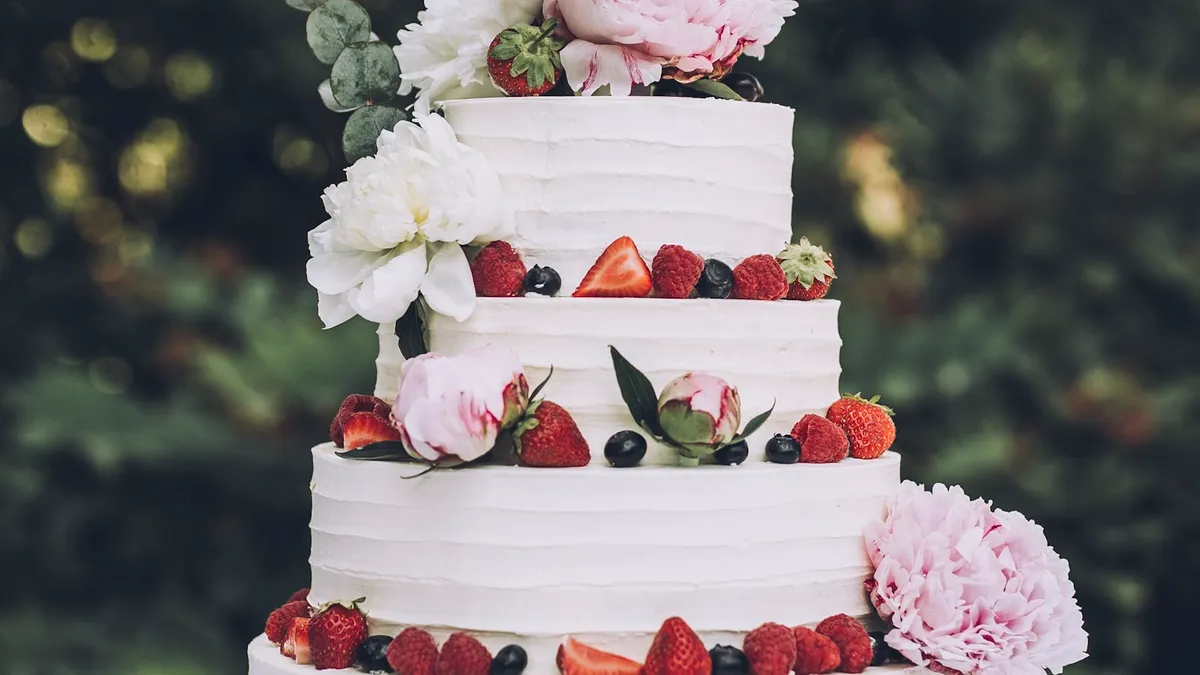
The Email That Makes Every Home Baker Sweat
“Hi! My fiancé and I tasted your cupcakes at a party and we LOVED them. We’re getting married in August and we’d love a wedding cake. We’re thinking three tiers, buttercream, maybe some sugar flowers? It’s for 120 guests. Can you send over pricing?”
You stare at the screen. You’ve been baking for years. You make incredible cupcakes. You’ve even done a couple of birthday cakes that wowed the room. But a three-tier wedding cake for 120 guests? You have no idea what to quote.
So you do what most home bakers do. You Google “how much does a wedding cake cost.” You squint at some forum post from 2019. You pick a number that feels big but not scary — maybe $350 — and you hit send.
Three months and 40 hours of work later, you realize you just catered a wedding for roughly minimum wage.
This is the single most expensive pricing mistake home bakers make. Wedding cakes are not birthday cakes with more tiers. They’re a different product with different economics — and if you don’t know the formula, you’ll quote low every single time.
Let’s fix that.
Why Wedding Cakes Aren’t Just “Big Birthday Cakes”
Wedding cake pricing for home bakers has to account for four things a birthday cake doesn’t:
- Structural complexity. Stacked tiers need internal dowels, cake boards, ganache or fondant seals, and chilling stages. A three-tier cake isn’t three times the work of a one-tier. It’s more like five or six times.
- Time per decoration. Sugar flowers, piped lace, fondant draping, hand-painted details — these scale by hours, not by inches. A single peony can take 45 minutes. A cake with 30 of them is a full workday on its own.
- Consultation overhead. Tasting, design revisions, venue coordination, timeline calls. Every wedding cake order comes with 3–6 hours of unpaid admin if you don’t price for it.
- Risk. If a birthday cake flops, you remake it tomorrow. If a wedding cake falls, you’ve ruined a once-in-a-lifetime event and quite possibly your reputation. That risk has a price.
Home bakers who charge “per slice” the same way they’d charge for a birthday cake are essentially volunteering four of those five things for free.
The Wedding Cake Pricing Formula That Actually Works
Here’s the formula, in order. Work through it every single time, even when the order feels simple.
Quote = (Base Price Per Serving × Servings) × Complexity Multiplier + Add-Ons + Delivery + Consultation Fee
Let’s break down each piece with illustrative numbers so you can see how the math plays out. Adjust the base rates to your market, ingredient costs, and skill level.
Step 1: Set Your Base Price Per Serving
Your base price per serving is the floor — what you’d charge for a plain buttercream cake with no decoration. It has to cover ingredients, basic labor, overhead, and a profit margin.
A rough illustrative range for home bakers in the US:
| Skill / Market Level | Base Price Per Serving |
|---|---|
| New home baker, simple designs | $4.50 – $6.00 |
| Mid-level, custom decoration experience | $6.50 – $9.00 |
| Advanced decorator, sugar flower specialist | $9.50 – $14.00+ |
A “serving” for wedding cake is conventionally a 1” × 2” × 4” slice, which is smaller than what you’d personally cut at home. Use that standard — every venue planner and wedding coordinator uses it, and undercutting your serving count is how you end up quoting for half as many slices as the cake actually yields.
Step 2: Apply a Complexity Multiplier
This is the step most home bakers skip entirely — and it’s where you lose hundreds of dollars per order.
A complexity multiplier adjusts the base price based on how much decorative and structural labor the design requires. Here’s a worked example of how multipliers might land:
| Design Description | Multiplier |
|---|---|
| Smooth buttercream, no decoration | 1.0× |
| Textured buttercream (rosettes, combed, ruffled) | 1.2× – 1.3× |
| Fondant-covered, clean design, minimal detail | 1.4× – 1.5× |
| Fondant with piped lace, edible pearls, simple appliqués | 1.6× – 1.8× |
| Sugar flowers, hand-painted details, draping fondant | 1.9× – 2.3× |
| Hyper-realistic sugar work, gravity-defying tiers, structural art pieces | 2.5×+ |
So a 120-serving cake at a $7 base price with a textured buttercream design (1.25×) is:
- $7 × 120 × 1.25 = $1,050
The same cake with cascading sugar flowers and hand-piped lace (2.0×):
- $7 × 120 × 2.0 = $1,680
That $630 difference isn’t markup — it’s the actual cost of the 12+ extra hours of decoration labor.
Step 3: Add Explicit Line-Item Add-Ons
Anything that isn’t base cake + design belongs as a separate line item. Never bundle these into the per-serving price — you’ll forget to charge for them, and clients won’t understand why you’re “so expensive” compared to the grocery store.
Common add-ons with illustrative ranges:
- Extra flavors per tier (different flavor in each tier, filling changes): $25 – $75 per tier
- Dietary modifications (gluten-free, vegan, nut-free): +15–25% on the affected tier
- Custom cake topper (sourcing, fitting, coordination): $15 – $40
- Edible image or custom printed elements: $20 – $60
- Additional fresh flowers (food-safe prep, wiring): $30 – $80
- Rental of cake stand: $25 – $75 plus refundable deposit
Step 4: Charge for Delivery and Setup
Delivery isn’t “included.” Delivery is a separate, stressful, high-risk service that costs you time, gas, and an increased chance of disaster.
A reasonable delivery formula:
- Base delivery fee (under 15 miles): $50 – $100
- Mileage beyond base radius: $1.50 – $2.50 per mile
- Setup and stacking at venue (stacking tiers on-site, final flower placement): $75 – $150
- Standby or early-delivery windows (venue requires arrival 4+ hours before reception): $50+
If the venue is over an hour away, add a travel premium — your time in the car is still your time.
Step 5: Add a Consultation Fee (or Fold It Into the Quote)
Consultations and tastings are real costs. Ingredients for a tasting box, the hour spent with the couple, the email back-and-forth refining the design — that’s 4–6 hours for most orders.
You have two options:
- Charge a separate tasting fee: $35 – $75, often credited toward the final cake if they book.
- Fold an admin charge into every quote: $100 – $200 baked into the total price.
Either works. Both are better than absorbing the cost.
What This Looks Like in Practice
Let’s walk through a full illustrative quote. A couple wants:
- 3 tiers, 100 servings
- Textured buttercream with 12 small sugar flowers
- Two flavors (vanilla bean, chocolate raspberry)
- Delivery 22 miles away, setup at venue
- Tasting session included
The math:
| Line Item | Calculation | Amount |
|---|---|---|
| Base cake, 100 servings × $7 | $700 | $700 |
| Complexity multiplier (1.5× for textured buttercream + sugar flowers) | $700 × 1.5 | $1,050 |
| Second flavor upcharge | flat | $40 |
| Delivery (base $75 + 7 extra miles × $2) | $75 + $14 | $89 |
| On-site setup fee | flat | $95 |
| Tasting + consultation | flat | $50 |
| Total quote | $1,324 |
If you’d quoted that cake at “$7 per slice,” you’d have charged $700. You’d have lost roughly $624 — which, given the 20+ hours of combined labor, would have meant you worked for about $15 an hour after ingredient costs. With the formula, you’re at $45–55 an hour. That’s the difference between a business and a hobby.
How to Structure Deposits and Payment
Custom wedding cakes are a deposit-based product. Non-negotiable.
The standard structure:
- Booking deposit (25–35% of total, non-refundable) — due at signing. This locks in the date and covers your time if they cancel.
- Design approval payment (25%) — due 60–90 days out, after design is finalized. If they want major changes after this point, revisions are billable.
- Final balance (remainder) — due 14–21 days before the wedding. Not the day of. Never the day of.
A few ironclad rules every home baker should bake into their contract:
- No final balance = no cake delivered. This needs to be written into the contract and communicated at booking. You cannot chase payment while stacking a four-tier cake.
- Design changes after the approval milestone are billed separately. Otherwise couples will “just add one more flower” until you’ve rebuilt the cake three times.
- Ingredient allergies must be disclosed in writing. This is both a safety and liability issue.
The 5 Questions You Must Ask Before Quoting
A home baker who quotes a wedding cake without these answers is guessing. Get these answers in writing before you send a number.
- How many guests are you serving? (This determines tier sizing, not just total cost.)
- What does the venue require? (Delivery windows, setup access, refrigeration availability, stand rental rules.)
- What’s the cake style? (Have them send 2–3 inspiration photos. Pinterest is fine. Vague descriptions are not.)
- What flavors and any dietary needs? (Affects pricing per tier and shopping list.)
- What’s the date, time, and address of the venue? (A 90-minute drive on Saturday of Memorial Day weekend is a very different job than a 10-minute drive on a Tuesday.)
If a prospective client won’t answer these, they’re not a wedding cake client. They’re a headache in disguise.
Common Objections and How to Respond
Home bakers often lose nerve at the quote stage because they brace for pushback. Here’s how to handle the three most common objections without slashing your price.
“That’s more than I expected.”
“I totally understand — custom wedding cakes are often priced very differently from what people see at bakeries or grocery stores. The quote reflects about 20 hours of hands-on work and the ingredient quality you tasted. I’d love to find a design that fits your budget. Would you like to simplify the decoration or reduce the serving count?”
“Can you match [lower quote from another baker]?”
“I can’t match that price, but I can tell you what’s in mine: [list 2–3 specific things — higher-quality ingredients, handmade sugar flowers, delivery and setup included, etc.]. If the other baker is offering the same things at that price, they’re a great choice. I want you to have the right cake for you.”
“Our venue has a cutting fee, so can you discount?”
“Venue cutting fees are billed separately by the venue — they’re not part of my pricing. My quote reflects the cake itself.”
You don’t have to match anyone. You have to price your own product honestly.
Tracking Costs and Staying Profitable
None of this math holds up if you don’t actually know what your ingredients and time cost in the first place. Most home bakers don’t — and they’re the ones getting burned quoting wedding cakes.
A tool like the Recipe Profit Calculator (Excel) or the Sheets version makes it easy to plug in each ingredient and labor step, then get a real cost-per-batch figure. That becomes the honest base number you plug into the formula above — not a guess based on what flour cost last year.
If you’re running an entire home bakery — not just pricing occasional wedding orders — the Bakery Business Manager (Excel) or Sheets edition is designed for exactly this. It tracks ingredient costs, recipe yields, order pipelines, and per-order profitability so you can see whether that “big wedding cake” actually paid you.
And when your business outgrows a spreadsheet… Ardent Seller is the next step — a full operations platform for scaling bakeries that handles inventory, manufacturing workflows, and sales analytics without the chaos of a dozen tabs.
The Takeaway
Wedding cake pricing for home bakers comes down to five things: a real base price per serving, an honest complexity multiplier, explicit add-ons, paid delivery and setup, and consultation time that isn’t free. Quote by formula, not by feeling. Charge a deposit, protect your time, and walk away from clients who won’t answer your questions.
The bakers who treat wedding cake orders like a business survive their second year. The ones who quote from the gut either burn out or quietly stop taking the work. You don’t need to be either.
Disclaimer: This post is for informational and educational purposes only and does not constitute legal, tax, accounting, or food safety advice. Wedding cake pricing, contracts, cottage food regulations, and liability requirements vary significantly by state, county, and individual business circumstances — consult a licensed attorney, CPA, and your local health department before setting prices, signing contracts, or accepting wedding cake orders commercially.