
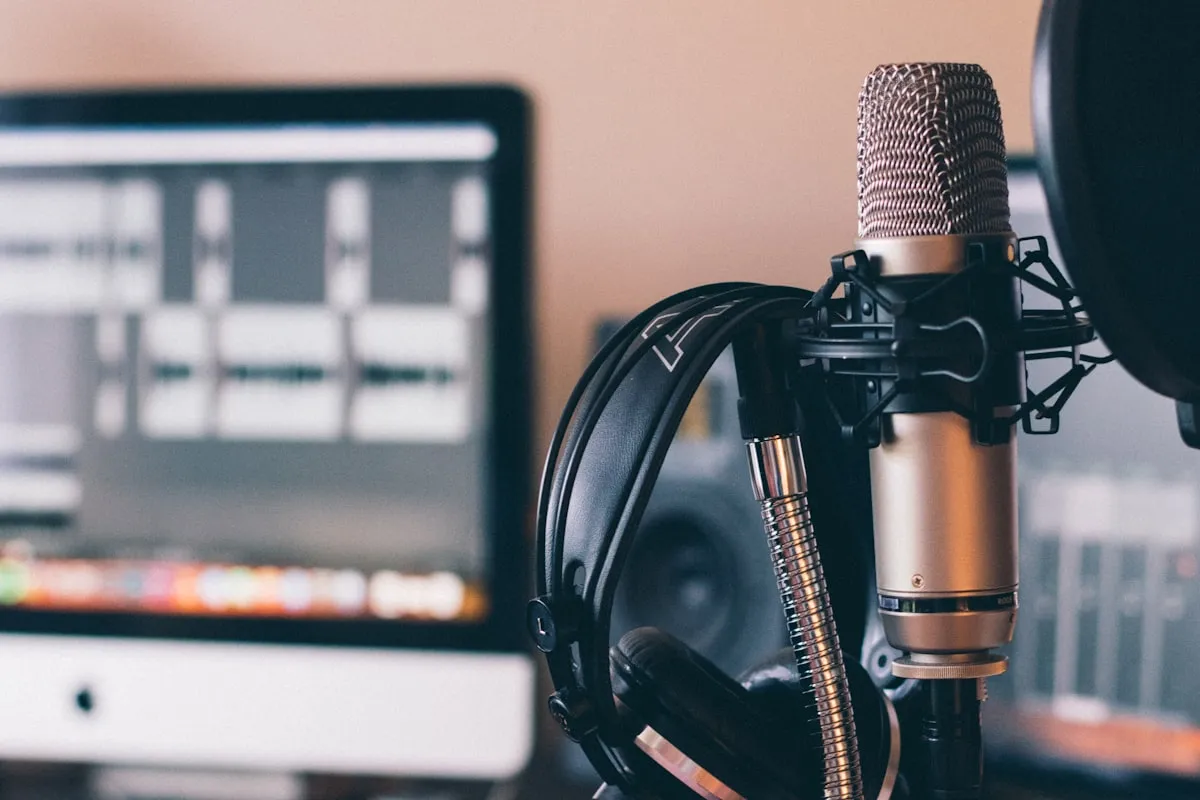
Podcasts are everywhere, and finding your first one is surprisingly hard. There are more than five million active shows. There is no real discovery layer — no algorithm that says “if you liked this book, you’ll like this podcast.” And everyone who loves podcasts has weird taste, so their “you have to try this” recommendation is almost always their weird taste and not yours.
So the real question isn’t “what are the best podcasts?” It’s: which shows would actually hook someone who’s never pressed play before? This list answers that question. These are the best podcasts for beginners — ten entry points, different flavors for different brains, chosen for one thing: how reliably they turn first-timers into regulars.
Not the 100 best podcasts. The 10 with the highest “I just binged seven episodes in a weekend” rate.
How I Picked These 10
A beginner-friendly podcast is one that hooks a new listener within the first episode, requires no backstory, and has enough quality episodes to keep listening if you fall in love. Every show on this list meets five criteria:
- The first episode earns your attention. No four-episode lore dump before it gets good.
- You can drop in anywhere. No 400-episode backlog to clear before current episodes make sense.
- The production is professional. Podcasts with bad sound design die in your ears at the gym.
- The catalog is deep. If you love it, you can binge for months.
- The host has a real voice. Someone you’d have coffee with, not just listen to.
These aren’t all my personal favorites. They’re the shows I’d hand to someone who’s never subscribed to a podcast in their life and be confident they’d finish at least one episode.
The Quick-Scan Comparison
| Podcast | Genre | Episode Length | Best First Episode |
|---|---|---|---|
| Serial (Season 1) | True crime / investigative | 30-55 min | ”The Alibi” (S1E1) |
| This American Life | Storytelling | 60 min | Any recent episode |
| Radiolab | Science / curiosity | 30-60 min | ”Colors” |
| My Favorite Murder | True crime / comedy | 60-90 min | Any recent minisode |
| Hardcore History | History deep-dive | 3-6 hours | ”Supernova in the East I” |
| Freakonomics Radio | Economics / behavior | 35-60 min | ”How to Get Anyone to Do Anything” |
| 99% Invisible | Design / hidden details | 20-40 min | ”Fordlandia” |
| The Daily | News briefing | 20-30 min | Today’s episode |
| How I Built This | Founder interviews | 45-75 min | The Spanx or Airbnb episode |
| Welcome to Night Vale | Surreal audio fiction | 25-30 min | Episode 1: “Pilot” |
Narrative & Storytelling: The Gateway Genre
Narrative podcasts are where most new listeners fall in love. They do what a great audiobook does, but built around ideas and interviews instead of a single author’s voice. Start here if you aren’t sure what you like.
Serial (Season 1)
One-line verdict: The show that made podcasts mainstream — and it still holds up.
Sarah Koenig reinvestigates a 1999 Baltimore murder case and invites the listener to reason alongside her, week by week. Twelve episodes, one case, no filler. If you only try one podcast and it doesn’t hook you, stop — podcasts may genuinely not be your thing. Season 1 is the universal starter kit, and “The Alibi” is where every podcast listener in America started.
This American Life
One-line verdict: The template every other podcast is copying.
Each episode builds a theme — “Modern Love,” “Babysitting,” “Kid Logic” — out of two or three short true stories. It has been running since 1995, which means there are over 800 episodes in the archive. Ira Glass’s voice is basically the sound of podcasting itself. Skip to any recent episode or browse the archive by theme; you don’t have to start at the beginning.
Radiolab
One-line verdict: Science and curiosity shaped like a story.
Radiolab treats weird questions — what color is the sky really? what does a year sound like? what do we owe strangers? — with genuine rigor and cinematic sound design. Not every episode lands equally, but the hits are unforgettable. The production quality alone is the reason sound engineers study this show.
Underrated pick: “Colors.” It will change how you think about the history of the color blue.
True Crime That Doesn’t Leave You Feeling Awful
True crime is the biggest gateway genre for a reason — the story engine is irresistible — but a lot of it can be exploitative or gratuitously bleak. This is the one that gets the tone right without making you feel like you need a shower after.
My Favorite Murder
One-line verdict: Two friends talking about historical crimes like you’re hanging out at brunch.
Karen Kilgariff and Georgia Hardstark essentially invented the “true crime comedy” genre. The show is less about gore and more about friendship, mental health, and the strange way humans process scary stories. Not for every listener, but for its audience it’s less a podcast and more a lifestyle. Start with a recent “minisode” (listener-submitted stories) to get the vibe before committing to a full episode.
Ideas, History, and “Wait, Really?” Moments
This is the “learn something while doing dishes” category. Podcasts are phenomenal for this — better than YouTube for lean-back listening, better than books for digesting between other things. Three very different picks depending on your appetite.
Hardcore History
One-line verdict: History podcasts are good. This is history podcasts made holy.
Dan Carlin’s episodes run four to six hours and release every six months to a year. He treats history like a novelist treats character — with weight, voice, and stakes. His “Blueprint for Armageddon” series on WWI is the one even non-history people finish on the first try.
Start with: “Supernova in the East I” if you prefer recent history (Pacific theater of WWII), “Blueprint for Armageddon I” if you want the crown jewel.
Freakonomics Radio
One-line verdict: Economics as the hidden operating system of everyday life.
Stephen Dubner asks questions that sound silly and turn out to be profound: why do people cheat? why is the price of college going up? what if we just paid people to be healthy? The production is tight, the guests are top-tier, and every episode gives you one thing worth arguing about at dinner.
99% Invisible
One-line verdict: Design stories about everything around you that you’ve stopped noticing.
Roman Mars unpacks the overlooked design of ordinary things — crosswalks, hotel carpet, the back of a dollar bill, stadium beer cups. It’s short, binge-friendly, and will permanently rewire how you look at the built world. The back catalog is enormous, so once you’re hooked you have months of listening ahead.
Underrated pick: “Fordlandia” — the story of Henry Ford’s attempt to build a rubber plantation city in the Amazon. It reads like a novel.
News Without the Doomscroll
The Daily (NYT)
One-line verdict: The 20-minute explainer that turned morning podcasts into a ritual for millions.
One story, every weekday, explained by the reporter who covered it. Not a news roundup — a deep dive on a single thing that happened. It pairs perfectly with a commute, a dog walk, or making coffee. Episodes drop around 6am ET. The format is consistent enough that any day’s episode works as your first.
Founder Stories and Business Obsession
How I Built This
One-line verdict: If you’ve ever wanted to start something, this is the podcast.
Guy Raz interviews founders — Spanx, Airbnb, Patagonia, Warby Parker, Ben & Jerry’s — and walks back through the messy origin story most books skip. The pattern is the lesson: everyone looked crazy and broke for longer than you’d think. Great for makers, side-hustlers, and anyone who needs a reminder that “being early” is not the same as “being wrong.”
Start with: The Sara Blakely (Spanx) or Brian Chesky (Airbnb) episode. Both are master classes in tolerating doubt.
Audio Fiction Is a Real Genre Now
If you love audiobooks, don’t skip this category. Audio drama has quietly become one of the most creative spaces in media — think “prestige TV drama, but made by five people with one mic.”
Welcome to Night Vale
One-line verdict: A fake community radio station broadcasting from a surreal desert town.
Cecil Baldwin voices the mild-mannered host of a radio show in a town where things are, let’s say, strange. Glow clouds drift through on Tuesdays. There’s a forbidden dog park. The show is funny, genuinely weird, and occasionally moving. You will know within ten minutes whether it’s for you.
Skip this if you need everything you listen to explained. Try it if you’ve ever loved surreal fiction, Twin Peaks, or The X-Files.
How to Pick Your First One
The biggest mistake new podcast listeners make is starting with someone else’s favorite. Pick based on the last thing you enjoyed reading, watching, or listening to — not the genre label.
| If you liked… | Try… |
|---|---|
| Any true crime documentary | Serial |
| Long-form nonfiction books | Hardcore History |
| Short personal essays | This American Life |
| Curiosity-driven YouTube channels | Radiolab or 99% Invisible |
| Prestige TV dramas | Welcome to Night Vale |
| Business books and founder biographies | How I Built This |
| Your daily newspaper | The Daily |
| Comedy friendship shows | My Favorite Murder |
| Counterintuitive nonfiction (“Thinking Fast and Slow”) | Freakonomics Radio |
Listen to two or three episodes before deciding. If the show doesn’t click, pick a different genre — don’t conclude that podcasts aren’t for you. Most people who “don’t like podcasts” just picked the wrong first one.
Why a Tracker Pays for Itself by Podcast Three
Once the podcast bug bites, it bites hard. Within a few months, you’ll be subscribed to ten shows, halfway through three different serial narratives, and unable to remember if you finished the episode everyone was talking about at brunch.
This is the problem every media tracker exists to solve. A simple spreadsheet that logs:
- The shows you’re subscribed to and your current episode
- Recommendations from friends (so you don’t forget them)
- Episode ratings (so you can find the great ones again)
- A running “queue” of what to listen to next
A tool like the Podcast Tracker makes this automatic — one sheet for subscriptions, one for your backlog, one for the finished pile. When you sit down for a walk, you look at the queue and press play. No thumbing through six apps trying to remember where you left off.
If you consume across formats — books, anime, K-dramas, podcasts, the whole media pantry — the Asian Media Bundle gives you matching trackers so everything lives in one system instead of scattered notes.
The Bottom Line
The best podcast for beginners is the one that matches your existing taste, not the one with the most hype. Start with one show from this list. Listen to two or three episodes before deciding. If it doesn’t click, pick a different genre.
Out of these ten, the highest “new listener hook rate” goes to:
- Serial if you’re a first-timer with no context
- This American Life if you like personal stories and essays
- 99% Invisible if you’re short on time and want bite-sized episodes to test the format
- How I Built This if you want a podcast that motivates you while you fold laundry
One podcast. One walk. That’s the whole commitment. Everything else is noise.