
You’re Already Running a Factory — You Just Don’t Know It Yet
Picture this: it’s 6 AM on a Saturday. You’ve got three dozen cupcake orders, a custom cake due by noon, and a farmer’s market booth to stock. You’re pulling butter out of the fridge, checking if you have enough vanilla extract, and mentally doing math on how many eggs are left in the carton.
Sound familiar? That chaos you feel isn’t a lack of talent. It’s a lack of systems.
Here’s the thing most home bakers and food sellers don’t realize: what you’re doing in your kitchen is manufacturing. You have raw materials (ingredients), a production process (recipes and baking), finished goods (the treats), and customers waiting for delivery. The only difference between your kitchen and a factory floor is that nobody taught you to think of it that way.
Once you do, everything changes.
What “Meal Prep as Manufacturing” Actually Means
Manufacturing isn’t about industrial ovens and conveyor belts. At its core, manufacturing is just a system for turning inputs into outputs — predictably, efficiently, and profitably.
For a home baker or food seller, that means:
- Raw materials = your ingredients and packaging
- Bill of materials = your recipes (with exact quantities)
- Production planning = your baking schedule
- Quality control = your taste tests and presentation standards
- Inventory management = knowing what you have before you shop
When you treat each of these as a real business function instead of something you wing on baking day, you stop scrambling and start scaling.
Step 1: Turn Your Recipes into Bills of Materials
A recipe tells you how to make something. A bill of materials (BOM) tells you what it costs and what you need on hand to make it.
The difference matters. A recipe says “2 cups flour.” A BOM says:
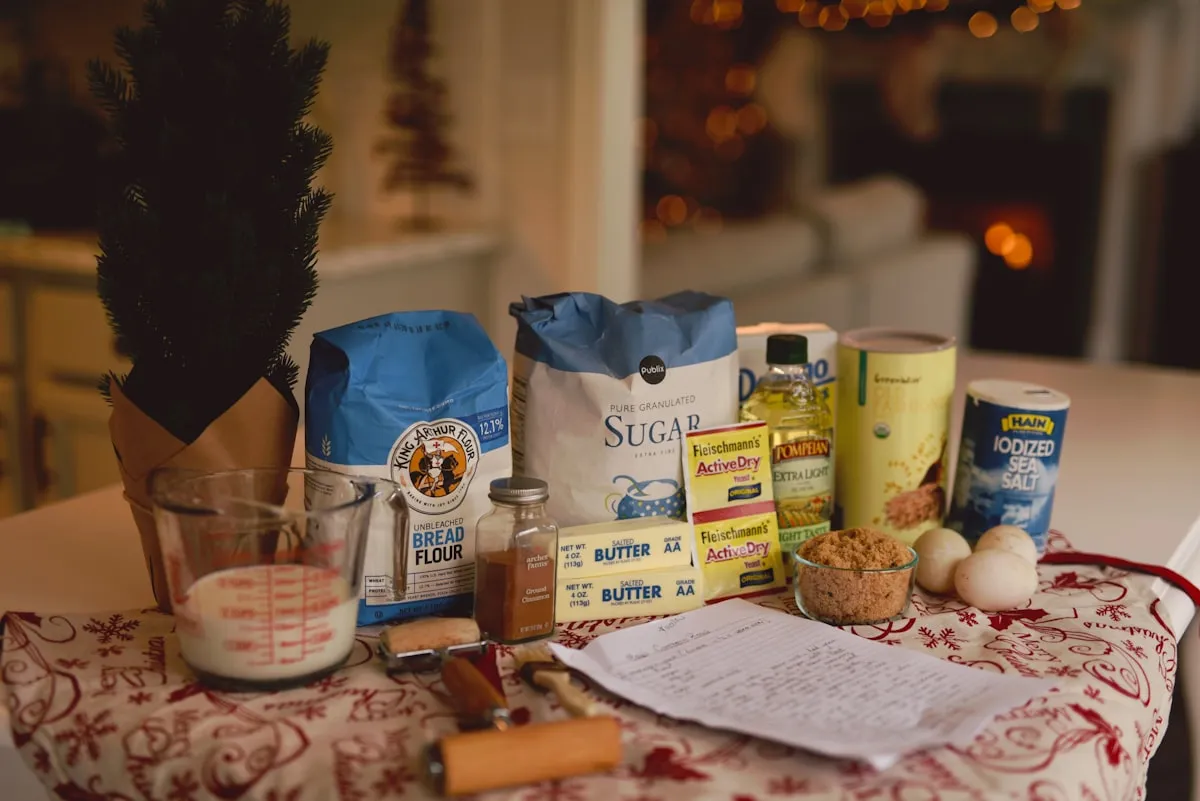
- 2 cups King Arthur bread flour = 240g
- Cost per kg: $1.85
- Cost for this recipe: $0.44
Do this for every ingredient in every recipe, and suddenly you know:
- Your exact cost per batch
- Your exact cost per unit (per cupcake, per cookie, per loaf)
- Which recipes are your most profitable
- Which ones are quietly losing you money
This is the foundation of profitable food selling. Without it, your pricing is guesswork.
The Recipe Profit Calculator makes this straightforward — enter your ingredients, quantities, and costs, and it calculates per-batch and per-unit profitability for every recipe in your lineup.
Step 2: Plan Production Like a Scheduler, Not a Scrambler
Most home bakers plan their week by scrolling through orders and mentally sorting out what needs to happen when. That works when you’re filling five orders a week. It falls apart at fifteen.
A manufacturing mindset means batch planning:
- Group similar items together. If three orders need vanilla buttercream, make one triple batch instead of three singles. Less cleanup, less waste, less time.
- Sequence by dependency. Cake layers need to cool before frosting. Dough needs to chill before cutting. Map out the timeline so you’re never standing around waiting.
- Prep shared components first. Make all your frostings, fillings, and doughs before you start assembling. This is mise en place at business scale.
- Assign time blocks. “Tuesday: all doughs. Wednesday: all baking. Thursday: all decorating and packaging.” Batching by task type is dramatically faster than completing one order start-to-finish before starting the next.
This isn’t just efficiency for efficiency’s sake. Batch production directly increases your hourly earnings because setup and cleanup time gets spread across more units.
Step 3: Track Inventory Before You Shop
How many times have you bought a bag of powdered sugar only to find two bags already in the pantry? Or worse — started a batch and realized you’re short on a critical ingredient with no time to run to the store?
Real manufacturers don’t guess what’s on the shelf. They track it.
You don’t need barcode scanners or warehouse software. You need a simple system:
- Log what you buy (item, quantity, cost, date)
- Deduct what you use (tied to your recipes/BOMs)
- Set reorder points (when flour drops below 5 kg, it goes on the shopping list)
This does three things at once:
- Eliminates waste from over-purchasing perishable ingredients
- Prevents stockouts that delay orders and frustrate customers
- Gives you real cost data instead of vague estimates
The Bakery Business Manager combines inventory tracking with recipe costing in one workbook — so when you log an ingredient purchase, it automatically updates your recipe costs and shows you what’s running low.
Step 4: Cost Every Batch (Yes, Every One)
“I know roughly what my cookies cost” is the most expensive sentence in the home baking world.
Rough estimates hide real losses. Butter prices fluctuate. You use more vanilla in the winter recipes. That “free” packaging from the dollar store actually costs $0.35 per box when you add the tissue paper, sticker, and ribbon.
Costing every batch means:
- Recording actual ingredient quantities used (not just the recipe amounts — real usage includes waste, spills, and taste-testing)
- Including packaging, labels, and presentation materials
- Factoring in your time at a fair hourly rate
- Adding a share of overhead (electricity, gas, cleaning supplies)
When you have real numbers, you can make real decisions:
- Raise prices on items where your margin is too thin
- Promote items where your margin is generous
- Retire recipes that aren’t worth the effort
- Negotiate better with ingredient suppliers because you know your volumes
Step 5: Measure What Matters
Manufacturers live and die by their metrics. You don’t need a dashboard with fifty charts, but you should know these numbers cold:
- Cost per unit — What does one cupcake/cookie/loaf actually cost you to produce?
- Margin per unit — How much profit per item after all costs?
- Revenue per hour — How much do you earn for each hour of kitchen time?
- Waste percentage — How much of what you buy ends up in the trash?
- Best sellers vs. best earners — Your most popular item isn’t always your most profitable one.
Track these monthly and you’ll start spotting patterns. Maybe your decorated sugar cookies are Instagram gold but earn you $8/hour after labor. Maybe your simple banana bread quietly earns three times that. Data tells you where to focus.
The Mindset Shift That Changes Everything
The difference between a hobbyist who sells baked goods and a business owner who happens to bake is systems thinking.
A hobbyist says: “I’ll figure it out as I go.”
A business owner says: “What’s the process, what does it cost, and how do I improve it?”
You don’t need an MBA or a commercial kitchen to think this way. You just need to:
- Document your recipes as BOMs with real costs
- Plan production in batches instead of one order at a time
- Track your inventory so you shop smart and never run short
- Cost every batch so your pricing is based on reality
- Review your numbers monthly so you keep getting better
These five habits are the difference between baking until you burn out and building a business that grows sustainably.
Your Kitchen Deserves Real Tools
Running a food business out of your kitchen is hard enough without trying to track everything in your head or on random sticky notes.
The Bakery Business Manager was built specifically for home bakers who want to run their kitchen like a real business — with recipe costing, inventory tracking, order management, and profit analysis in one Excel workbook. And the Recipe Profit Calculator is perfect if you just want to start with the costing piece and see which recipes are actually earning their keep.
Start with the numbers. The systems will follow.
And when your baking business outgrows a spreadsheet — when you’re juggling multiple sales channels, tracking dozens of ingredients, and need real-time visibility into your operation — Ardent Seller is the next step. It’s a full business management platform built for makers, with inventory tracking, manufacturing workflows, and sales analytics designed to scale with you.
Your recipes deserve to be profitable. Your business deserves to be built on more than guesswork.
Disclaimer: This post is for informational and educational purposes only and does not constitute financial, tax, accounting, or legal advice. Business situations vary widely — consult a licensed CPA, attorney, or business advisor before making significant decisions about pricing, taxes, business structure, or compliance.