
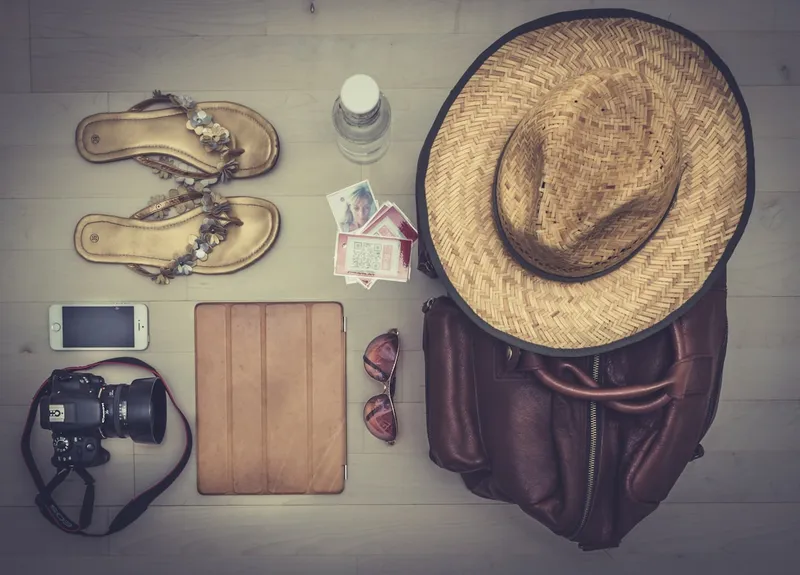
You’re leaving in two days. The suitcase is open on your bed. You’re staring at your closet like it owes you an explanation.
Spring travel is uniquely tricky. The weather can’t make up its mind — sunny and 70 one day, rainy and 50 the next. You’re packing for two seasons at once, and you don’t want to check a bag for a four-day trip. Something’s getting left behind. The question is whether it’ll be your rain jacket or your sanity.
Here’s the fix: a packing system that accounts for spring’s mood swings without turning your suitcase into a game of Tetris. This checklist covers everything from clothing layers to the small stuff most people forget until they’re already at the airport.
Why Spring Trips Need a Different Packing Strategy
Spring travel packing requires a layering strategy rather than a single-climate approach. Unlike summer (where everything is light) or winter (where everything is heavy), spring demands versatility. You might need a sundress and a fleece on the same day.
The three principles that make spring packing work:
- Layer everything. A thin base layer, a mid layer, and a packable outer layer handle 90% of spring weather scenarios.
- Choose fabrics that multitask. Merino wool, moisture-wicking synthetics, and wrinkle-resistant blends earn their suitcase space. Cotton doesn’t.
- Pack by outfit, not by category. Instead of grabbing “five shirts and three pants,” plan complete outfits for each day. You’ll pack less and wear more of what you bring.
The Complete Spring Travel Packing Checklist
Use this as your master list. Not every item applies to every trip — adjust based on your destination, trip length, and activities. But scan the full list before you zip that bag shut.
Clothing Essentials
| Item | Quantity (4-Day Trip) | Why It Matters |
|---|---|---|
| T-shirts or blouses | 3-4 | Base layers for warm days |
| Long-sleeve shirt | 1-2 | Cooler mornings and evenings |
| Light sweater or fleece | 1 | Mid-layer for temperature drops |
| Packable rain jacket | 1 | Non-negotiable for spring |
| Jeans or pants | 2 | One casual, one nicer option |
| Shorts or skirt | 1 | For unexpectedly warm days |
| Comfortable walking shoes | 1 pair | You’ll walk more than you think |
| Sandals or flip-flops | 1 pair | Doubles as hotel room shoes |
| Underwear | 4-5 | Always pack one extra |
| Socks | 4-5 pairs | Match to your shoe choices |
| Sleepwear | 1 set | Don’t sleep in tomorrow’s outfit |
| Light scarf or bandana | 1 | Versatile — warmth, sun cover, style |
Pro tip: Roll your clothes instead of folding them. Rolling reduces wrinkles and lets you see everything at a glance when the suitcase is open. Packing cubes take this a step further — one cube per outfit or per clothing category keeps things organized throughout the trip, not just on day one.
Toiletries and Personal Care
This is where most packing lists fall short. The basics are obvious — it’s the “small stuff” that trips people up:
- Toothbrush and toothpaste (travel size)
- Deodorant
- Shampoo and conditioner (solid bars save space and avoid TSA liquid drama)
- Face wash and moisturizer (spring air can be dry, especially on flights)
- Sunscreen — SPF 30 minimum. Spring sun is sneaky. You’ll burn before you realize it’s that warm.
- Lip balm with SPF
- Any prescription medications (keep in original containers for travel)
- Pain relievers (ibuprofen, acetaminophen)
- Allergy medication — spring means pollen. Even if you don’t normally need it, throw a small pack of antihistamines in your bag
- Contact lenses and solution (if applicable)
- Hair ties and bobby pins
- Small first aid basics — bandages, antiseptic wipes, blister pads if you’ll be walking a lot
Tech and Electronics
- Phone and charger (obvious, but chargers are the #1 forgotten item)
- Portable battery pack — a must for days when you’re out sightseeing from morning to night
- Headphones or earbuds
- Camera (if your phone camera isn’t enough)
- Universal power adapter (for international travel)
- E-reader or tablet — lighter than books for flights and downtime
Documents and Money
- ID or passport (check expiration dates — some countries require 6 months of validity)
- Boarding passes (digital or printed backup)
- Hotel confirmation details
- Travel insurance documents (if you have coverage)
- Credit cards — bring at least two from different networks in case one gets declined
- Small amount of local cash — card readers fail, street vendors exist, and tips happen
- Copies of important documents — photo or scan of passport, ID, and insurance cards stored in your email or cloud storage
The “Most People Forget” List
These are the items that won’t ruin your trip if you forget them, but will make the trip noticeably better if you remember:
- Reusable water bottle — stay hydrated, save money, skip the airport markup
- Snacks for travel days — granola bars, nuts, dried fruit. Airport food is overpriced and underwhelming
- Plastic bags or dry bags — for wet swimsuits, dirty laundry, or leaky toiletries
- Sunglasses — spring glare is real, especially near water
- Umbrella (compact/travel size) — your rain jacket handles drizzle; an umbrella handles downpours
- Eye mask and earplugs — for flights, noisy hotels, or roommates who snore
- Laundry detergent sheets — if your trip is longer than 4 days, packing lighter and doing a quick wash beats overpacking
- A nice outfit for one evening out — even casual trips usually have one “let’s go somewhere nice” moment
How to Pack It All Without Checking a Bag
Fitting a spring trip into a carry-on is absolutely doable for trips up to a week. Here’s the method:
- Start with shoes. Place them sole-to-sole in a bag at the bottom of your suitcase. Shoes are the heaviest, least flexible items — everything else works around them.
- Roll base layers and lightweight items. T-shirts, underwear, socks, and sleepwear all roll tightly and fill gaps.
- Fold structured items. Jeans, nicer pants, and button-downs get a single fold and lay flat across the top of your rolled items.
- Wear your bulkiest items on travel day. Your heaviest shoes, your jacket, and your thickest sweater should be on your body, not in your bag.
- Use every pocket. Stuff socks inside shoes. Tuck chargers into shoe gaps. Put toiletries in an outside pocket for easy TSA access.
- Compress with packing cubes. Once clothes are rolled and sorted into cubes, compress the air out. This alone can save 20-30% of suitcase space.
The Personal Item Trick
Your “personal item” (backpack or tote) is your secret weapon. Use it for:
- Electronics and chargers
- One change of clothes (in case your carry-on gets gate-checked or delayed)
- Snacks and water bottle
- Documents and wallet
- Anything you need during the flight
This means your carry-on suitcase is purely clothes, shoes, and toiletries — much easier to organize.
Planning Your Trip Before You Pack
Good packing starts before the suitcase comes out. The most common reason people overpack isn’t poor folding technique — it’s poor planning. They don’t know what they’ll actually do each day, so they pack for every possible scenario.
Spend 15 minutes before packing to:
- Check the weather forecast for your destination. Not just temperatures — look at rain probability and wind.
- List your activities. Hiking, beach, restaurants, sightseeing, business meetings — each one has a wardrobe implication.
- Plan outfits by day. Assign specific clothing combinations to specific days. Mix and match is fine, but each piece should have a job.
- Check your accommodation. Does it have laundry? A pool? A dress code for dining? This affects what you need to bring.
Having trouble deciding between destinations in the first place? The Vacation Decision Helper is a structured spreadsheet that helps you compare trip options side by side — factoring in costs, travel time, weather, and what matters most to you.
Packing Checklists by Trip Type
Not every spring trip is the same. Here’s how to adjust the master checklist above for specific trip types:
Beach or Resort Trip
Add: swimsuit (2 if possible — one drying, one wearing), cover-up, reef-safe sunscreen, waterproof phone pouch, beach towel (only if your resort doesn’t provide one), aloe vera gel.
Skip: heavy layers, multiple pairs of closed-toe shoes.
If you’re heading to the coast, the Beach Vacation Checklist has a detailed, category-by-category packing list you can customize and check off as you go. It covers everything from swimwear to beach gear to evening outfits.
City Sightseeing Trip
Add: comfortable walking shoes (seriously — the single most important item), a crossbody bag for security, a dressier outfit for one evening, public transit card or app.
Skip: bulky outdoor gear, multiple pairs of sandals.
Family Trip with Kids
Add: entertainment for travel days (tablets, coloring books, small toys), extra snacks (double what you think you need), kid-specific medications, a change of clothes in your personal item for spills/accidents, plastic bags for everything wet or dirty.
Skip: anything white.
The Family Vacation Checklist is built specifically for family travel — with sections for each family member, age-appropriate item suggestions, and a packing timeline so nothing gets left until the last minute.
Outdoor or Adventure Trip
Add: moisture-wicking base layers, hiking boots (wear them on the plane), quick-dry towel, insect repellent, headlamp or flashlight, daypack for hikes.
Skip: dressy clothes, fragile electronics.
The Day-Before Departure Checklist
Run through this the night before you leave:
- Suitcase packed and weighed (carry-on limit is typically 22 lbs / 10 kg)
- Personal item packed with flight essentials
- Boarding passes accessible (on phone and/or printed)
- ID or passport in your personal item — not the checked bag
- Phone, tablet, and battery pack fully charged
- Home secured — lights on timer, mail held, plants watered, thermostat adjusted
- Pet care arranged (if applicable)
- Travel notifications set on credit cards
- Downloaded offline maps and entertainment for the flight
- One last weather check — adjust layers if the forecast changed
Stop Overpacking. Start Planning.
The real secret to packing light isn’t some magical folding technique or an expensive set of compression bags. It’s knowing exactly what you need before you open the suitcase. Plan your days, plan your outfits, and check them off a list.
Spring travel should feel exciting, not stressful. And walking through the airport with a single carry-on while everyone else wrestles with oversized luggage? That’s a win before the trip even starts.
Grab the Beach Vacation Checklist or Family Vacation Checklist if you want a ready-made, customizable packing system — or use the checklist above as your starting point. Either way, you’ll never have that “did I forget something?” panic at the airport again.